

Fresh ink comes with a predictable side effect: redness. Your immune system floods the tattooed area with white blood cells the moment the needle stops, triggering inflammation that can last anywhere from a few days to a couple of weeks. The good news is that the right aftercare products are designed to support your skin through every phase of that process. Below, we break down the product categories that tattoo enthusiasts and professionals reach for most often, explain what makes each one useful, and help you match the right formula to the right stage of your healing timeline.
Why Tattoos Get Red in the First Place
Tattoo redness is a normal inflammatory response. When a tattoo needle deposits ink into the dermis, your body treats the area like a wound. White blood cells rush to the site, blood vessels dilate, and you see the classic signs: redness, warmth, and mild swelling. According to Healthline's aftercare guide, your skin may be red, itchy, and sore for the first few days, and that is natural and to be expected.
Factors like tattoo size, placement, and your individual skin sensitivity all influence how long that redness sticks around. Areas with thinner skin, such as the inner arm or ribs, tend to stay inflamed longer than thicker areas like the thigh. If redness persists beyond five to seven days or worsens, consult your tattoo artist or a healthcare professional.
Why Moisturizing Matters for Redness
Moisturization is the single most cited aftercare recommendation across dermatological literature. A 2022 study published in PMC found that consistent moisturizer application reduced skin discomfort as soon as the first day and led to good skin repair quality after 14 days. European tattoo aftercare guidelines now specifically recommend keeping the site moist with an adapted ointment.
Tattoo aftercare moisturizer is a topical product formulated to hydrate healing skin without clogging pores or suffocating the tattoo. The goal is balance: enough moisture to prevent cracking and itching, but not so much that you trap bacteria. Over-moisturizing can actually delay healing and cause additional redness, so a thin, intentional layer is the standard approach.
Alpha Whip vs. Alpha Butter vs. Alpha Oil
Painless Tattoo's Alpha aftercare line offers three distinct textures, each designed for a different preference and use case. Here is a side-by-side comparison to help you decide.
| Feature | Alpha Whip | Alpha Butter | Alpha Oil |
|---|---|---|---|
| Texture | Light, whipped, airy | Rich, dense butter | Lightweight liquid oil |
| Best For | People who prefer a gel-lotion hybrid feel | Deep moisturizing during mid-stage healing | Fast absorption and long-term tattoo maintenance |
| Ingredients Highlight | 100% organic blend with anti-inflammatory properties | Organic blend supporting natural healing processes | Proprietary Advanced Growth Factor Technology |
| Multi-Use | Aftercare and daily moisturizer | Tattooing glide, aftercare, and daily moisturizer | Aftercare and ongoing tattoo preservation |
| Vegan | Yes | Yes | No (contains growth-factor technology) |
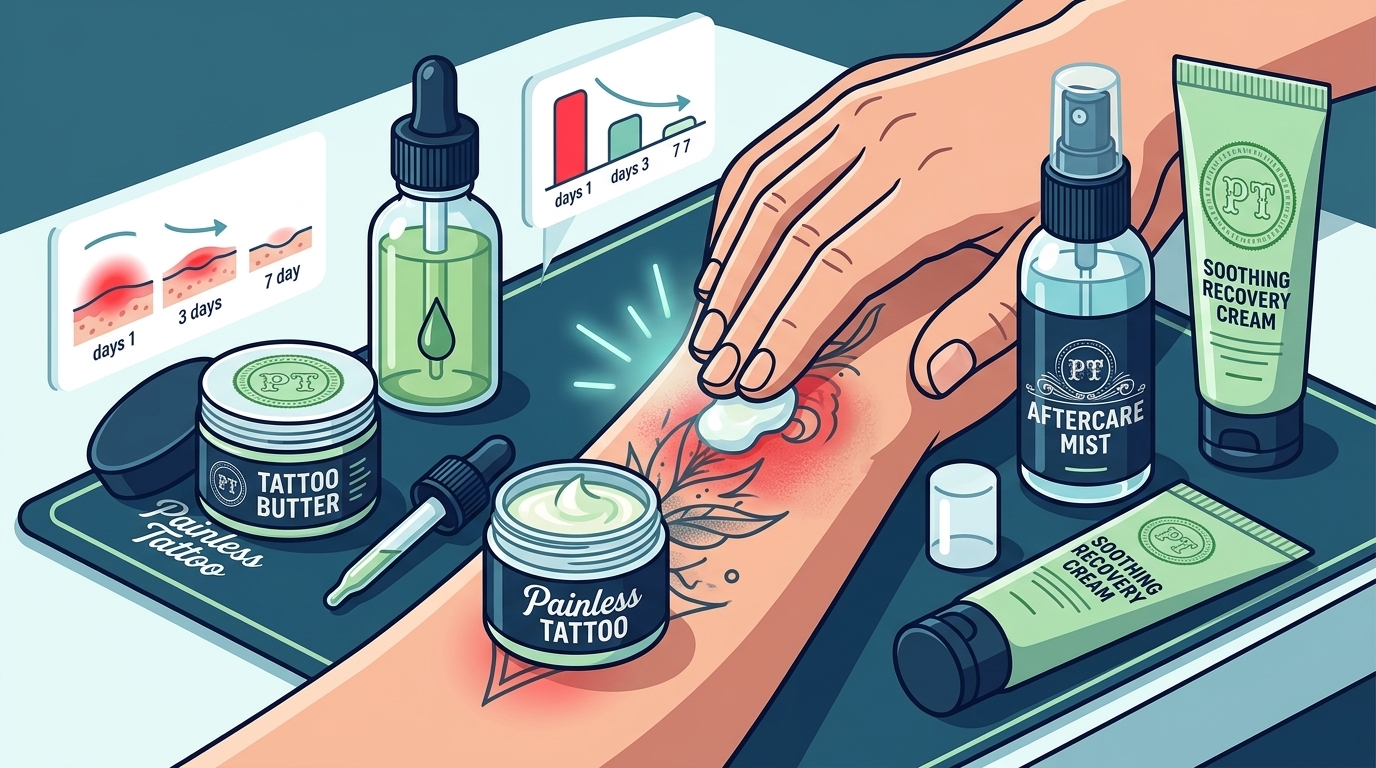
When to Reach for the Whip
Alpha Whip combines qualities of aloe vera gel, rich butters, and hydrating lotions in one formula. Its light, whipped texture makes it easy to apply without dragging across tender skin. Many people prefer it in the early days when the tattooed area is most sensitive.
When the Butter Makes Sense
Alpha Butter is a versatile aftercare product that doubles as a tattooing glide and daily moisturizer. It provides a thicker barrier of hydration, which some people find helpful once the initial sensitivity has eased and the skin enters its flaking and peeling phase.
When to Choose the Oil
Alpha Oil leverages proprietary Advanced Growth Factor Technology originally developed for wound care. It absorbs quickly and is a strong choice for anyone who dislikes the feel of heavier creams. It also works well as a long-term maintenance product on fully healed tattoos.
Matching Products to Your Healing Timeline
A tattoo generally takes about 2 to 4 weeks to heal on the surface and up to 6 months below the surface. Painless Tattoo's Ultimate Tattoo Aftercare Guide recommends building your routine around each phase.
Days 1 to 3: Inflammation Phase
Redness and mild swelling are at their peak. After removing your bandage (following your artist's instructions), gently wash the area with lukewarm water and fragrance-free soap. Apply a thin layer of your chosen aftercare product. This is when many people reach for Alpha Whip or Alpha Oil for their lightweight feel on tender skin.
Days 4 to 14: Peeling and Flaking Phase
Scabbing and flaking begin. The tattoo may look cloudy. Consistent, thin applications of aftercare keep the area hydrated without suffocating it. Alpha Butter's richer consistency can feel especially comfortable during this stage.
Week 3 and Beyond: Maturation Phase
Surface healing wraps up, but deeper skin layers continue repairing. Ongoing moisturization with any of the Alpha products helps preserve vibrancy and definition in your ink.
Key Ingredients to Look For
Not all aftercare products are created equal. Here are ingredient categories worth understanding:
Glycerin is a humectant that draws moisture into the skin and helps maintain hydration levels. It appears in many quality aftercare formulas, including Alpha Oil's blend of glycerin and essential fatty acids.
Hyaluronic acid is a naturally occurring molecule that acts as a water reservoir in the skin. Research published in PMC notes that its degradation products have substantial wound healing properties, particularly by supporting keratinocyte activity.
Anti-inflammatory botanicals are plant-derived compounds that help calm irritated skin. Look for formulas, like Painless Tattoo's Alpha line, that list organic, anti-inflammatory ingredients without relying on synthetic fragrances or harsh chemicals.
Common Aftercare Mistakes That Increase Redness
Even the best products cannot compensate for poor habits. Avoid these common pitfalls:
- Over-moisturizing: Applying too much product can trap moisture and bacteria, potentially increasing redness rather than reducing it.
- Sun exposure: UV rays irritate healing skin and can fade ink. Keep your tattoo out of direct sunlight until fully healed, then use broad-spectrum sunscreen.
- Soaking: Pools, hot tubs, and baths introduce bacteria and strip moisture. Stick to brief, lukewarm showers.
- Picking or scratching: Removing scabs prematurely can cause scarring and ink loss.
- Fragranced products: Perfumes, dyes, and alcohol-based ingredients can irritate broken skin and prolong redness.
For a deeper look at what to avoid, read How To Effectively Manage Tattoo Pain on the Painless Tattoo blog.
Key Takeaways
- Redness after a new tattoo is a normal immune response that typically lasts a few days to two weeks.
- Consistent, thin applications of a quality moisturizer are the foundation of effective aftercare.
- Alpha Whip, Alpha Butter, and Alpha Oil each serve a different texture preference and healing stage.
- Ingredients like glycerin and hyaluronic acid are backed by peer-reviewed research for supporting skin hydration and repair.
- Over-moisturizing, sun exposure, and fragranced products are the most common causes of prolonged redness.
- Always follow your tattoo artist's specific aftercare instructions alongside any product you use.
- If redness worsens or lasts beyond two weeks, consult a licensed healthcare professional.
Frequently Asked Questions
How long does tattoo redness normally last?
For most people, noticeable redness subsides within 5 to 7 days. Larger tattoos, coverups, or tattoos on sensitive areas may stay red a bit longer. Tattoo healing is usually complete after 2 to 3 weeks on the surface.
Can aftercare products actually reduce redness?
Quality aftercare products are designed to support your skin's natural healing processes, keeping the area hydrated and protected. A moisturized wound environment is associated with reduced discomfort, according to published dermatological research. They are not medications, but they support the conditions your skin needs to recover.
What is the difference between Alpha Whip and Alpha Butter?
Alpha Whip has a light, airy, whipped texture similar to a gel-lotion hybrid. Alpha Butter is richer and denser, providing deeper moisturization. Both are crafted from organic ingredients. Your choice comes down to personal texture preference and which healing phase you are in.
Is Alpha Oil suitable for fresh tattoos?
Yes. Alpha Oil is designed for use on both new and healed tattoos. Its fast-absorbing, lightweight formula makes it a popular option starting from day one. Always follow your artist's guidance on when to begin applying aftercare products.
Should I use all three Alpha products at once?
Most people pick one product per healing cycle based on their texture preference. You do not need all three simultaneously. Some people rotate between them as their skin's needs change during healing. Explore the full range on the Painless Tattoo products page.
When should I see a doctor about tattoo redness?
If redness spreads significantly beyond the tattoo borders, is accompanied by pus, fever, or increasing pain after the first week, seek medical attention promptly. Normal redness improves gradually; worsening redness is a reason to consult a professional.
Does numbing cream before a tattoo affect healing or redness?
Topical numbing products like Painless Tattoo Numbing Cream are used before the session to address comfort during the procedure. They are a separate category from aftercare. Your post-session redness is driven by the tattooing process itself, not the numbing step. Talk to your artist about how pre-session and post-session products work together.
Can I bundle numbing and aftercare products together?
Yes. The Painless All-Stars Kit includes numbing cream, numbing spray, and an Alpha aftercare product, covering every stage from pre-session comfort to post-session recovery.
Start Your Aftercare Right
Your tattoo is an investment in self-expression. Give it the support it deserves from day one. Browse the full Painless Tattoo aftercare lineup to find the texture and formula that fits your skin, your ink, and your routine.