
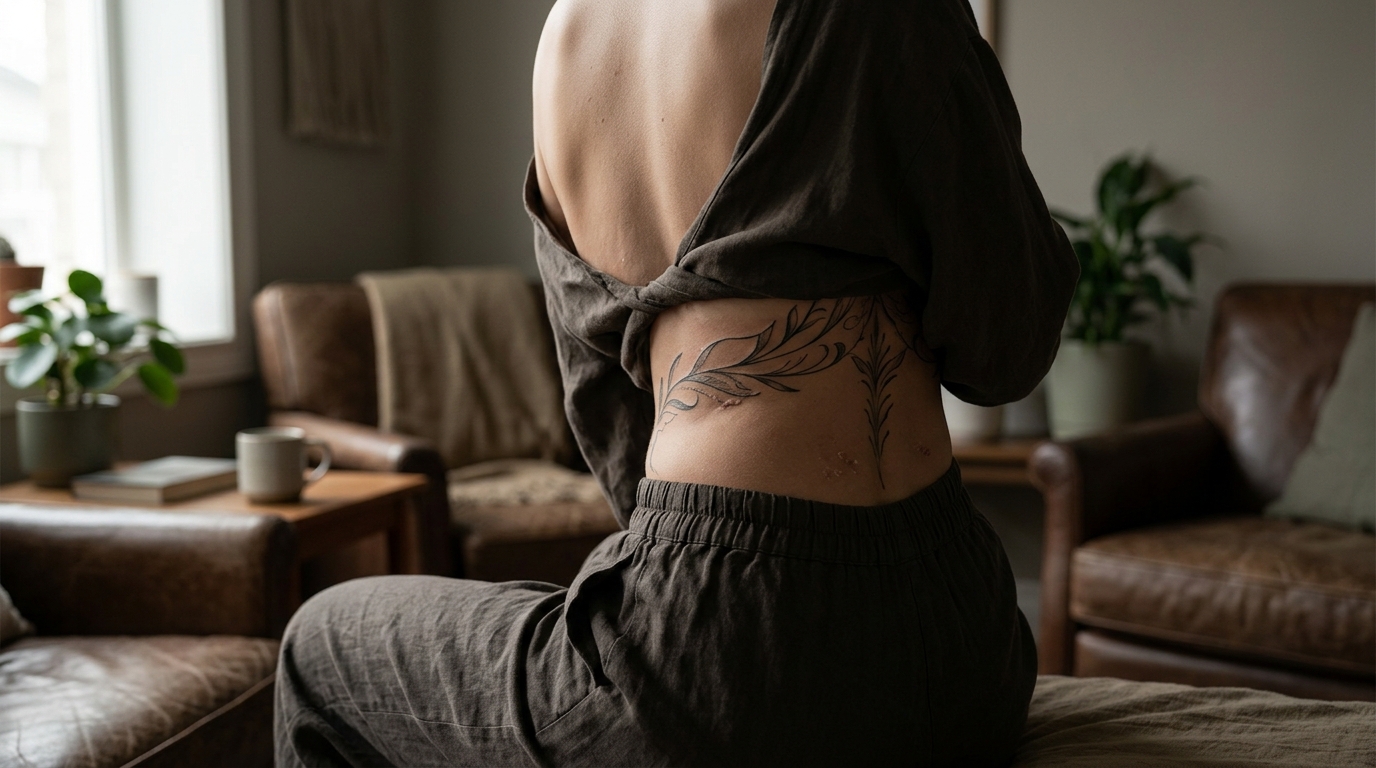
Ribs and spine consistently rank among the most painful spots on every tattoo pain chart. The thin skin, dense nerve endings, and proximity to bone create a level of intensity that catches many people off guard. But pain does not have to dictate your placement choice. With the right preparation before your session, smart strategies during the appointment, and consistent aftercare afterward, you can sit through a rib or spine piece with far more confidence than you might expect. This guide walks you through every stage of the process so you know exactly what to bring, what to expect, and what comes next.
Why Rib and Spine Tattoos Hurt More
The anatomy of these areas is what separates them from friendlier placements like the outer arm or thigh. Your rib cage has very little fat or muscle between the skin and bone, meaning the tattoo needle's vibration resonates directly through hard tissue. The skin over the ribs is also thinner and more sensitive than most other body parts, as noted by Healthline's tattoo pain chart.
A spine tattoo is a similar story. The vertebrae sit close to the surface, and the area is loaded with nerve endings. Together, thin skin and bony proximity create that sharp, buzzing sensation people describe.
The Breathing Factor
One challenge unique to rib tattoos is breathing. Every inhale and exhale expands and contracts the rib cage, shifting the skin under the needle. This constant movement can intensify discomfort and makes it harder for the artist to maintain clean lines. Controlled, steady breathing is not just a comfort tool here; it is a practical necessity for the quality of the work.
Where Ribs and Spine Land on the Pain Scale
Pain is subjective, but most charts and community consensus point in the same direction. The table below compares common tattoo placements by general pain level.
| Body Area | Typical Pain Rating (1-10) | Key Factor |
|---|---|---|
| Outer arm / shoulder | 3 - 4 | Thick skin, muscle padding |
| Outer thigh | 3 - 5 | Fat cushion, fewer nerves |
| Inner bicep | 6 - 7 | Thin skin, nerve density |
| Spine | 7 - 9 | Bone proximity, nerve endings |
| Rib cage | 8 - 10 | Minimal padding, constant movement |
| Sternum | 8 - 9 | Thin skin over flat bone |
A pain rating is a general indicator of intensity based on anatomy, not a guarantee of your personal experience. Individual tolerance, hydration, sleep, and mental state all influence the outcome. The ribs can feel like an 8 or 9 for some and closer to a 6 for others.
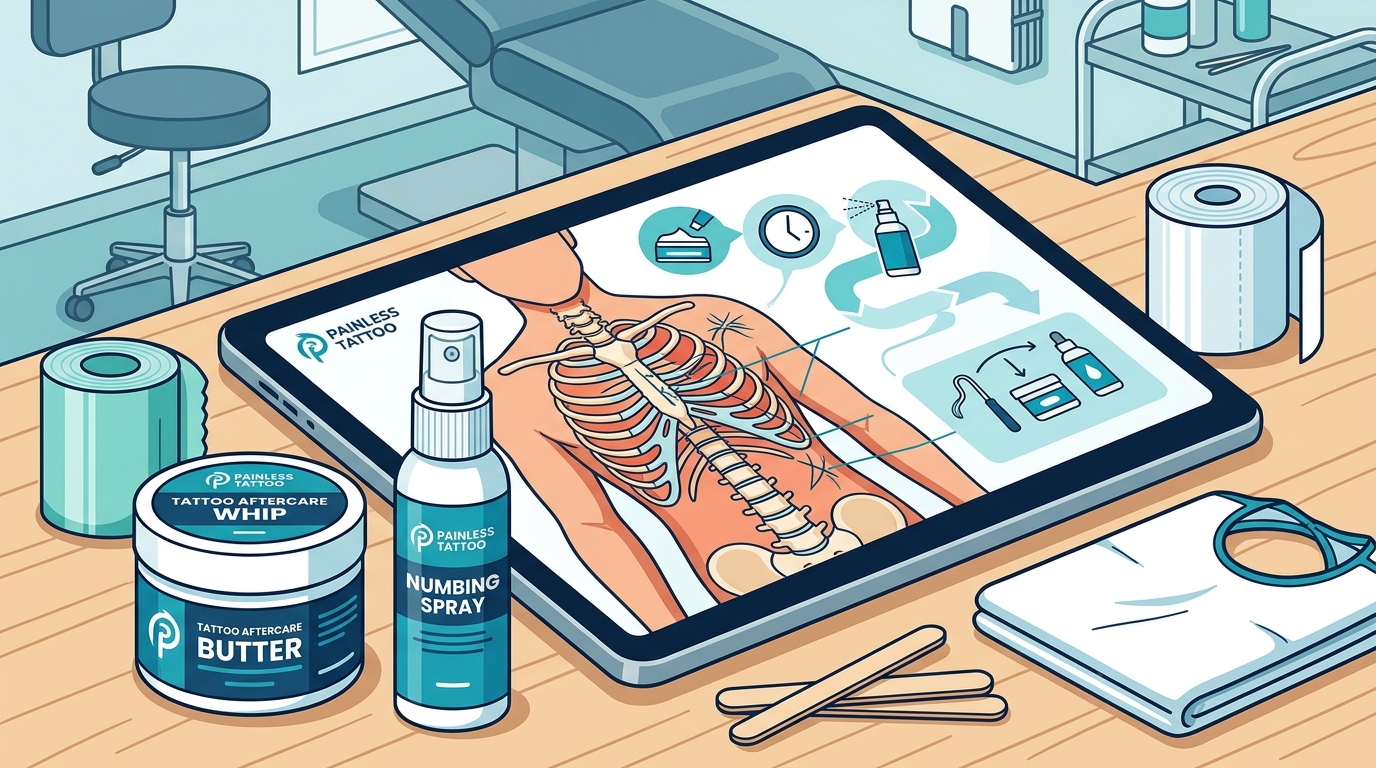
How to Prepare Before Your Session
Preparation is one of the most underrated pain-management tools. Showing up well-rested, hydrated, and fed can make a genuine difference.
The Week Before
- Prioritize sleep. Sleep deprivation lowers your pain tolerance. Aim for 7 to 8 hours per night in the week leading up to your appointment.
- Hydrate your skin. Well-hydrated skin is easier to tattoo and more comfortable to work on. Drink plenty of water and use a fragrance-free moisturizer on the area.
- Avoid blood thinners. Alcohol, aspirin, and ibuprofen can increase bleeding, making the session harder for your artist.
Day-Of Checklist
- Eat a solid meal 1 to 2 hours before your appointment.
- Wear loose, comfortable clothing that gives easy access to the tattoo area.
- Bring water, snacks, headphones, and a stress ball or something to squeeze.
- Have your Painless Tattoo Numbing Cream ready if you plan to use a topical numbing product.
Strategies for Managing Pain During the Session
Once you are in the chair, your main tools are breathing, distraction, and communication with your artist.
Controlled breathing is the single most effective free pain-management technique available. Deep, slow breathing activates your parasympathetic nervous system, which can help reduce the intensity of pain signals. Try inhaling for 4 counts, holding for 4, and exhaling for 4.
Distraction works. Talking with your artist, listening to music, or watching something on your phone can keep you in the dull-pain phase longer instead of fixating on sensation.
Breaks are completely normal, especially for rib and spine work. A 5-minute pause every 30 to 45 minutes can help you reset. Do not try to power through if your body is telling you to stop.
If your session runs long, your artist may be able to use a mid-session product like Painless Tattoo Numbing Spray to help you push through the final stretch. Talk to them about it ahead of time.
Topical Numbing Options for High-Pain Placements
A topical numbing cream is a product containing ingredients like lidocaine that is applied to the skin before a tattoo session to reduce surface-level sensation. Many people reach for topical numbing options specifically when booking rib and spine sessions because these placements push comfort limits further than most.
Topical numbing spray is a liquid formula designed for mid-session use, applied by the artist to broken skin to extend comfort during longer appointments. It pairs well with pre-session cream when the piece requires multiple hours of work.
The Painless All-Stars Kit bundles the numbing cream, spray, and aftercare together, which is worth considering if you are planning a high-pain session and want everything in one order. Always discuss any numbing product with your tattoo artist before your appointment so they can plan the session accordingly.
Aftercare for Rib and Spine Tattoos
Aftercare is the phase of tattoo maintenance that begins immediately after your session ends and continues for several weeks. Rib and spine tattoos come with a few extra considerations compared to less sensitive placements.
Clothing and Sleep
Loose, breathable clothing is essential. Tight shirts or waistbands that rub against a fresh rib tattoo create friction that can aggravate the area. Natural fabrics like cotton allow the skin to breathe. If your tattoo is on one side, sleep on the opposite side.
Moisturizing Without Overdoing It
Keeping the tattoo hydrated supports the healing process. A thin layer of aftercare product is the goal. Over-moisturizing can clog pores and create issues. The Alpha Tattoo Whip has a light, whipped texture that absorbs easily, which can feel more comfortable on tender rib or spine skin. If you prefer a richer formula, the Alpha Tattoo Butter provides deeper moisturization with organic ingredients like Shea Butter and Mango Butter.
Timeline and Sun Protection
Surface healing generally takes about 2 to 4 weeks, with full sub-surface healing extending up to 6 months. Avoid direct sun exposure on the fresh tattoo until healed, and apply broad-spectrum sunscreen once the skin has recovered. For any concerns during the healing process, reach out to your tattoo artist or a licensed professional.
Key Takeaways
- Ribs and spine are among the highest-pain tattoo placements due to thin skin, minimal padding, and dense nerve endings.
- Rib tattoos carry the added challenge of constant movement from breathing, which can intensify discomfort and affect line quality.
- Preparation matters: sleep, hydration, nutrition, and avoiding blood thinners can measurably influence your pain experience.
- Controlled breathing and regular breaks are the most accessible in-session pain-management techniques.
- Topical numbing products like numbing cream (pre-session) and numbing spray (mid-session) are commonly used for high-pain areas.
- Aftercare for these sensitive areas requires loose clothing, careful moisturizing, and patience through a multi-week healing window.
- Always discuss your pain-management plan and product choices with your tattoo artist before the session.
Frequently Asked Questions
Are rib tattoos really that painful?
Yes, rib tattoos are widely regarded as one of the most painful placements. The combination of thin skin, lack of fat and muscle cushioning, and the constant motion of breathing creates higher-than-average intensity for most people.
Is a spine tattoo more or less painful than ribs?
Both are considered high-pain areas. The spine has dense nerve endings and sits close to bone, but the ribs add the challenge of movement from breathing. Most pain charts place them in a similar tier, though individual experiences vary.
How long does a rib or spine tattoo session take?
Session length depends entirely on the size and complexity of the design. Small script or minimalist pieces may take under an hour. Larger, detailed work can require multiple hours or even multiple sessions.
Can I use a numbing cream for a rib tattoo?
Many people use topical numbing creams before rib and spine sessions. Talk to your tattoo artist in advance so they can account for the product in their workflow. Browse Painless Tattoo's numbing product line for options designed for this use case.
What should I wear to a rib tattoo appointment?
Wear loose-fitting clothing that allows your artist easy access to the area. Button-up shirts or tank tops work well. Avoid tight waistbands or anything that will press against the tattoo afterward.
How do I sleep after getting a rib tattoo?
Sleep on the opposite side of your body from the tattoo. Use clean sheets and avoid letting fabric press directly against the fresh ink. Some people find sleeping slightly elevated or on their back more comfortable during the first few nights.
What aftercare products work best for sensitive placements?
Look for lightweight, organic formulas that absorb quickly without sitting heavy on tender skin. The Alpha Whip offers a light texture, while the Alpha Butter provides a richer option. Your artist can help you choose the right fit.
When should I contact a professional about my healing tattoo?
If you notice increased redness, swelling, unusual discharge, or signs that something does not look right, reach out to your tattoo artist or a licensed healthcare professional promptly. Normal healing includes some tenderness, light peeling, and mild itching.
Ready to Prepare for Your Rib or Spine Session?
Check out the full Painless Tattoo product line to find the right numbing and aftercare products for your next appointment. Get everything you need in one place so you can walk into your session focused on the art, not the anxiety.