

Tattoo Healing and Redness: Products That Support Every Stage of Recovery
You just sat through hours in the chair, and now your fresh tattoo is red, warm, and a little angry. That is completely normal. Tattoo redness is your body's inflammatory response to thousands of tiny needle punctures in the dermis, and it typically lasts two to four days before fading. The real question is what you can do to support the healing process and keep that ink looking sharp. Below, we break down the product categories that matter most, map each one to a specific phase of recovery, and explain the differences so you can build a simple, effective aftercare routine.
Why Tattoos Get Red in the First Place
Tattoo redness is a natural inflammatory response. When a tattoo needle deposits ink into the dermis (the second layer of skin), your immune system sends increased blood flow to the area to begin tissue repair. According to Healthline, it is normal for a new tattoo to be red and slightly puffy in the days immediately after the session.
Inflammation is your body's repair mechanism, not a sign that something has gone wrong. Redness, mild swelling, and warmth are expected during the first week. The severity depends on factors like tattoo size, placement, and individual skin sensitivity. Tattoos on thinner skin areas like wrists and ribs tend to stay red longer than those on thicker areas like the back.
The Four-Stage Healing Timeline
Understanding the healing timeline helps you choose the right product at the right time. Most tattoos heal in four overlapping stages.
Stage 1: Days 1 to 6 (Oozing and Redness)
Expect swelling, warmth, and fluid discharge. This is when redness peaks. Your skin is essentially an open wound, and proper cleansing with a fragrance-free soap is critical. A quality aftercare product applied in a thin layer keeps the area hydrated without suffocating it.
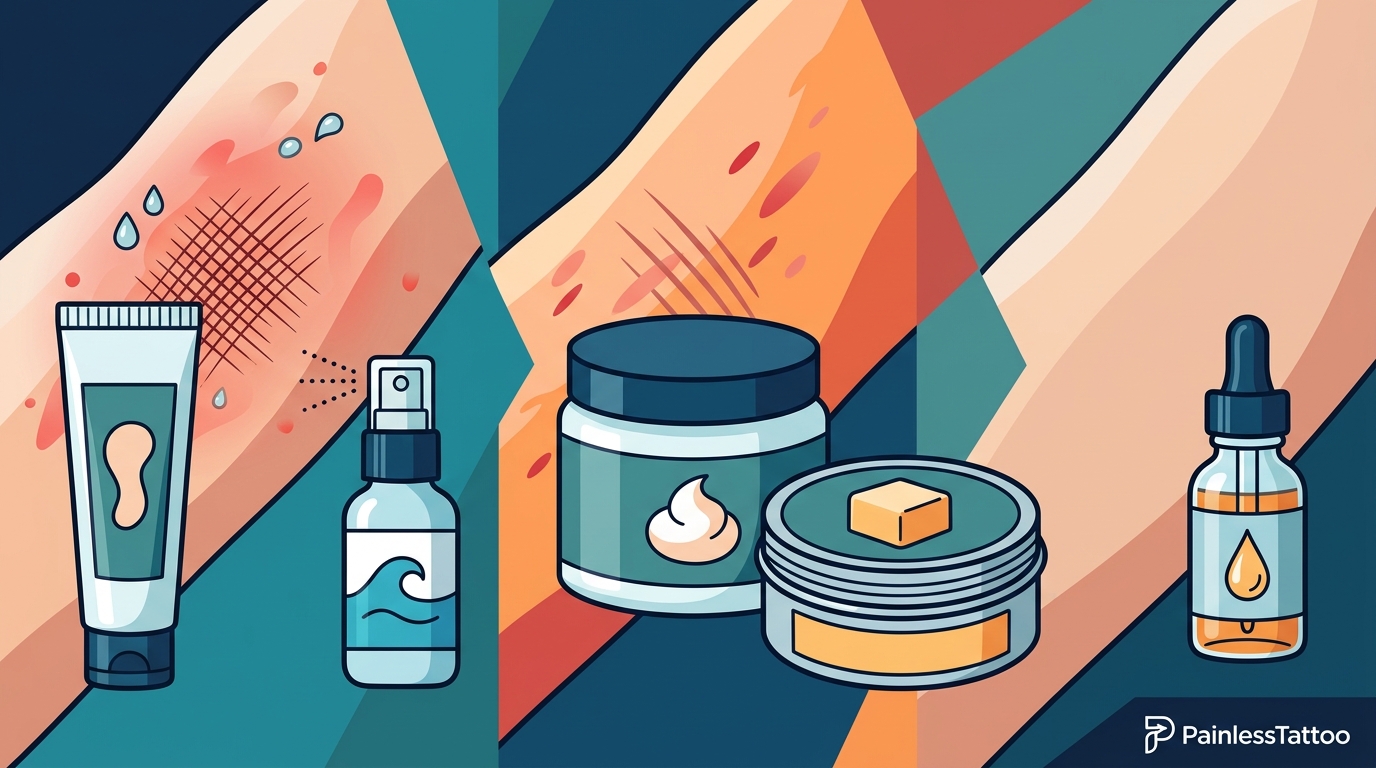
Stage 2: Days 7 to 14 (Itching and Flaking)
Scabs form and begin to flake away. Itching can be intense, but picking or scratching risks pulling ink out of the skin. A lightweight, soothing aftercare product helps manage that itch while keeping skin supple.
Stage 3: Weeks 3 to 4 (Surface Healing)
The outer skin looks healed, but deeper layers are still recovering. A tattoo generally takes about 2 to 4 weeks to heal on the surface and up to 6 months below the surface. Continued moisturizing supports ink vibrancy during this period.
Aftercare Products by Stage: Whip vs. Butter vs. Oil
Aftercare is not one-size-fits-all. Painless Tattoo's Alpha Aftercare line offers three distinct textures, each designed for different preferences and stages of recovery.
Alpha Whip
Alpha Tattoo Whip is a lightweight, whipped-texture aftercare product that combines qualities of aloe vera gel, rich butters, and hydrating lotions into one formula. Crafted from organic ingredients, it is formulated with anti-inflammatory and antibacterial properties. Its airy consistency makes it a popular pick during the early flaking stage when heavy creams can feel uncomfortable.
Alpha Butter
Alpha Tattoo Butter is a deeper-moisturizing aftercare product designed to support healing, nourish skin, and preserve ink appearance. It works well from the first needle stroke through long-term maintenance. Its richer texture suits people who prefer a more intensive moisture barrier, especially during the later stages of healing or in dry climates.
Alpha Oil
Alpha Tattoo Oil is a fast-absorbing aftercare oil that uses proprietary Advanced Growth Factor Technology. It was originally developed for wound treatment and has been repurposed for tattoo care. Alpha Oil is designed to reduce inflammation and support skin protection, and it has been laboratory-tested against harmful bacteria.
Side-by-Side Comparison Table
| Feature | Alpha Whip | Alpha Butter | Alpha Oil |
|---|---|---|---|
| Texture | Light, whipped | Rich, creamy | Lightweight liquid |
| Best Stage | Days 5-14 (flaking/itching) | Days 1-28+ (all stages) | Days 1-14 (inflammation phase) |
| Key Strength | Soothing, easy application | Deep moisture barrier | Fast absorption, antibacterial support |
| Vegan | Yes | Yes | No (contains animal-derived ingredient) |
| Use Beyond Healing | Daily moisturizer for healed ink | Daily moisturizer for healed ink | Long-term vibrancy maintenance |
Building a Daily Aftercare Routine
A consistent routine matters more than any single product. Here is a general framework many tattoo enthusiasts follow. Always defer to your tattoo artist's specific guidance.
- Wash hands thoroughly with antibacterial soap before touching your tattoo.
- Gently cleanse the tattooed area with lukewarm water and a mild, fragrance-free soap, twice daily.
- Pat dry with a clean paper towel. Avoid rubbing.
- Apply a thin layer of your chosen aftercare product once the area is fully dry.
- Wear loose, breathable clothing over the tattoo. Natural fabrics like cotton help the skin breathe.
For a more detailed walkthrough, check out the Ultimate Tattoo Aftercare Guide on the Painless Tattoo blog.
Common Mistakes That Prolong Redness
Even with the right products, certain habits can extend redness and slow the healing process.
- Over-moisturizing: Applying too much product can suffocate the skin and delay healing. A thin layer is all you need.
- Sun exposure: UV rays worsen redness and can cause long-term fading. Keep fresh ink out of direct sunlight, and use a high-SPF sunscreen once healed. As Cleveland Clinic advises, keeping the area clean and moisturized is essential during the months-long healing window.
- Tight clothing: Friction against fresh ink irritates the skin and can pull scabs prematurely.
- Submerging in water: Pools, hot tubs, and baths expose healing skin to bacteria and can cause ink loss.
- Using the wrong soap: Fragranced or harsh cleansers can trigger additional irritation and redness.
If redness worsens, spreads significantly, or is accompanied by fever or unusual discharge, consult a licensed healthcare professional. That falls outside normal aftercare territory.
Key Takeaways
- Tattoo redness is a normal inflammatory response that typically subsides within 2 to 4 days for most people.
- Healing happens in four stages over 2 to 4 weeks on the surface and up to 6 months deeper in the skin.
- Different aftercare textures serve different needs: Whip for lightweight comfort, Butter for deep moisture, Oil for fast-absorbing antibacterial support.
- A thin layer of aftercare product is better than a thick one. Over-moisturizing can delay recovery.
- Sun protection is critical during and after healing to prevent redness flare-ups and ink fading.
- Always follow your tattoo artist's aftercare instructions as a first priority.
- Persistent or worsening redness warrants a visit to a healthcare professional.
Frequently Asked Questions
How long does tattoo redness normally last?
For most people, redness from a new tattoo fades within 2 to 4 days. Larger pieces, coverups, and tattoos on sensitive areas like ribs or ankles can stay red for a week or more. If redness intensifies rather than fading, reach out to your tattoo artist or a medical professional.
What is the difference between Alpha Whip, Alpha Butter, and Alpha Oil?
Alpha Whip has a light, airy texture ideal for the flaking stage. Alpha Butter provides a richer moisture barrier for all-stage use. Alpha Oil is a liquid formula with Advanced Growth Factor Technology that absorbs quickly and offers antibacterial support. Each addresses a different texture preference and stage of healing.
Can aftercare products reduce redness directly?
Aftercare products are designed to keep skin hydrated, supported, and protected from environmental irritants, all of which contribute to a smoother recovery. They are not medications. If you have concerns about excessive inflammation, consult a licensed professional.
When should I start applying aftercare products?
Most tattoo artists recommend beginning aftercare once the initial bandage is removed and the area has been gently cleansed. Timing varies by artist, so follow their specific instructions. Visit the tattoo pain management guide for more context on the full session experience.
Is it possible to over-moisturize a new tattoo?
Yes. Applying too much product can trap moisture against the skin, potentially causing breakouts or slowing the healing process. A thin, even layer is the standard recommendation from most tattoo professionals.
Are the Whip and Butter vegan?
Alpha Whip and Alpha Butter are formulated with plant-based, organic ingredients. Alpha Oil contains an animal-derived component. Check individual product pages on the Painless Tattoo product collection for full ingredient details.
Should I use numbing products during the healing phase?
Numbing cream is a pre-session product applied to intact skin before the tattoo begins. Numbing spray can be used during a session on broken skin. Neither is an aftercare product. For aftercare, switch to a dedicated healing product from the Painless All-Stars Kit.
When should I see a doctor about tattoo redness?
If redness is expanding, accompanied by red streaks, pus, fever, or increasing pain after the first week, seek medical attention. Normal healing redness gradually improves day over day. Anything trending in the wrong direction deserves professional evaluation.
Start Your Aftercare Right
Your tattoo deserves the same care you put into choosing the design. Explore the full Painless Tattoo aftercare lineup to find the texture and formula that fits your skin, your tattoo, and your healing stage.