

Ribs and spine consistently rank among the most painful spots on every tattoo pain chart. The thin skin, prominent bone, and dense nerve endings in these areas create a sensation most people rate between 8 and 9 out of 10. That does not mean you should avoid these placements. With the right preparation, the right products at each stage, and a solid aftercare plan, a rib or spine piece is absolutely manageable. This guide walks you through why these areas hurt more than most, what you can do before and during your session, and how to set your skin up for a smooth recovery afterward.
Why Rib and Spine Tattoos Hurt More Than Other Placements
Tattoo pain is driven by three anatomical factors: skin thickness, fat padding, and nerve density. The rib cage and spine score poorly on all three. According to Healthline's tattoo pain chart, the most painful places to get tattooed are those with the least fat, most nerve endings, and thinnest skin.
Your rib cage has virtually no fat or muscle cushioning between the skin and the bone. Every pass of the tattoo machine transmits vibration straight into the ribs, amplifying the sensation in a way that fleshy placements like the outer arm or thigh simply do not. Add constant breathing movement, and your body stays in a near-constant state of tension throughout the session.
The Spine Factor
The spine is a bony column packed with nerve endings, and the spinal cord sits remarkably close to the skin's surface. As Saniderm's pain chart notes, it is almost exclusively comprised of bones and nerves, making it a highly painful area to tattoo. If your design allows flexibility, placing artwork slightly off-center from the spine can reduce the intensity.
Where Ribs and Spine Land on the Tattoo Pain Scale
A tattoo pain scale is a relative ranking system that compares discomfort across body locations. Most experienced tattoo artists and pain references place ribs and spine firmly in the top tier. Here is how common placements compare:
| Body Area | Pain Rating (1-10) | Key Reason |
|---|---|---|
| Outer Forearm | 3-4 | Fleshy, few nerve endings |
| Upper Arm / Shoulder | 5-6 | Moderate muscle padding |
| Upper Back (off-spine) | 5-7 | Muscle cushion present |
| Rib Cage | 8-9 | Thin skin, no fat, bone vibration |
| Spine | 8-9 | Dense nerve network, direct bone |
| Sternum | 9-10 | Extremely thin skin over bone |
These numbers come from aggregated pain chart data across multiple tattoo industry sources. Individual experience varies based on pain tolerance, hydration, rest, and session length.
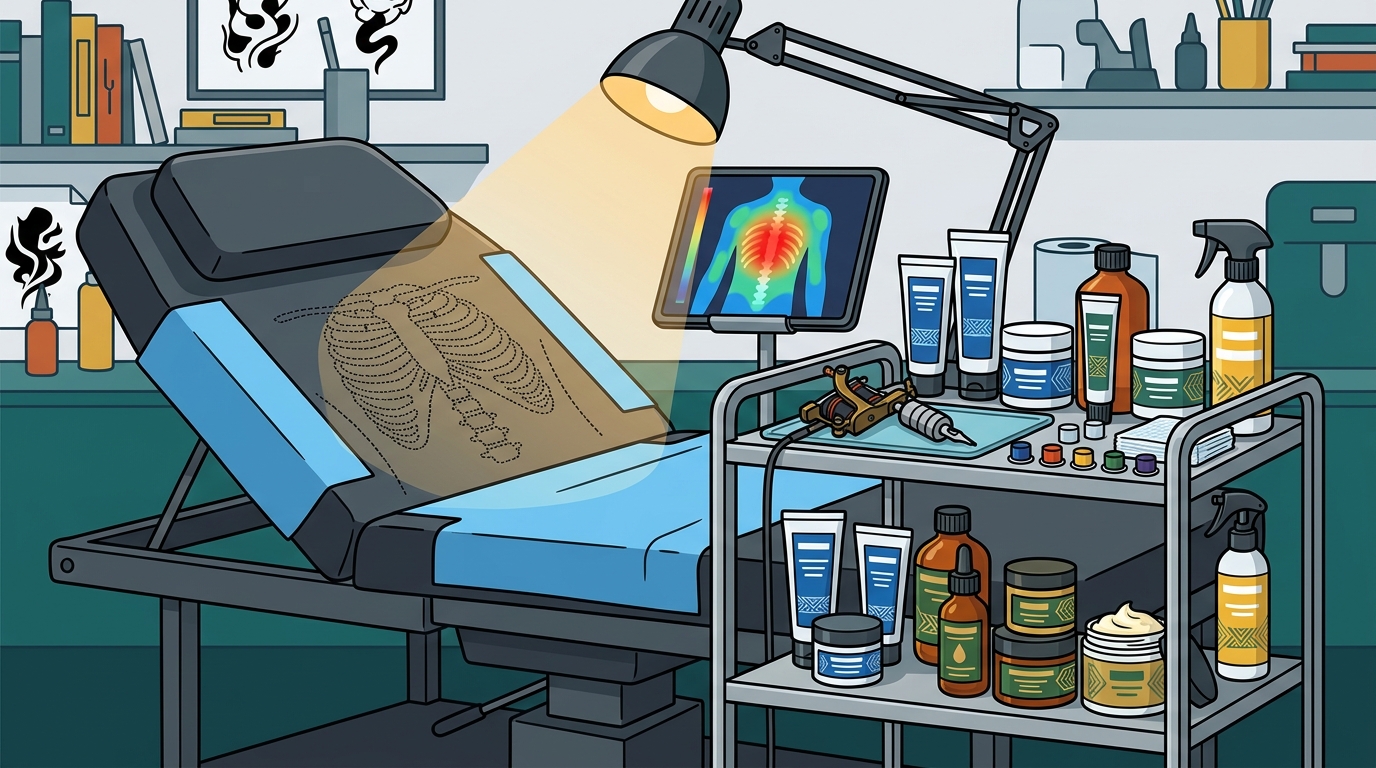
What to Have Ready Before Your Session
Preparation matters more for rib and spine work than almost any other placement. Your physical state directly affects how you sit and how your skin responds to the needle.
Pre-Session Checklist
- Sleep well the night before. Fatigue lowers your pain threshold significantly.
- Eat a full meal 1-2 hours before your appointment. Blood sugar drops during long sessions and can increase discomfort.
- Hydrate heavily for 24-48 hours prior. Well-hydrated skin accepts ink more smoothly.
- Bring a topical numbing option. Many people reach for a topical numbing cream before high-pain sessions. Talk to your tattoo artist about whether they are comfortable working with a numbing product.
- Pack snacks and a drink. Rib and spine sessions often run 2-6 hours for detailed pieces.
- Wear loose, comfortable clothing that provides easy access to the tattoo area without rubbing.
Managing Discomfort During the Session
Once the needle starts, your body's stress response kicks in and produces adrenaline, which can dull the initial sensation. Staying calm extends that natural buffer.
Breathing Technique
Short, shallow breathing tenses your torso and makes rib tattoos worse. Focus on long, slow exhales during needle passes. This relaxes the muscles around the rib cage and gives your artist a more stable surface to work on.
Mid-Session Support
For longer sessions, some artists are open to using a numbing spray on broken skin during the session to help extend your comfort window. This is a conversation to have with your artist beforehand, as not every artist works the same way. Taking short breaks, chatting with your artist, or listening to music can also help keep your mind off the sensation.
Your Aftercare Sequence by Stage
Aftercare is the process of caring for freshly tattooed skin to support the body's natural healing cycle and preserve ink vibrancy. Rib and spine tattoos can be slightly trickier to heal because of constant movement from breathing and bending.
Days 1-3: The Fresh Stage
Gently wash the area with lukewarm water and fragrance-free soap. Pat dry. Apply a thin layer of aftercare product to keep the tattoo hydrated. Avoid over-moisturizing, which can suffocate the area. Alpha Tattoo Whip is a lightweight, vegan option designed for this early window when skin is most tender.
Days 4-14: The Peeling Stage
The tattoo will begin to peel and may itch. Do not scratch or pick. Continue applying aftercare consistently. This is a stage where many people transition to a product with a slightly richer texture, like Alpha Tattoo Butter, for deeper moisture.
Weeks 3-6+: The Settling Stage
Surface healing wraps up in 2-4 weeks, but full dermal healing can take up to 6 months beneath the surface. Alpha Tattoo Oil is a popular choice during this phase for ongoing hydration and to maintain the glow of healed ink over time.
Whip vs. Butter vs. Oil: Choosing the Right Aftercare
Painless Tattoo's Alpha aftercare line includes three distinct textures, each suited to a different moment in the healing timeline. Here is a quick comparison:
| Product | Texture | Best For | Vegan |
|---|---|---|---|
| Alpha Tattoo Whip | Light, airy whip | Days 1-3, freshly tattooed skin | Yes |
| Alpha Tattoo Butter | Soft, rich butter | Days 4-14, peeling and itching stage | Yes |
| Alpha Tattoo Oil | Lightweight oil | Weeks 3+, long-term vibrancy | No (contains alligator oil) |
Alpha Tattoo Whip and Alpha Tattoo Butter are both vegan formulations. Alpha Tattoo Oil features alligator fat oil, an ingredient with a growing reputation in the skin care space for its fatty acid profile. Many customers cycle through all three as their tattoo moves from raw to fully settled.
Key Takeaways
- Ribs and spine rank 8-9 out of 10 on most tattoo pain scales due to thin skin, minimal fat, and high nerve density.
- Preparation is critical: sleep, hydration, a full meal, and a conversation with your artist about numbing products.
- Controlled breathing during the session reduces torso tension and can lower perceived pain on rib pieces.
- Topical numbing cream is the most common pre-session option people use for high-pain placements; numbing spray can support longer sessions when your artist approves.
- Aftercare for rib and spine tattoos should account for constant movement from breathing; use thin, consistent layers of product.
- Match your aftercare product to the healing stage: Whip for fresh ink, Butter for peeling, Oil for long-term care.
- Always follow your tattoo artist's specific aftercare guidance, as their recommendations are tailored to your skin and their technique.
Frequently Asked Questions
How painful is a rib tattoo compared to other placements?
Rib tattoos are consistently rated 8-9 out of 10 on tattoo pain scales. They rank alongside the spine, sternum, and feet as some of the most intense locations because the skin is thin and sits directly over bone with almost no fat or muscle buffer.
Is a spine tattoo more painful than a rib tattoo?
They are very close. Both areas score in the 8-9 range. The spine has denser nerve endings, while the ribs add the challenge of constant breathing movement. Individual tolerance plays a large role in which feels worse.
Can I use numbing cream before a rib or spine tattoo?
Many people use a topical numbing cream like Painless Tattoo Numbing Cream before high-pain sessions. Always check with your tattoo artist first, as some artists have preferences about working with numbed skin.
How long does a rib tattoo session typically last?
Small designs may take 30 minutes to an hour. Larger floral, script, or illustrative pieces can require 3-6 hours, sometimes split across multiple sessions to keep discomfort manageable.
What should I eat before a rib tattoo?
Eat a balanced meal with protein, complex carbohydrates, and healthy fats about 1-2 hours before your appointment. This helps stabilize blood sugar during a long session. Bring snacks like granola bars or fruit for sustained energy.
How long do rib and spine tattoos take to heal?
Surface healing typically takes 2-4 weeks. Full dermal healing beneath the surface can take up to 6 months. Rib tattoos may heal slightly slower due to the constant skin movement from breathing.
What aftercare products work best for rib tattoos?
Look for aftercare products that match each healing phase. A lightweight formula like Alpha Tattoo Whip works well in the first few days, while a richer option like Alpha Tattoo Butter supports the peeling stage. For long-term care, Alpha Tattoo Oil helps maintain vibrancy.
Should I avoid certain medications before a tattoo?
Consult your doctor or pharmacist about any medications you take. Some over-the-counter medications can affect bleeding or skin response. Your tattoo artist and a licensed healthcare provider are the best sources for personalized guidance.
Ready to Prep for Your Next Session?
Browse the full Painless Tattoo product lineup to find the right numbing and aftercare products for your rib or spine tattoo. Match each product to your stage in the tattoo journey, and walk into your appointment with a plan.