

Pain is one of the top reasons people hesitate before booking a tattoo appointment. Modern topical numbing products have changed that equation by giving clients and artists options at every stage of the session. Whether you are preparing for your first piece or sitting for a multi-hour sleeve, understanding which numbing solutions fit each phase of the process helps you plan a more comfortable experience. This guide walks through the science behind topical lidocaine, maps each product type to a specific moment in the tattoo journey, compares the Painless Tattoo aftercare line side by side, and answers the most common questions people ask before they sit in the chair.
How Topical Lidocaine Works
Lidocaine is a local anesthetic that blocks sodium channels in nerve endings, preventing pain signals from reaching the brain. When a tattoo needle enters the skin, nerve endings normally fire a sharp signal upward. Lidocaine interrupts that transmission at the source, so the brain registers pressure and vibration rather than sharp pain.
In over-the-counter topical creams, lidocaine concentrations typically go up to 5%, the maximum strength available without a prescription. The carrier formula matters too. Water-based creams absorb more cleanly into the skin, leaving a workable surface for the artist. Oil-based alternatives can leave residue that makes the skin feel slippery or rubbery, which may affect the tattooing process.
Types of Tattoo Numbing Solutions
Tattoo numbing solution is any topical product that temporarily reduces skin sensitivity during or around a tattoo session. The three main formats are creams, sprays, and combination approaches that pair both.
Creams (Pre-Session)
Applied before the session begins, numbing creams need time to absorb through intact skin. They are typically covered to create an occlusive environment that improves penetration. Painless Tattoo Numbing Cream is designed for use prior to the tattooing process, delivered in single-use sachets to support sanitation and potency.
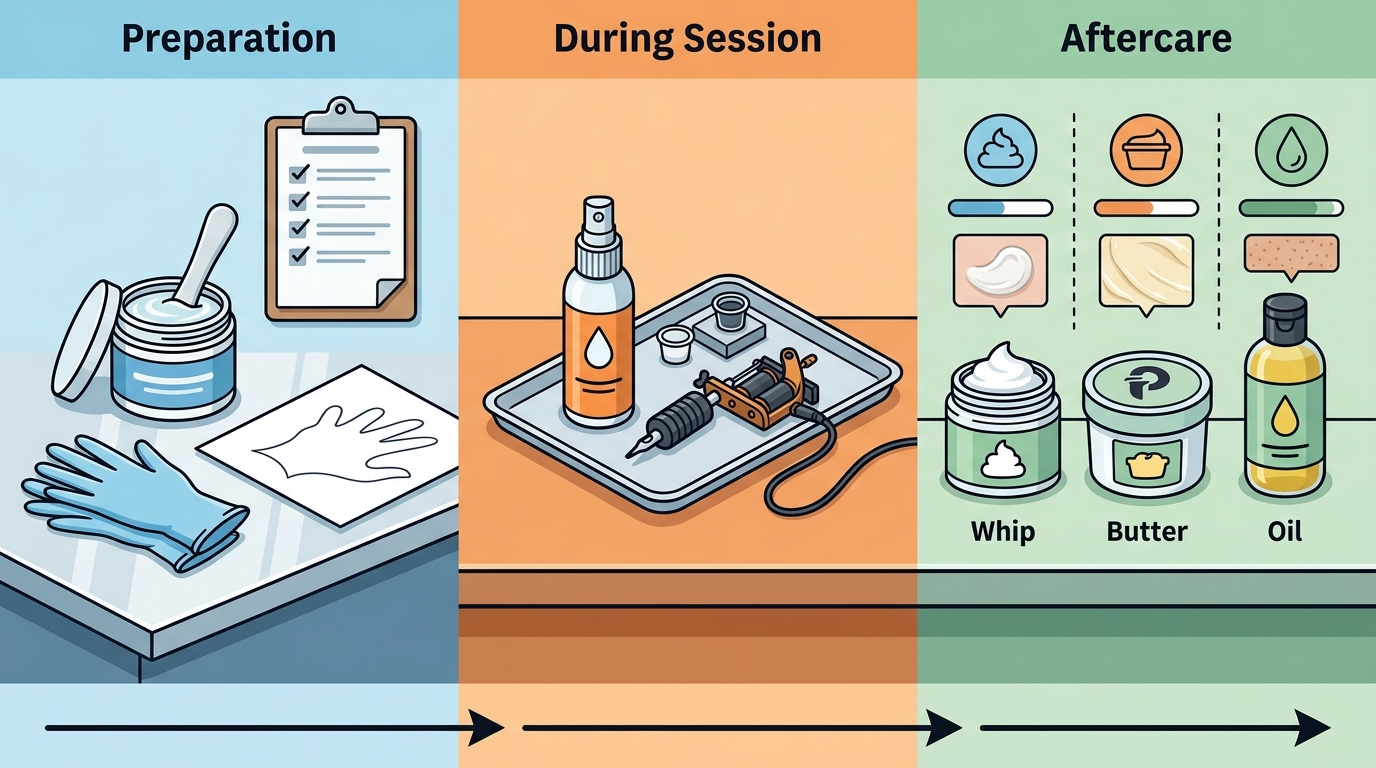
Sprays (Mid-Session)
Numbing sprays are formulated for broken skin, making them useful once tattooing is already underway. They provide a quick-onset option when the initial numbing begins to fade or when the artist moves to a more sensitive area. Painless Tattoo Numbing Spray is designed as a companion to the cream, applied during the session without interrupting the workflow.
Combination Packs
Many people use both formats in a single session. The Painless Tattoo Combo bundles cream and spray together so clients have coverage from start to finish.
Pre-Session: Numbing Cream
Topical numbing cream is the foundation of most pain-management plans for tattoos. The active ingredient, lidocaine, absorbs into the upper layers of the skin and temporarily blocks nerve signals. Most people reach for a numbing cream because they want to reduce the sharp, stinging sensation that comes with needle work, especially on sensitive areas like ribs, feet, or the spine.
Always discuss numbing cream use with your tattoo artist before the appointment. Some artists have specific preferences about formulas and timing. Your artist is the best resource for guidance on how a particular product fits into their process.
Mid-Session: Numbing Spray
Numbing spray is a topical anesthetic in liquid form designed for application on skin that has already been opened by the tattoo needle. Unlike cream, spray does not require an occlusion period. According to Painless Tattoo, their spray formula includes skin conditioners and compounds to improve absorption and does not affect the tattooing process.
Spray is especially popular during long sessions. When a cream's effects begin to diminish partway through a multi-hour sitting, the artist can wipe the area, apply the spray, and resume work after a brief pause. Talk to your artist about whether mid-session spray fits their workflow.
Aftercare: Whip vs. Butter vs. Oil
Aftercare is the phase that determines how well your tattoo heals and how vibrant it looks long term. Painless Tattoo's Alpha Aftercare line offers three distinct textures, each suited to different preferences and skin types. All three are made in the USA with organic ingredients.
| Product | Texture | Key Ingredients | Best For |
|---|---|---|---|
| Alpha Tattoo Whip | Light, whipped, lotion-like | Aloe Vera, Organic Glycerin, Vitamin E, MCT Oil | People who prefer a lightweight, fast-absorbing feel |
| Alpha Tattoo Butter | Rich, balm-like | Shea Butter, Mango Butter, Beeswax, Lavender & Rosemary Oils | People who want a richer moisturizer or tattooing glide |
| Alpha Tattoo Oil | Liquid oil, fast-absorbing | Glycerin, Essential Fatty Acids (Oleic, Linoleic, Gamma-Linolenic) | People looking for an oil-format aftercare with antibacterial properties |
Alpha Tattoo Whip combines qualities of aloe gel, butter, and lotion into one formula with a light, whipped texture. Alpha Tattoo Butter uses shea butter, mango butter, and beeswax for a richer consistency and doubles as a tattooing glide. Alpha Tattoo Oil leverages proprietary Advanced Growth Factor Technology and is the first oil-format product in the line. All three are designed to hydrate, nourish, and support the skin's recovery process. For a full breakdown of the healing timeline, see the Ultimate Tattoo Aftercare Guide.
Choosing the Right Product for Your Session
Matching the right product to the right moment is simpler than it looks. Here is a quick framework:
- Before the session: Numbing cream on intact skin, discussed and coordinated with your artist.
- During the session: Numbing spray on broken skin if additional relief is needed, applied by or with the approval of your artist.
- After the session: An aftercare product (Whip, Butter, or Oil) applied to clean, dry skin as part of your daily healing routine.
If you are unsure which aftercare texture is right for you, consider your skin type. Oily skin often pairs well with the lighter Whip. Dry skin may benefit from the richer Butter. The Oil format appeals to those who want a fast-absorbing liquid. Your tattoo artist can also point you toward what they have seen work well with their clients. Browse the full Next Gen Aftercare collection to compare options.
Key Takeaways
- Lidocaine is a local anesthetic that blocks nerve pain signals and is the primary active ingredient in most tattoo numbing creams.
- Numbing creams are applied before a session on intact skin; numbing sprays are used mid-session on broken skin.
- Water-based formulas generally absorb more cleanly and leave a workable surface for the tattoo artist.
- Always coordinate numbing product use with your tattoo artist before the appointment.
- Painless Tattoo offers three aftercare textures: Whip (light), Butter (rich), and Oil (liquid), each with organic ingredients.
- Consistent aftercare hydration supports the healing process and helps maintain ink vibrancy over time.
- For any concerns about skin sensitivity or allergies, consult a licensed professional before using a new topical product.
Frequently Asked Questions
What is tattoo numbing cream?
Tattoo numbing cream is a topical anesthetic applied to the skin before a tattoo session to reduce the sensation of pain. Most formulas use lidocaine as the active ingredient, which temporarily blocks nerve signals in the treated area.
Can I use numbing spray during a tattoo session?
Yes. Numbing sprays like Painless Tattoo Spray are formulated for use on skin that has already been opened by the tattoo needle. Check with your artist before applying any product during the session.
How long does topical lidocaine typically last?
Most topical lidocaine products provide numbing effects that last between one and three hours, depending on the formula, the area of the body, and individual skin factors. Discuss timing with your artist to plan around your session length.
Will numbing cream affect my tattoo's appearance?
Water-based numbing creams are generally preferred because they absorb cleanly and do not leave a greasy residue. Formulas without vasoconstrictors are less likely to affect how ink settles. Always confirm product compatibility with your tattoo artist.
What is the difference between Alpha Whip, Butter, and Oil?
Alpha Whip has a light, lotion-like texture with aloe vera and glycerin. Alpha Butter is richer, made with shea butter, mango butter, and beeswax. Alpha Oil is a fast-absorbing liquid featuring glycerin and essential fatty acids. All three are designed for tattoo aftercare hydration and skin support.
When should I start using aftercare products?
Follow your tattoo artist's specific instructions. Generally, aftercare begins after the initial protective bandage is removed and the area has been gently washed and dried. Apply a thin layer of your chosen aftercare product to keep the skin hydrated without over-moisturizing.
Are Painless Tattoo products vegan?
Alpha Tattoo Whip is formulated without animal-derived ingredients. Alpha Tattoo Butter contains beeswax, so it is not vegan. Check individual product pages on painlesstattoo.co for full ingredient lists.
Should I talk to my tattoo artist before using numbing products?
Absolutely. Your tattoo artist is the best resource for advice on how numbing products fit into their specific workflow. Some artists prefer particular formulas or timing approaches, and open communication leads to the best results for your tattoo.
Plan Your Next Session
Ready to map out the right numbing and aftercare products for your next tattoo? Explore the full Painless Tattoo product lineup to find the combination that fits your session length, skin type, and comfort goals.