
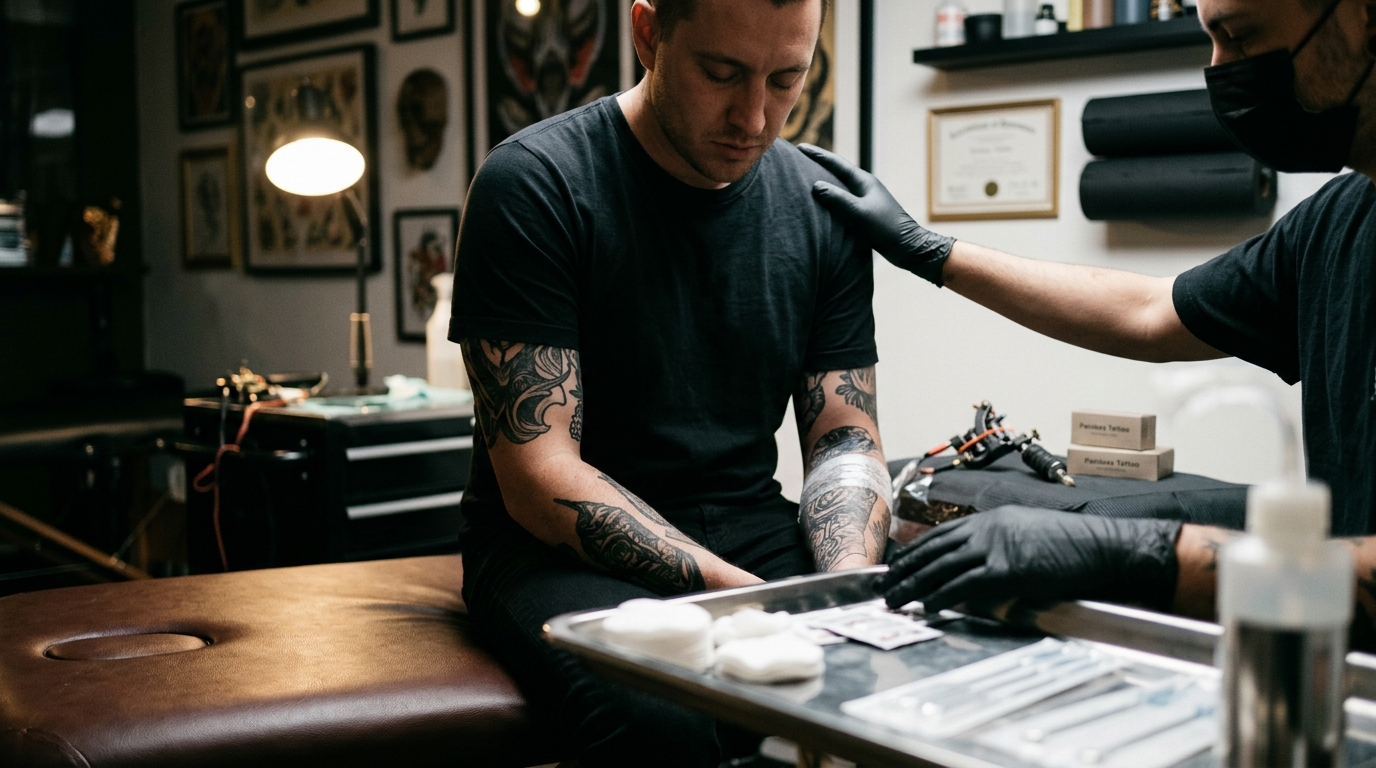
Long tattoo sessions test your body and your mindset. Whether you are sitting for a half-sleeve or a detailed back piece, sessions that stretch beyond three hours introduce fatigue, heightened sensitivity, and mental wear. Your body's natural endorphins tend to taper off after a few hours, which means the second half of a long session often feels harder than the first. The good news is that practical preparation, the right supplies, and smart in-chair strategies can make a significant difference. This guide walks you through every stage of the process, from the days before your appointment to the aftercare routine that follows.
Why Long Sessions Hurt More
Tattoo pain is not constant. During the first hour or two, your body releases adrenaline and endorphins that act as natural pain relievers. According to Saniderm's pain chart, these chemicals start wearing off after roughly three to four hours, which is why many artists divide large pieces into multiple sittings.
The type of work matters, too. Shading with larger needle groupings creates a dull, building burn, while fine line work feels sharper but fades faster. Styles with bold lines and heavy color saturation work the skin more intensely, adding up over time.
Prepare Your Body Before the Appointment
Hydration and Nutrition
Hydrated skin is more elastic and takes ink more smoothly, which can reduce the number of passes your artist needs to make. Start increasing your water intake at least 48 hours before your session. Eat a substantial meal one to two hours beforehand and pack high-glucose snacks like fruit or juice to keep blood sugar stable in the chair.
Sleep and Timing
Sleep deprivation lowers your pain tolerance significantly. Schedule your session during a window when your natural energy is highest, and aim for a full night of rest the evening before. Avoid alcohol for at least 48 hours prior, as it can thin your blood and increase sensitivity.
Topical Numbing Options and Where They Fit
A topical numbing cream is a product containing a local anesthetic, commonly lidocaine, that is applied to the skin before a procedure to temporarily reduce sensation. Many tattoo collectors reach for numbing options specifically because long sessions push past the body's natural comfort window.
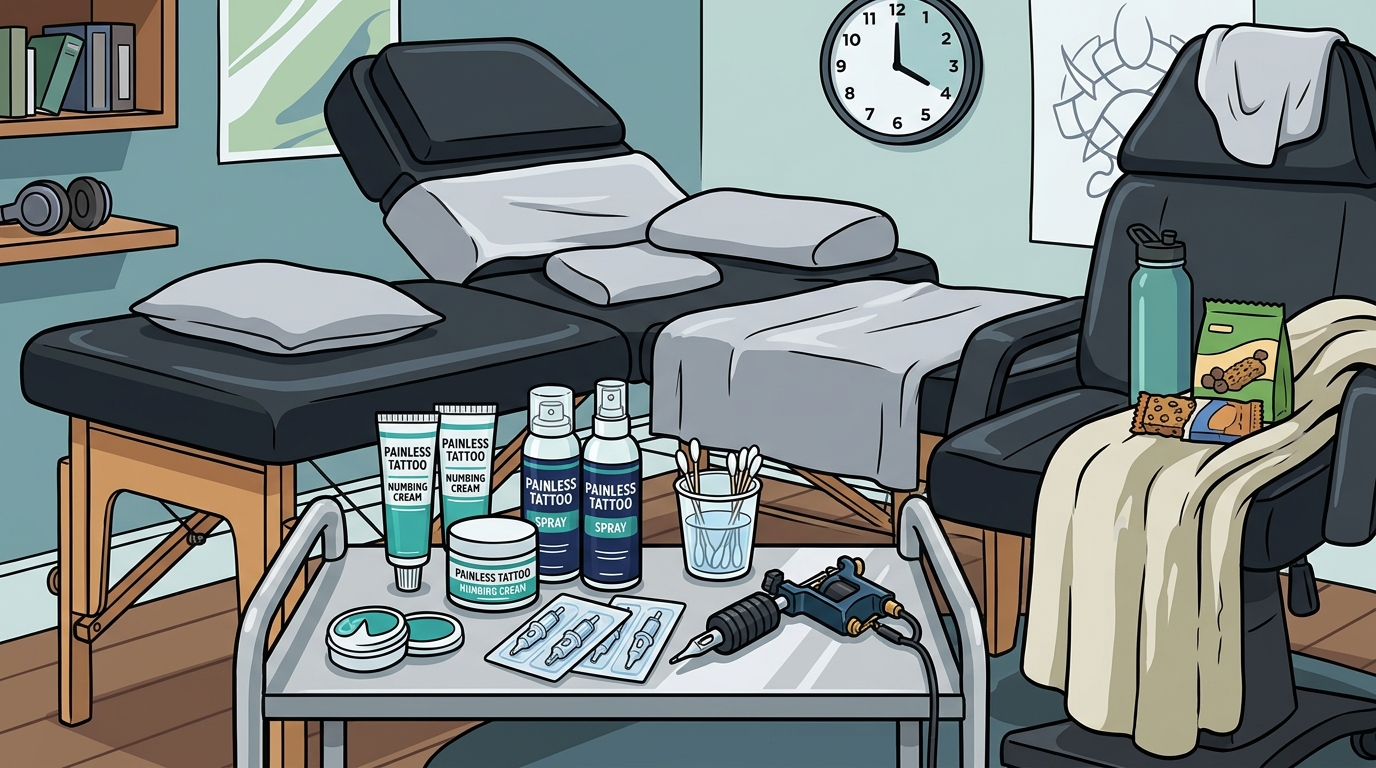
Painless Tattoo offers products mapped to different moments in your session. Painless Tattoo Numbing Cream is designed for pre-session use. For mid-session support, the Painless Tattoo Numbing Spray is a popular option among collectors who want to extend their comfort as the session continues. Always coordinate with your tattoo artist before using any topical product, as they can advise on what works best with their process.
In-Chair Strategies for Managing Discomfort
Breathing and Distraction
Deep, controlled breathing activates the parasympathetic nervous system and helps reduce muscle tension. Pair it with a distraction: music, a podcast, a conversation with your artist, or a show on your phone. Distraction is one of the most effective ways to lower perceived pain during repetitive stimulation.
Strategic Breaks
Short breaks every two to three hours give you time to stretch, hydrate, and reset. However, keep them brief. Too many pauses or overly long breaks can actually make the pain feel more intense when work resumes, because your body has to readjust to the sensation each time.
Communication with Your Artist
Your artist wants a smooth session as much as you do. Be open about discomfort, positioning, and when you need a moment. A skilled artist can adjust technique, shift positioning, or suggest a break at the right time.
Pain by Body Placement: A Quick Reference
| Body Area | Typical Sensation | Relative Pain Level |
|---|---|---|
| Outer arm / shoulder | Mild scratching | Low |
| Forearm | Moderate scratching | Low to Moderate |
| Thigh (outer) | Dull pressure | Low to Moderate |
| Inner bicep | Stinging | Moderate |
| Chest / sternum | Sharp, vibrating | High |
| Ribs | Burning, intense | High |
| Elbows / knees | Sharp, bone vibration | High |
| Spine | Deep, nerve-level | Very High |
| Hands / feet | Sharp, stinging | Very High |
Placement is the single largest variable in how a session feels. Areas with thin skin or minimal muscle, such as ribs, elbows, and the spine, are consistently reported as the most challenging for long sittings.
Why Aftercare Matters After a Long Session
Aftercare is the practice of cleaning, moisturizing, and protecting a new tattoo during the healing period that follows your session. After a long session, your skin has experienced sustained irritation, and the right aftercare sequence supports the recovery process while helping preserve your tattoo's appearance.
Painless Tattoo's Alpha aftercare line gives you options based on texture preference and skin feel. Alpha Tattoo Butter is a soft, light formula made from organic ingredients, designed for gentle application on freshly tattooed skin. The Alpha Tattoo Whip offers a lighter, whipped consistency for those who prefer minimal residue. And for longer-term maintenance, the Alpha Tattoo Oil provides a nourishing layer that supports skin hydration over time. Both the Whip and Butter feature vegan formulations.
Follow your artist's specific aftercare guidance. General principles include keeping the area clean, applying a thin layer of aftercare product as directed, wearing loose clothing over the tattoo, and avoiding sun exposure until healing is complete. For more detail, visit the Painless Tattoo Aftercare Directions page.
Key Takeaways
- Your body's natural endorphins start fading after three to four hours, making the second half of a long session harder.
- Hydration, sleep, and a solid pre-session meal are the foundation of pain management.
- Topical numbing products like Painless Tattoo Numbing Cream are designed for pre-session use; the Numbing Spray fits mid-session.
- Deep breathing, distraction, and short strategic breaks help reduce perceived pain in the chair.
- Body placement is the biggest pain variable. Ribs, spine, elbows, and hands are consistently the most intense.
- Aftercare is not optional. Products like Alpha Tattoo Butter and Alpha Tattoo Whip support the recovery process after extended sessions.
- Always coordinate with your tattoo artist on both numbing products and aftercare routines.
Frequently Asked Questions
How long is too long for a single tattoo session?
Most artists recommend capping sessions at around six to eight hours with breaks included. Beyond that, fatigue and skin irritation can affect both your comfort and the quality of the work. Your artist will help determine the right session length for your piece.
Does tattoo pain get worse the longer you sit?
Generally, yes. Your body's natural pain-relieving chemicals tend to diminish after three to four hours. That is why many experienced collectors use a combination of pre-session preparation and mid-session strategies to stay comfortable.
Can I use numbing cream for a long tattoo session?
Many people do. Topical numbing creams containing lidocaine are a common choice for tattoo sessions. Talk to your tattoo artist beforehand to make sure the product you choose works well with their process.
What should I eat before a long tattoo session?
A balanced meal with protein, complex carbohydrates, and healthy fats one to two hours before your session helps keep blood sugar stable. Bring high-glucose snacks like fruit for the session itself.
Are some body parts more painful than others?
Yes. Areas with thin skin or proximity to bone, such as the ribs, spine, elbows, knees, hands, and feet, are widely reported as the most painful spots to tattoo.
How do I take care of my tattoo after a long session?
Follow your artist's instructions closely. In general, keep the area clean, apply a thin layer of aftercare product, avoid sun exposure, and wear loose-fitting clothing. Painless Tattoo's Alpha aftercare line offers Butter, Whip, and Oil options depending on your preference.
Do breaks during a tattoo session help with pain?
Short breaks help you stretch, hydrate, and reset mentally. However, taking too many or overly long breaks can make the pain feel more intense when work restarts, so keep them brief and purposeful.
Should I talk to my artist about pain management?
Absolutely. Your tattoo artist is your best resource for session-specific advice. They can adjust technique, pacing, and break timing to help you stay comfortable throughout the process.
Your Next Step
Preparing for a long tattoo session starts before you walk into the studio. Browse the full Painless Tattoo product lineup to find the right numbing and aftercare products for your next appointment, and talk to your artist about building a session plan that works for both of you.