

Planning a sleeve, a back piece, or any multi-hour tattoo sitting? You have probably seen two main topical numbing options on the market: cream and spray. They both contain similar active ingredients, but they are designed for completely different moments in your tattoo session. Understanding when and why each one is used can help you plan ahead, communicate with your artist, and sit more comfortably from the first hour to the last. Below, we break down the differences so you can walk in prepared.
What Is Tattoo Numbing Cream?
Tattoo numbing cream is a topical anesthetic applied to intact, unbroken skin before a tattoo session begins. Most over-the-counter formulas use lidocaine as the primary active ingredient. The cream's thicker consistency helps it form a barrier on the skin, which supports deeper absorption into the outer layers where nerve endings sit.
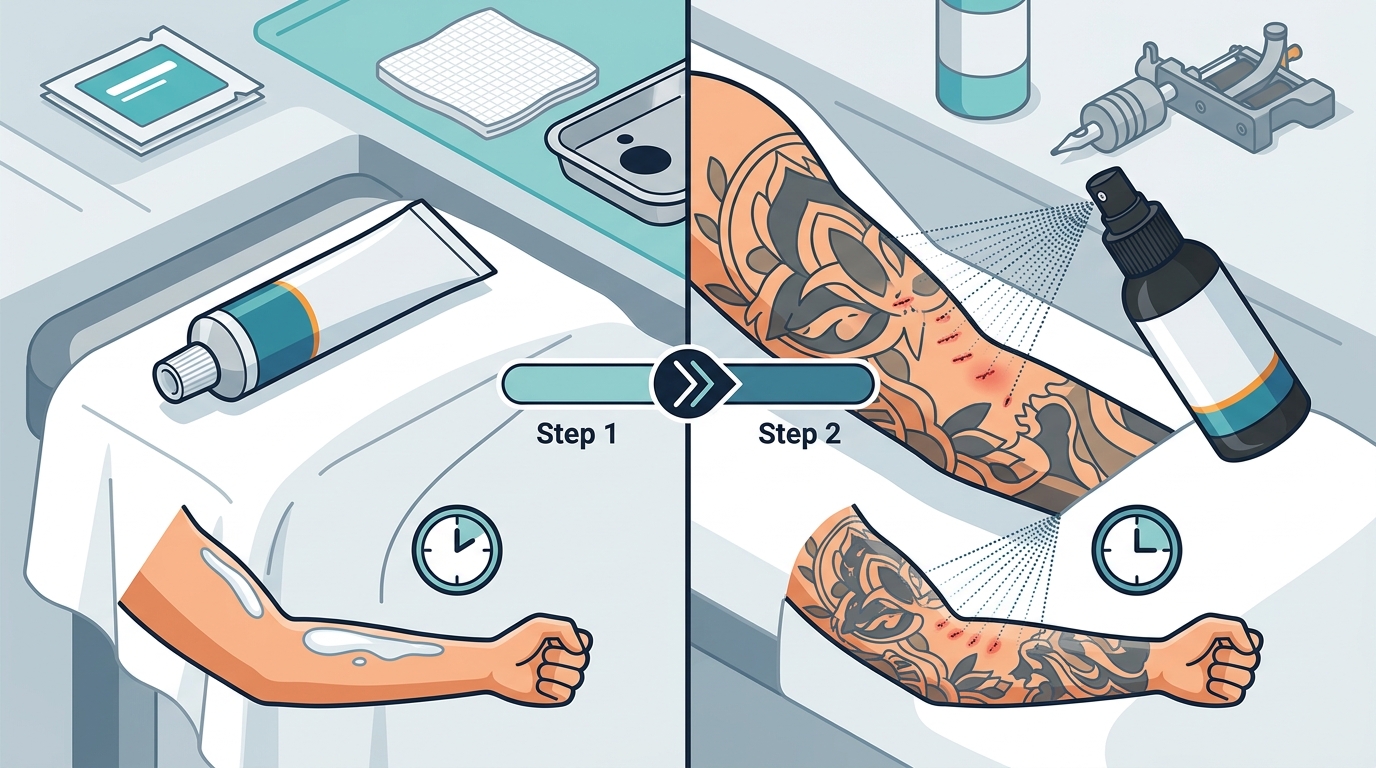
Because it needs time to absorb, numbing cream is a pre-session product. It is applied well in advance of the appointment, typically covered with plastic wrap, and then wiped clean before your artist begins. The Painless Tattoo Numbing Cream is designed for exactly this stage of the tattoo journey.
What Is Tattoo Numbing Spray?
Tattoo numbing spray is a liquid topical anesthetic formulated for use on broken skin during a tattoo session. Sprays often contain lidocaine, tetracaine, or benzocaine and are valued for their rapid onset. Your artist applies the spray mid-session to refresh comfort when the initial numbing effect begins to fade.
Unlike cream, spray is not designed for pre-session use on intact skin. It absorbs through a different pathway once the epidermis has been opened by the tattoo needle. The Painless Tattoo Numbing Spray is built for this mid-session role, giving artists a quick tool to keep clients comfortable without long pauses.
Key Differences at a Glance
| Feature | Numbing Cream | Numbing Spray |
|---|---|---|
| When applied | Before the session (pre-needle) | During the session (mid-needle) |
| Skin condition | Intact, unbroken skin | Broken skin |
| Onset time | Longer (requires advance application) | Faster (minutes after application) |
| Duration per application | Longer-lasting per single use | Shorter-lasting, may need reapplication |
| Typical active ingredient | Lidocaine (often 5%) | Lidocaine, tetracaine, or benzocaine |
| Applied by | Client (before arriving) or artist | Artist (during session) |
| Texture | Thick, stays in place under wrap | Lightweight liquid mist |
The short version: cream handles the opening stretch, spray handles the mid-session refresh. They are complementary, not interchangeable.
Why Long Sessions Change the Equation
For a quick one-hour tattoo, a single application of numbing cream is usually enough to cover the entire sitting. The math changes once a session stretches past the two- to three-hour mark.
The Fade Window
Most topical numbing creams provide their strongest effect within a window that eventually tapers. After that window closes, you are relying on your own endorphins and pain tolerance. This is exactly where a mid-session spray becomes valuable. It bridges the gap without requiring the long lead time that cream needs.
Reapplication Logistics
You cannot reapply cream once tattooing has started. Cream is formulated for intact skin; putting it on an open tattoo area is not recommended and could interfere with the process. A spray designed for broken skin is the only practical mid-session option, and your artist should always be the one applying it.
Artist Workflow
Long sessions demand focus from your artist. Fewer interruptions mean better line work and shading. Having both a cream and a spray ready gives your artist a plan for the full duration, so they can stay in their creative flow instead of managing discomfort breaks.
Using Cream and Spray Together
For sessions expected to run beyond a couple of hours, many people bring both products. The Painless Tattoo product line includes cream for the pre-session phase and spray for mid-session top-ups, so they are designed to work as a pair.
A typical approach looks like this: arrive with cream already applied and wrapped, let your artist wipe the area and begin work, then have the spray available for your artist to use when needed during the session. Always coordinate with your tattoo artist before using any numbing product. They know your skin, the placement, and the session plan better than anyone.
Aftercare Matters Just as Much
Comfort during the session is only half the story. What you do after the needle stops is just as important for your tattoo's long-term appearance. Painless Tattoo's Alpha aftercare line offers options mapped to different preferences and skin types.
Whip vs Butter vs Oil
Alpha Tattoo Butter is a soft, light formula designed for gentle application on tender, freshly tattooed skin. Alpha Tattoo Whip offers a similar vegan-friendly option with a lighter, airier texture. Alpha Tattoo Oil provides a liquid alternative for those who prefer an oil-based moisturizer. Each targets the same goal: keeping the tattooed area hydrated during the healing window.
Which one you reach for often comes down to personal texture preference and how your skin responds. Talk to your artist about what they recommend for your specific piece and placement.
Key Takeaways
- Numbing cream is a pre-session product for intact skin; numbing spray is a mid-session product for broken skin.
- Cream provides a longer initial numbing window, while spray offers a faster but shorter refresh.
- For sessions over two to three hours, having both products on hand gives you and your artist the most flexibility.
- Never reapply cream once tattooing has started. Mid-session relief should come from a spray formulated for broken skin.
- Always coordinate numbing product use with your tattoo artist before your appointment.
- Aftercare is the next critical step. Products like Alpha Butter, Alpha Whip, and Alpha Oil support the healing phase.
- If you have sensitive skin or known allergies, consult a licensed professional before using any topical anesthetic.
Frequently Asked Questions
Can I use numbing cream and numbing spray at the same time?
They are not used simultaneously. Cream goes on before the session on intact skin. Spray is applied by your artist during the session on broken skin. They work in sequence, not in parallel.
How long does tattoo numbing cream typically last?
Duration varies by product and individual factors like skin type and placement. Generally, you can expect the strongest effect within the first couple of hours. For specifics, check the Painless Tattoo cream directions and talk to your artist.
Is numbing spray safe on broken skin?
Sprays designed for tattoo use are formulated specifically for application on broken skin. That said, only your artist should apply it during a session. If you have concerns, discuss them with a licensed professional beforehand.
Will numbing products affect my tattoo's appearance?
When used as directed and fully removed before tattooing begins, quality numbing creams are generally considered compatible with the tattoo process. Ink retention and healing are primarily influenced by artist technique, ink quality, and proper aftercare.
Do I need both cream and spray for a short session?
For most shorter sittings (under two hours), cream alone is typically sufficient. Spray becomes more valuable as sessions extend past that window.
What is lidocaine?
Lidocaine is a local anesthetic commonly used in topical products to temporarily reduce sensation in the applied area. It is one of the most widely used ingredients in over-the-counter topical anesthetics. For questions about whether lidocaine is appropriate for you, consult your doctor or pharmacist.
Should I talk to my tattoo artist before using numbing products?
Yes, always. Your artist may have preferences about which products they are comfortable working with, and they can help you plan the timing for the best results. Communication before your appointment is key.
Where can I find the full Painless Tattoo product line?
You can browse the complete lineup of numbing and aftercare products on the Painless Tattoo store, including cream, spray, BLT Triple Numb, and the full Alpha aftercare range.
Ready to Plan Your Next Long Session?
Browse the Painless Tattoo product collection to find the right combination of numbing cream, numbing spray, and aftercare for your next sitting. Match each product to the right stage of your tattoo journey and walk in prepared.