
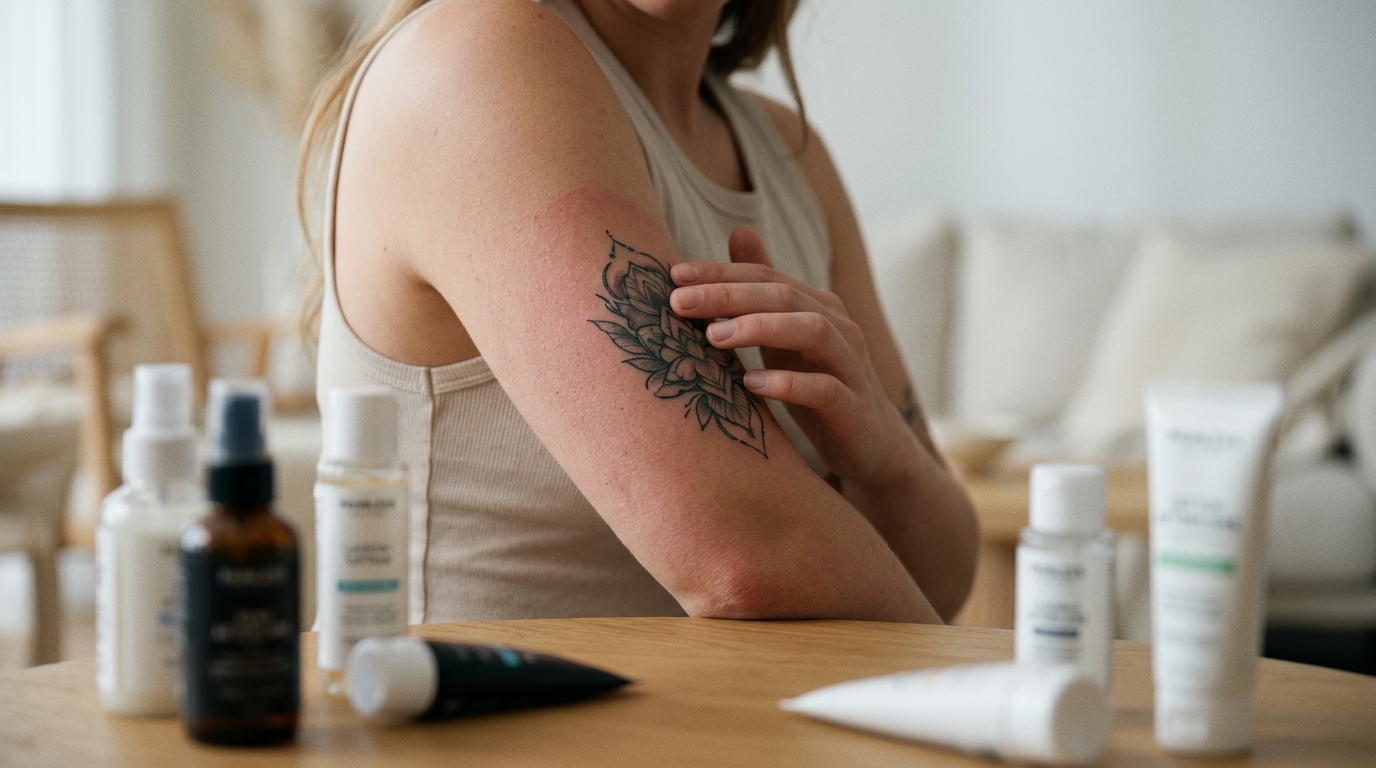
If your skin tends to flush, itch, or react to new products, the days after a tattoo session can feel especially nerve-wracking. Sensitive skin is skin that responds more readily to environmental triggers, friction, or topical ingredients than average skin does. The good news is that a thoughtful aftercare routine can make the recovery period far more comfortable. This guide walks you through what to look for in aftercare products, how to structure your routine day by day, and which Painless Tattoo Alpha Aftercare products map to each stage of the journey. Always consult your tattoo artist or a licensed dermatologist for personalized guidance.
Why Sensitive Skin Needs a Different Approach
Tattooing introduces ink into the dermis through thousands of tiny punctures. For people with sensitive skin, this process can amplify redness, swelling, and itching beyond the typical range. Conditions like eczema, rosacea, or general reactivity mean the skin barrier is already compromised, so aftercare products need to support that barrier rather than stress it further.
According to research published in the Journal of Cosmetic Dermatology, proper tattoo aftercare with a specifically designed product is essential to limit uncomfortable symptoms and improve skin repair quality. That principle is even more important when your skin is predisposed to reactions.
Ingredients to Seek Out (and Avoid)
What to Look For
Fragrance-free formulas are the single most important filter for sensitive skin. Fragrance ingredients are a frequent cause of contact reactions during tattoo recovery, as noted by dermatology-aligned aftercare guidance. Beyond that, look for organic plant butters (shea, mango), essential fatty acids, and naturally soothing botanicals like lavender or rosemary. Alpha Tattoo Butter from Painless Tattoo, for example, is crafted from 100% organic ingredients including shea butter, mango butter, and essential oils chosen for their compatibility with tattooed skin.
What to Avoid
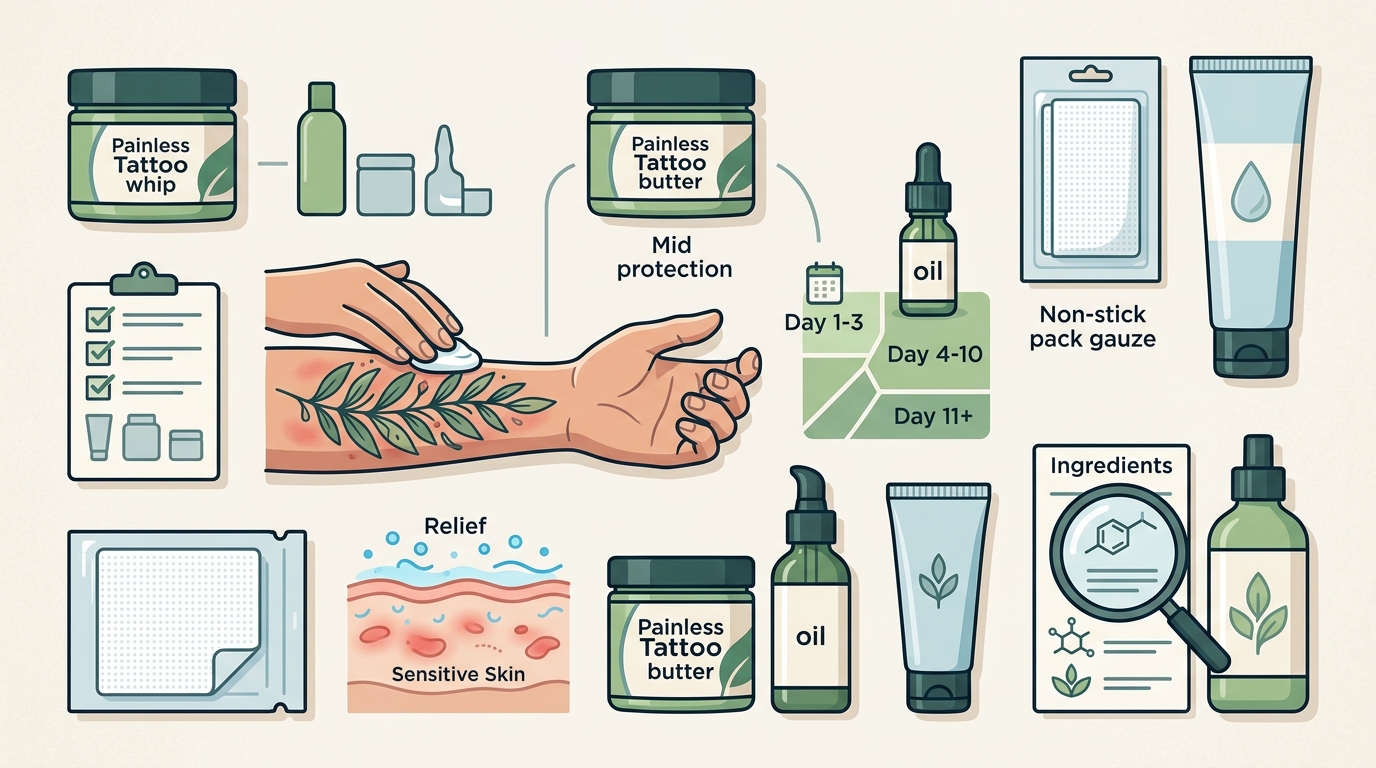
Petroleum-based products can create an occlusive seal that traps heat and bacteria against a fresh tattoo. Alcohol-based formulas strip moisture. Heavy fragrances introduce unnecessary irritants. Painless Tattoo's Ultimate Aftercare Guide specifically recommends avoiding petroleum-based products or those that are highly fragrant.
Day-by-Day Aftercare Sequence
Your tattoo artist's instructions always take priority. The timeline below is a general informational framework, not a substitute for professional advice.
Days 1 through 3: The Fresh Phase
Leave your initial bandage on for the duration your artist recommends. Once removed, gently clean the area with lukewarm water and a mild, fragrance-free soap. Pat dry with a clean paper towel. Apply a thin layer of aftercare product to keep the area hydrated. Over-moisturizing can suffocate the tattoo and cause issues, so less is more.
Days 4 through 14: The Peeling Phase
This is when flaking and itching typically peak. Resist scratching. Keep the tattoo lightly moisturized. A light-textured product like Alpha Tattoo Whip can feel soothing without sitting heavy on reactive skin. Wear loose, breathable clothing made from natural fabrics like cotton to minimize friction.
Weeks 3 through 6 and Beyond
Surface healing generally completes around weeks 2 to 4, but deeper layers can take up to six months to fully settle. Continue moisturizing as needed and begin applying broad-spectrum sunscreen once healed to preserve vibrancy and protect sensitive skin from UV-related irritation.
Alpha Whip vs. Alpha Butter vs. Alpha Oil
Painless Tattoo's Alpha Aftercare line offers three distinct textures. Each serves a different preference and skin need. Here is how they compare:
| Feature | Alpha Whip | Alpha Butter | Alpha Oil |
|---|---|---|---|
| Texture | Light, airy, whipped | Rich, creamy butter | Lightweight liquid oil |
| Best For | People who dislike heavy products; sensitive or reactive skin | Those who prefer a traditional balm feel; cooler, drier climates | Fast absorption; daily use on healed tattoos |
| Ingredients Highlight | 100% organic blend; anti-inflammatory botanicals | Shea butter, mango butter, lavender, rosemary, MCT oil | Glycerin, essential fatty acids; chemical-free formula |
| Absorption | Quick | Moderate | Very quick |
| Ideal Stage | Peeling phase and beyond | Fresh phase through peeling | Long-term maintenance and daily care |
Alpha Whip is a whipped-texture aftercare product that combines the soothing qualities of aloe vera gel with the nourishing benefits of rich butters. Alpha Butter is a premium balm-style product formulated from organic shea and mango butters. Alpha Oil is a fast-absorbing liquid aftercare that blends glycerin with essential fatty acids for lightweight daily hydration. All three are formulated with anti-inflammatory and antibacterial properties.
Warning Signs That Need Professional Attention
Some redness, swelling, and mild oozing are normal in the first couple of days. However, if redness spreads, swelling intensifies instead of subsiding, or you notice pus, persistent warmth, or fever, contact a healthcare provider promptly. As Healthline's tattoo aftercare guide notes, bigger tattoos will stay red and swollen longer because they cause more trauma to the skin, so context matters. When in doubt, reach out to your tattoo artist or a dermatologist rather than guessing.
Your Sensitive-Skin Aftercare Checklist
- Fragrance-free, gentle soap for cleaning
- Clean paper towels (avoid cloth towels that harbor bacteria)
- A thin-layer aftercare product from a line designed for tattooed skin, such as the Painless Tattoo Alpha Aftercare range
- Loose cotton clothing for the first two weeks
- Broad-spectrum SPF 30+ sunscreen (for use only after the tattoo is fully healed)
- Your tattoo artist's written aftercare instructions
- Your dermatologist's contact information if you have a known skin condition
Key Takeaways
- Sensitive skin requires fragrance-free, organic-ingredient aftercare products to reduce the risk of reactions during tattoo recovery.
- Hydration is critical, but over-moisturizing can trap bacteria and slow recovery.
- The Alpha Aftercare line from Painless Tattoo (Whip, Butter, and Oil) offers three textures so you can match your product to your skin's needs and the healing stage.
- Surface healing typically takes 2 to 4 weeks, with deeper skin layers settling over several months.
- Always follow your tattoo artist's specific aftercare instructions before any general guide.
- Watch for escalating redness, pus, or fever and consult a healthcare professional immediately if they appear.
- Once healed, daily sunscreen application helps preserve vibrancy and shields sensitive skin from UV stress.
Frequently Asked Questions
Is it normal for sensitive skin to react more after a tattoo?
Yes. Sensitive skin has a lower threshold for irritation, so redness, itching, and mild swelling may be more pronounced. This does not automatically indicate a problem, but you should monitor symptoms and consult your artist or a dermatologist if anything worsens after the first few days.
Can people with eczema or psoriasis get tattoos?
Many people with these conditions do get tattooed successfully. However, it is best to check with a dermatologist before booking your appointment, especially if symptoms are active in the area you plan to tattoo.
What is the difference between Alpha Whip and Alpha Butter?
Alpha Whip has a light, airy texture that absorbs quickly and feels similar to a gel-lotion hybrid. Alpha Butter is richer and more occlusive, closer to a traditional balm. Both are made from organic ingredients. People with very reactive skin often prefer the Whip for its lighter feel. Read the full aftercare guide for more detail.
How often should I moisturize a new tattoo if I have sensitive skin?
Apply a thin layer of aftercare product after each gentle cleaning, typically two to three times per day. Avoid thick coats. Your tattoo artist can give you a schedule tailored to your skin type and tattoo size.
Should I do a patch test before using a new aftercare product?
A patch test is a small application of a product on an untattooed area of skin to check for reactions before broader use. It is a smart step for anyone with a history of skin sensitivities. Apply a small amount to your inner forearm and wait 24 hours before using it on your tattoo.
When can I start using sunscreen on my new tattoo?
Only after the tattoo is fully healed on the surface, which generally takes at least two to four weeks. Applying sunscreen to broken or peeling skin can cause irritation and interfere with recovery.
What should I do if my skin reacts to an aftercare product?
Stop using the product immediately and gently clean the area with lukewarm water and fragrance-free soap. Contact your tattoo artist or a dermatologist for guidance on an alternative. Do not apply a new product without professional input.
Does Painless Tattoo offer a bundle that includes aftercare?
Yes. The Painless All-Stars Kit includes numbing products for the session itself along with an Alpha Aftercare product, covering every stage from pre-session comfort through post-tattoo recovery.
Ready to Build Your Sensitive-Skin Aftercare Kit?
Explore the full Painless Tattoo product lineup to find the aftercare texture and format that fits your skin. Whether you lean toward the lightweight Whip, the nourishing Butter, or the fast-absorbing Oil, the Alpha Aftercare line is built to support tattooed skin at every stage of recovery.