
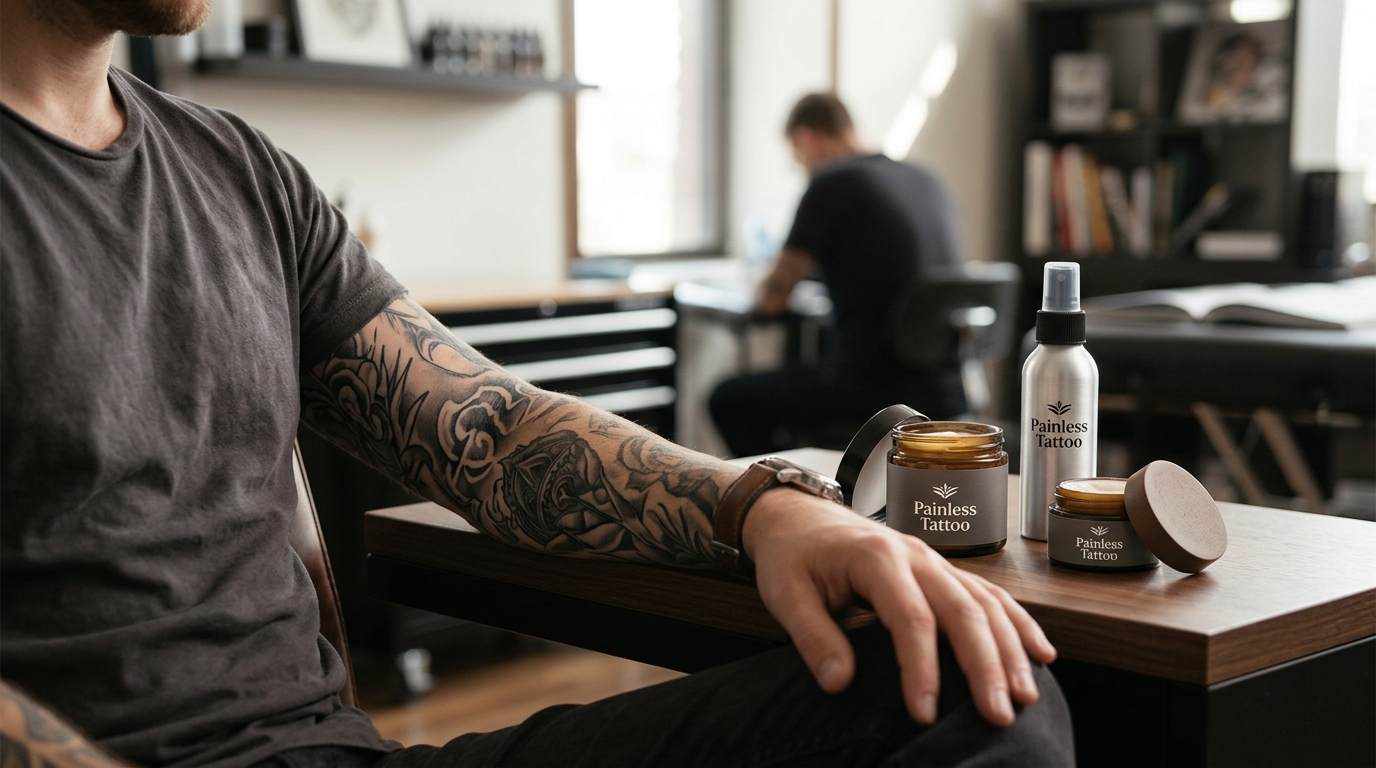
If you have ever wondered which tattoo numbing solution actually makes a difference during a session, you are not alone. The topical numbing category has grown quickly, and choosing between a cream, a spray, and a triple-compound formula can feel overwhelming. This guide breaks down the three main formats available from Painless Tattoo's product line, explains how topical anesthetics work at a high level, and maps each option to the stage of the tattoo journey where it fits best. The goal is to help you walk into your next appointment informed, not confused.
How Topical Numbing Works in the Tattoo Context
A topical anesthetic is a substance applied to the surface of the skin that temporarily reduces sensation in a localized area. In the tattoo world, these products are designed to block or dampen the nerve signals responsible for transmitting pain from the needle to the brain. According to Tattooing 101, numbing creams and sprays are applied to the skin specifically to reduce pain during the tattooing process, helping clients sit longer with less flinching.
Lidocaine is the most common active ingredient in over-the-counter tattoo numbing products. It is a local anesthetic that works by blocking sodium channels in nerve cells, preventing pain signals from traveling to the brain. Most OTC formulas contain lidocaine in concentrations up to 5%, which is the maximum available without a prescription.
Three Types of Numbing Agents You Should Know
Not every numbing ingredient works the same way. Understanding the categories helps you evaluate any product label.
Nerve Deadeners
Lidocaine is the primary example. It temporarily stops nerves from firing pain signals altogether, making it the frontline ingredient in most tattoo numbing creams.
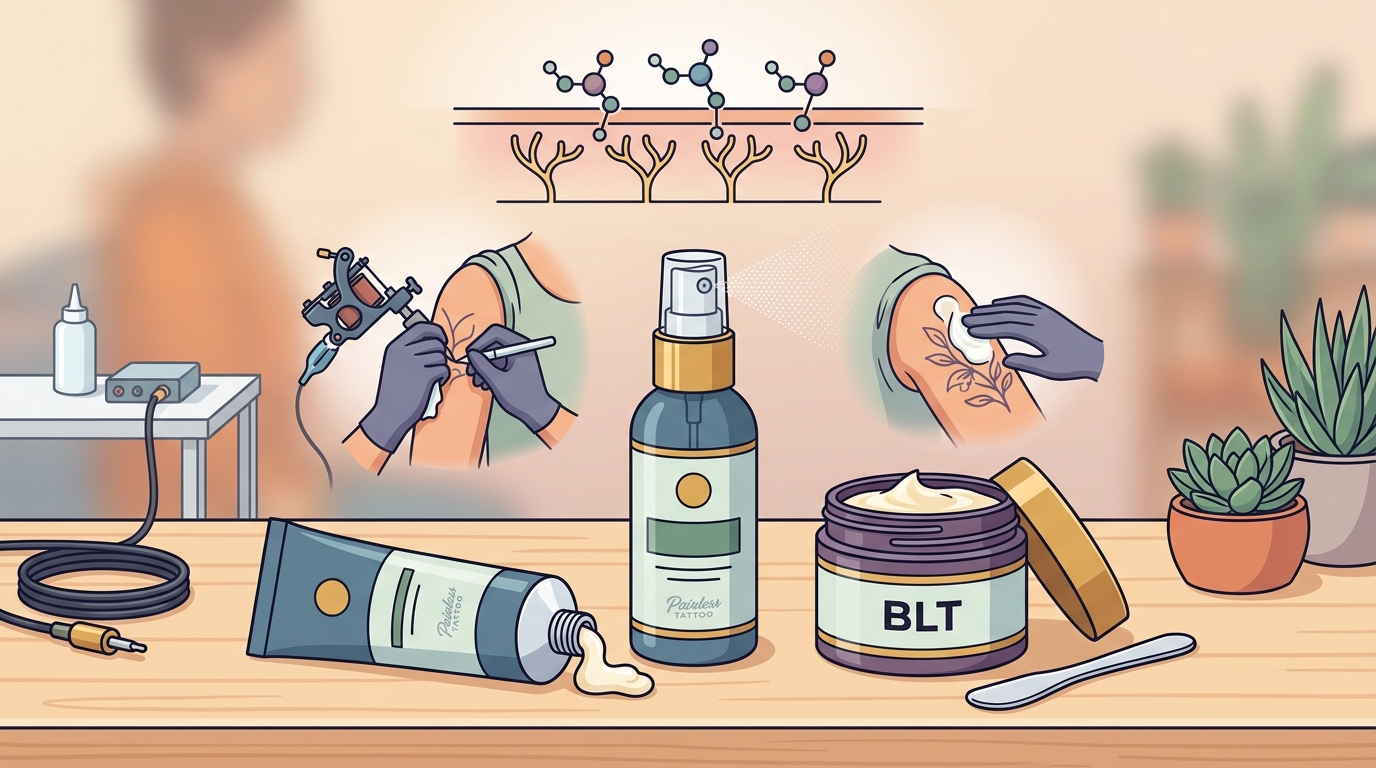
Nerve Blockers
Tetracaine and benzocaine fall into this group. A nerve blocker is an anesthetic agent that does not fully prevent pain signals but softens their intensity before they reach the brain. As noted by Painful Pleasures, these ingredients turn sharp pain into milder discomfort.
Vasoconstrictors
Epinephrine is the most common vasoconstrictor found in tattoo numbing products. A vasoconstrictor is a compound that tightens blood vessels, which can reduce bleeding and swelling while slowing the absorption of other anesthetics so they last longer. Products that combine all three agent types tend to offer the broadest coverage.
Numbing Cream: Your Pre-Session Foundation
Painless Tattoo Numbing Cream is designed for application before your tattoo session begins. It is applied to intact skin, typically covered with a barrier, and left to absorb before the artist starts working. The cream format is the most popular entry point for people who want to sit more comfortably, especially during longer sessions or on sensitive body areas like the ribs, elbows, or neck.
One practical note: always discuss numbing cream use with your tattoo artist before your appointment. Some artists have preferences about which products work best with their technique, and your artist can offer guidance tailored to your skin and session plan.
Numbing Spray: Mid-Session Reinforcement
Painless Tattoo Numbing Spray serves a different role. While creams are a pre-session tool, sprays are often used during the session once the skin has been opened by the needle. The spray format allows for quick, hands-free application without the artist needing to pause for long. Its formulation includes skin conditioners and compounds designed to improve absorption on worked skin.
Many clients find that pairing cream before the session with spray during the session gives them the most comfortable experience from start to finish. If you are unsure whether a spray fits your situation, ask your artist for their recommendation.
BLT Triple Numb: The Multi-Agent Approach
The BLT Triple Numb formula takes a different approach by combining multiple anesthetic agents. "BLT" in the numbing world refers to the combination of benzocaine, lidocaine, and tetracaine. This gives the product coverage across nerve deadening, nerve blocking, and broader desensitization. It is particularly popular among tattoo professionals who want to offer numbing as a standard option for clients, especially during longer sessions or for clients with lower pain tolerance.
Side-by-Side Comparison Table
| Feature | Numbing Cream | Numbing Spray | BLT Triple Numb |
|---|---|---|---|
| Session Stage | Pre-session (intact skin) | During session (open skin) | Pre-session (intact skin) |
| Format | Thick cream in sachet | Liquid spray bottle | Cream in sachet |
| Primary Agent | Lidocaine | Lidocaine-based blend | Benzocaine + Lidocaine + Tetracaine |
| Application Method | Apply to skin, cover with barrier | Spray directly onto worked area | Apply to skin, cover with barrier |
| Best For | Individual clients prepping at home | Mid-session comfort boost | Artists offering numbing to clients |
| Wholesale Available | Yes (25-pack) | Yes (15-pack) | Yes (25-pack) |
Why Aftercare Matters Just as Much as Numbing
Numbing gets you through the session, but aftercare is what supports your skin in the days and weeks that follow. Painless Tattoo's Alpha aftercare line includes three formats, each with a different texture and use case:
- Alpha Tattoo Whip features a light, whipped texture made from organic ingredients like aloe vera, MCT oil, and sweet almond oil. It is vegan and designed for gentle application on freshly tattooed skin.
- Alpha Tattoo Butter is a richer, deeper-moisturizing option crafted for intensive nourishment during the healing window and long-term vibrancy of older tattoos.
- Alpha Tattoo Oil represents an entirely new category of tattoo aftercare, offering a lightweight alternative for ongoing skin hydration.
For a detailed breakdown of what to do after your session, read the Ultimate Tattoo Aftercare Guide on the Painless Tattoo blog.
Key Takeaways
- Topical numbing products for tattoos generally rely on lidocaine, tetracaine, benzocaine, or a combination of all three.
- Numbing cream is a pre-session product applied to intact skin before your appointment begins.
- Numbing spray is a mid-session tool used on skin that has already been worked by the needle.
- BLT formulas combine three agent types (nerve deadener, nerve blocker, and vasoconstrictor traits) for broader coverage.
- Always talk to your tattoo artist before using any numbing product to ensure compatibility with their workflow.
- Aftercare is just as important as numbing; products like Alpha Whip, Butter, and Oil support different stages of healing.
- Individual results vary based on body placement, session length, skin type, and product preparation.
Frequently Asked Questions
What is the most common active ingredient in tattoo numbing creams?
Lidocaine is the most prevalent active ingredient. Over-the-counter products typically contain concentrations up to 5%. Some formulas also include tetracaine or benzocaine for additional nerve-blocking action.
Can I use numbing spray before my tattoo starts?
Most numbing sprays are formulated for use on skin that has already been opened during the tattooing process. For pre-session numbing on intact skin, a cream or BLT product is generally the better fit. Check the product directions or ask your artist.
What does BLT stand for in tattoo numbing?
BLT stands for benzocaine, lidocaine, and tetracaine. These three agents cover different mechanisms of pain reduction, which is why BLT formulas are popular among professionals looking for broad-spectrum numbing.
Will numbing cream affect my tattoo ink or skin texture?
When used as directed, quality numbing creams should not alter skin texture in a way that impacts the tattoo. Many Painless Tattoo customers report that their artists noticed no changes to skin quality during sessions. That said, always follow the product directions and consult your artist.
How do I decide between cream, spray, and BLT?
It depends on when you need relief. Cream is for before the session, spray is for during, and BLT is a multi-agent pre-session option. Some people use cream or BLT before the session and spray during for layered comfort.
Should I talk to my tattoo artist before using numbing products?
Yes. Your artist knows your skin, the placement, and the session plan. They can recommend which format fits best and ensure the product does not interfere with their technique. If you have sensitive skin or allergies, consider consulting a licensed professional as well.
Are Painless Tattoo aftercare products vegan?
Alpha Tattoo Whip and Alpha Tattoo Butter are made from organic, plant-based ingredients. Alpha Tattoo Oil contains alligator fat, so it is not vegan. Check individual product pages for full ingredient lists.
Find the Right Numbing Solution for Your Next Session
Ready to explore your options? Browse the full Painless Tattoo product lineup to find the numbing format and aftercare products that match your session plan. Whether you are a first-timer or a seasoned collector, the right preparation makes every appointment more comfortable.