
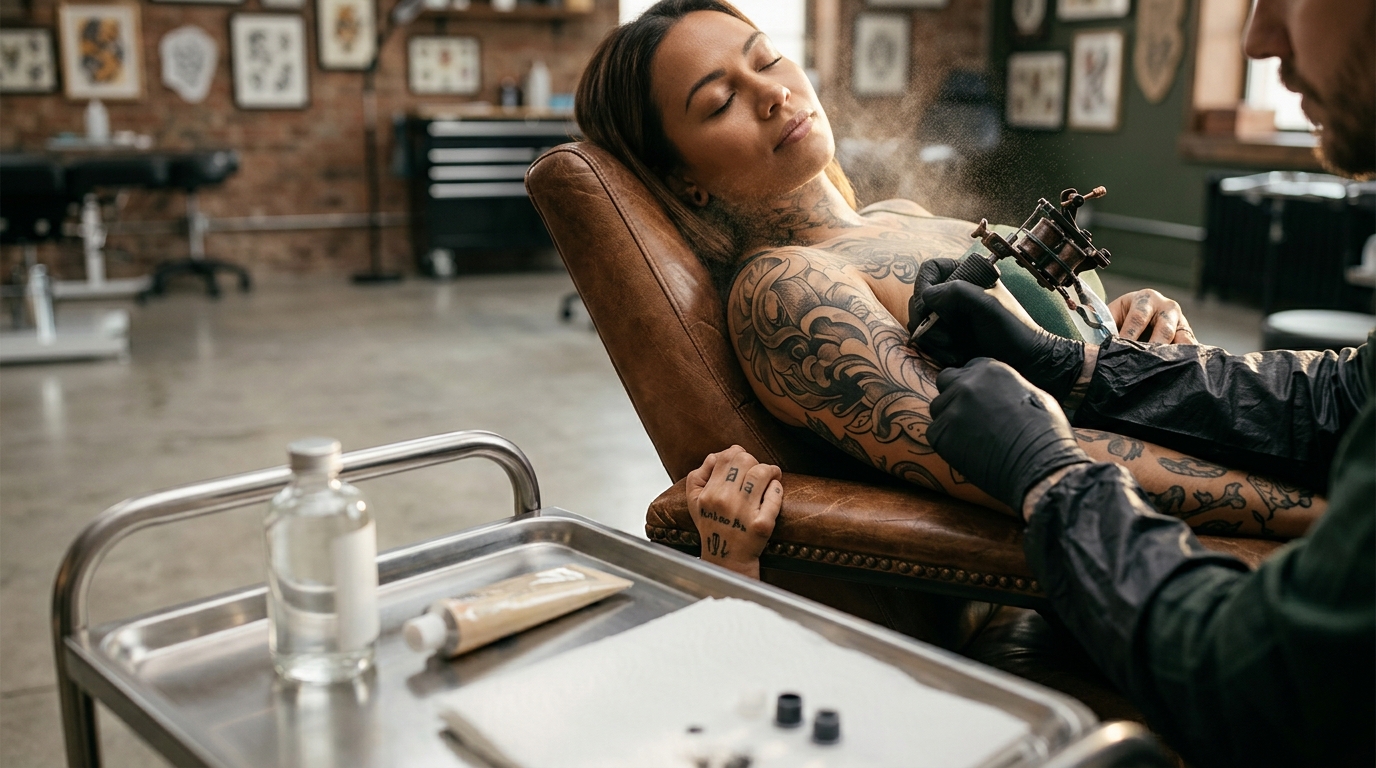
Long tattoo sessions test your body and your mindset. Whether you are sitting for a half-sleeve or a detailed back piece, multi-hour appointments bring a unique set of challenges that shorter sessions simply do not. The good news is that preparation, smart in-chair strategies, and the right products can make a real difference in how you feel from the first outline to the final detail. In this guide we break down the factors that influence tattoo discomfort, walk through practical steps you can take before, during, and after your session, and show you where Painless Tattoo products fit into each stage of the process.
Why Long Sessions Hurt More
Pain during tattooing is not static. Your body releases adrenaline and endorphins early in the session, which can make the first hour or two feel surprisingly manageable. According to Saniderm's pain resource, those natural pain relievers tend to start wearing off after three to four hours. That is exactly when longer sessions begin to feel significantly harder.
Tattoo pain type also shifts over time. Early line work often produces a sharp, scratching sensation, while prolonged shading creates a duller, burning feeling that builds as the skin becomes increasingly worked. Styles with bold lines and heavy color saturation demand more needle passes, adding to the cumulative effect.
Body Placement and Pain Levels
Placement is one of the biggest variables in how a long session feels. A body-placement pain comparison can help you plan ahead with your artist.
| Body Area | Relative Pain Level | Why It Hurts More or Less |
|---|---|---|
| Outer arm / shoulder | Low to moderate | More muscle and fat cushion the area |
| Outer thigh | Low to moderate | Thick skin with ample padding |
| Inner bicep | Moderate to high | Thinner skin, more nerve endings |
| Ribs | High | Thin skin directly over bone |
| Elbows and knees | High | Bony with minimal fat |
| Spine | Very high | Dense nerve endings along the vertebrae |
| Hands and feet | Very high | Thin skin, bone, and many nerve endings |
If you are booking a multi-hour session, talking to your artist about placement trade-offs is one of the most practical steps you can take.
Preparing Your Body Before the Appointment
Hydration and Nutrition
Hydration is the practice of maintaining adequate water intake so your skin stays elastic, resilient, and ready to accept ink. Start increasing your water intake at least 48 hours before your session. Well-hydrated skin tends to take ink more smoothly, which can reduce the number of passes your artist needs to make.
Eat a substantial meal one to two hours before you sit down. Bring high-glucose snacks like fruit or juice to keep blood sugar stable throughout the day. Low blood sugar is a common contributor to dizziness and heightened pain sensitivity during long sessions.
Sleep and Timing
A full night of rest directly influences your pain tolerance. Schedule your appointment for a time of day when your energy is naturally highest, and avoid alcohol for at least 48 hours beforehand, as it can thin the blood and increase skin sensitivity.
What to Wear
Choose loose, comfortable clothing that gives your artist easy access to the tattoo area. Bring a light jacket or blanket because studios can run cool, and being cold adds unnecessary tension to your muscles.
In-Chair Strategies for Staying Comfortable
Breathing and Distraction
Distraction is a technique where you redirect your attention away from the pain stimulus, and it is one of the simplest tools available. Listening to music, watching a show on your phone, or having a conversation with your artist can all help activate your parasympathetic nervous system and reduce perceived discomfort.
Deep, slow breathing keeps your muscles relaxed and lowers anxiety, which in turn lowers the intensity of the sensation you feel. Meditation practitioners often report being able to sit longer in high-pain areas because they have trained themselves to calm their nervous system on demand.
Strategic Breaks
Breaks matter, but their timing is important. Most artists suggest pausing every two to three hours to stretch, hydrate, and snack. However, too many breaks or overly long pauses can work against you. Once your body adapts to the pain, stopping and restarting can make the discomfort feel sharper. Keep breaks short and purposeful.
Communicate with Your Artist
Your tattoo artist is your partner in this process. Let them know when you need to adjust position, take a breath, or pause. A skilled artist will pace the session, shift between areas of varying sensitivity, and check in regularly.
Why People Reach for Topical Numbing Options
Topical numbing cream is a product containing a local anesthetic, commonly lidocaine, that is applied to the skin before or during a tattoo session to temporarily reduce sensation. Many people choose a numbing option specifically for long sessions or when getting tattooed in high-pain areas like ribs, elbows, or the spine.
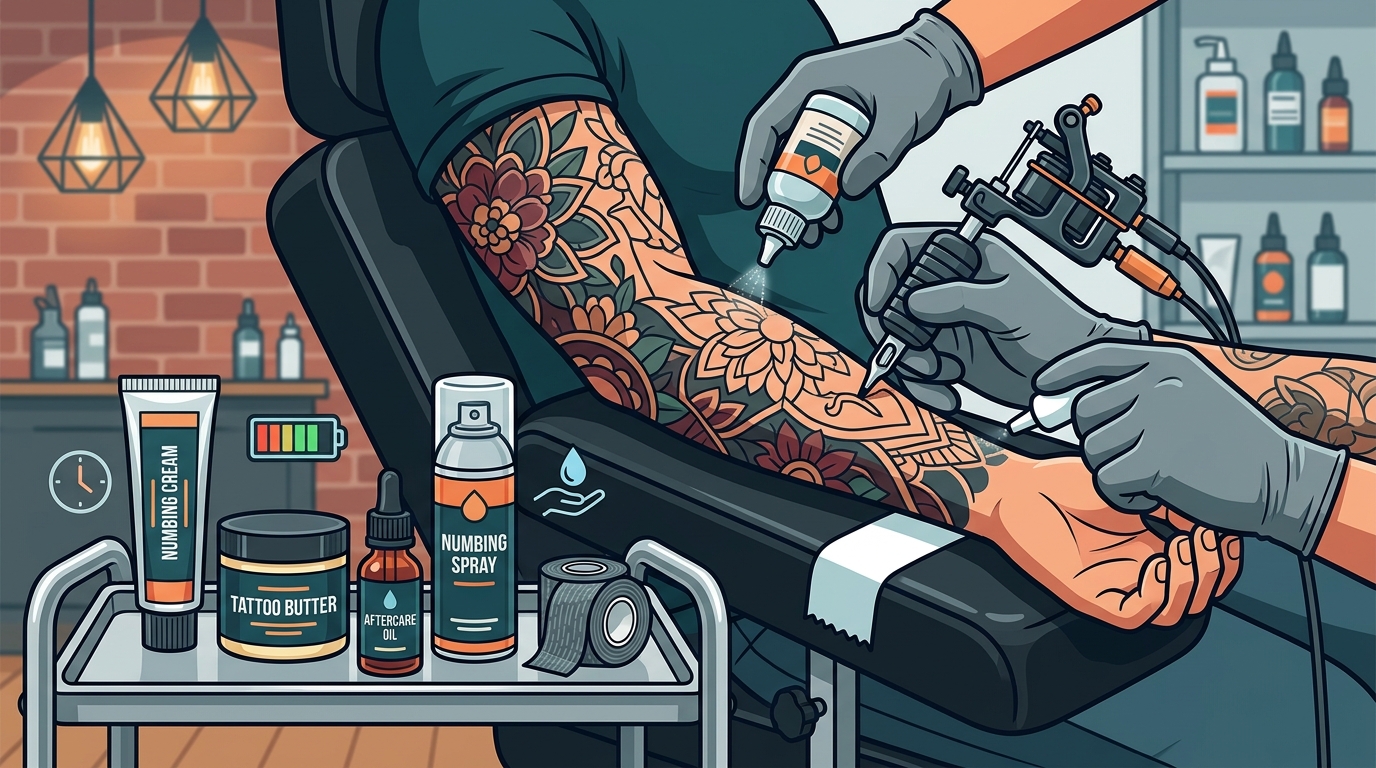
Painless Tattoo Numbing Cream is designed to be applied before your appointment so you can start the session feeling more comfortable. For sessions that extend well beyond the initial application window, Painless Tattoo Numbing Spray is a mid-session option your artist can use to help extend comfort as the work continues. Always discuss numbing products with your tattoo artist beforehand so they can plan accordingly.
If you are curious about the strongest available formulas, the BLT Triple Numb line is built for professionals and is increasingly popular with artists who offer numbing as a client option.
Aftercare: Supporting Your Skin After a Long Session
A longer session means more skin trauma, which makes proper aftercare even more important. Pain does not stop when you leave the chair. Soreness, swelling, and sensitivity can persist for days, and how you care for your skin during that window directly affects comfort and the final appearance of your tattoo.
Painless Tattoo offers three aftercare products, each with a distinct texture and use case:
| Product | Texture | Best For |
|---|---|---|
| Alpha Tattoo Butter | Soft, light butter | Daily use during healing; gentle on freshly tattooed skin |
| Alpha Tattoo Whip | Airy, whipped consistency | Lightweight hydration without a heavy feel; vegan formula |
| Alpha Tattoo Oil | Smooth oil | Long-term maintenance and reviving older tattoos |
Both the Alpha Whip and Alpha Butter feature vegan formulations, which is worth noting if that aligns with your preferences. The Alpha Oil includes alligator fat, an ingredient with a long history of use in skin care that is generating renewed interest for its moisturizing properties.
Your tattoo artist will give you specific aftercare guidance. Follow it closely, and use an aftercare product that keeps the area hydrated without over-moisturizing.
Key Takeaways
- Your body's natural endorphins start to fade after three to four hours, making preparation essential for long sessions.
- Body placement is one of the largest variables in pain intensity. Discuss it with your artist early.
- Hydrate heavily for 48 hours before your appointment and bring snacks to maintain blood sugar.
- Use distraction, controlled breathing, and short strategic breaks to manage discomfort in the chair.
- Topical numbing products like Painless Tattoo Numbing Cream are a popular pre-session option. Talk to your artist first.
- Aftercare matters even more after long sessions. Match the product to your stage: Butter or Whip for healing, Oil for maintenance.
- Communication with your tattoo artist is the single most underrated pain-management tool.
Frequently Asked Questions
How long is considered a "long" tattoo session?
Most artists define a long session as anything over three hours. Large-scale work like sleeves, back pieces, or detailed leg work often requires sessions of four to eight hours, sometimes split across multiple sittings.
Does tattoo pain get worse the longer you sit?
Generally, yes. Your body's endorphin response weakens after a few hours, and cumulative skin irritation causes the burning or stinging sensation to intensify over time.
Can I use numbing cream for a long tattoo session?
Many people do. A topical numbing cream is applied before the session, and a numbing spray can sometimes be used mid-session by your artist. Always confirm with your artist before using any numbing product.
What should I eat before a long tattoo appointment?
A balanced, substantial meal one to two hours beforehand works well. Bring portable high-sugar snacks like fruit to keep blood sugar steady throughout the session.
Are breaks during a tattoo session a good idea?
Yes, but keep them short and purposeful. Stretching, hydrating, and snacking during a quick pause helps. Excessively long or frequent breaks can actually make the pain feel worse when you restart.
What is the most painful body part to get tattooed?
Areas with thin skin close to bone, like the ribs, spine, elbows, knees, hands, and feet, are widely reported as the most painful. Outer arms and thighs tend to be more manageable.
How do I take care of my tattoo after a long session?
Follow your artist's instructions first. Keeping the area clean and lightly moisturized with a dedicated aftercare product supports the skin through healing. The Alpha Tattoo Butter is designed for daily use on fresh ink.
Should I take painkillers before getting tattooed?
This is a question for your doctor or your tattoo artist. Some over-the-counter options can thin the blood or affect the healing process, so professional guidance is important.
Ready to Prepare for Your Next Session?
Browse the full Painless Tattoo product lineup to find the right numbing and aftercare products for every stage of your tattoo journey.