
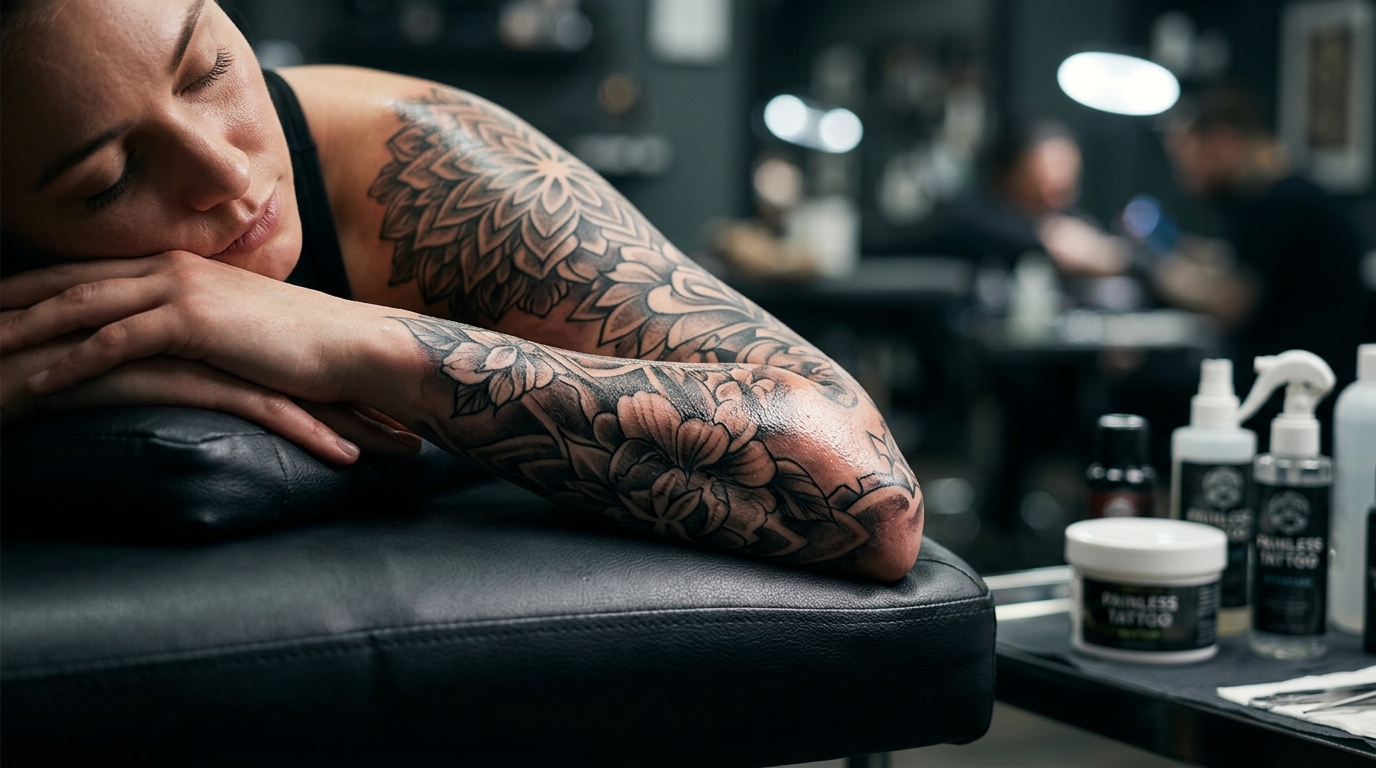
Long tattoo sessions are a marathon, not a sprint. Whether you are sitting for a half-sleeve, a back piece, or a detailed leg project, the hours add up and so does the discomfort. The good news is that pain management during a tattoo session is not a matter of luck or willpower alone. With the right preparation, in-session tools, and aftercare routine, you can turn an all-day appointment into something genuinely manageable. This guide walks you through every stage of a long session, from the night before to the days that follow, so you can focus on the art instead of the ache.
Why Long Sessions Hurt More Than Short Ones
Tattoo pain is not a flat line. During the first hour your body releases adrenaline, which naturally dulls discomfort. As that adrenaline fades and inflammation builds over extended periods, the final hours become noticeably harder to sit through.
Skin fatigue is the cumulative irritation that develops when the same area is worked on for hours. It compounds ordinary needle sensation into something far more intense. Body position also matters: holding one pose for three or four hours creates stiffness that amplifies every pass of the needle.
Understanding these factors is the first step toward managing them. When you know the pain will ramp up, you can plan around it instead of being caught off guard.
Pre-Session Preparation Checklist
What you do in the 24 hours before your appointment has a direct impact on how your body handles discomfort. Proper preparation sets the stage for a smoother session and better results for your artist.
Sleep, Hydration, and Nutrition
Studies have shown that lack of sleep increases your sensitivity to pain and can cause inflammation before you even sit down. Aim for seven to nine hours the night before.
Drink plenty of water in the days leading up to your session. Well-hydrated skin is more elastic and easier for your artist to work with. Eat a balanced meal one to two hours before your appointment to stabilize blood sugar and prevent dizziness.
What to Pack
- High-protein snacks and a water bottle
- Your preferred Painless Tattoo Numbing Cream
- A bottle of Painless Tattoo Numbing Spray for mid-session use
- Headphones, a tablet, or anything that helps you relax
- Loose, breathable clothing that exposes the tattoo area
What to Avoid
Skip alcohol for at least 48 hours before your session. Alcohol thins the blood and increases bleeding, which makes it harder for your artist to see their work. Similarly, avoid blood-thinning medications unless directed by your doctor.
Topical Numbing Options for Every Stage
Topical numbing is one of the most common reasons people explore products before a long tattoo session. A topical numbing agent is a cream, gel, or spray that contains a local anesthetic like lidocaine, designed to temporarily reduce sensation in the applied area.
Painless Tattoo offers products mapped to each phase of your session:
- Pre-session: Painless Tattoo Numbing Cream is designed for use before the tattooing process begins. Each single-use packet covers approximately a 4"x4" surface.
- Mid-session: Painless Tattoo Numbing Spray is the companion product used during the session on areas the artist has already worked. It is designed so it does not affect the tattooing process.
- Combo approach: The Painless Tattoo Cream Combo bundles both products for collectors who know they are sitting for a longer appointment.
Always talk to your tattoo artist before using any numbing product. Your artist can advise on timing and compatibility with their workflow. If you have sensitive skin or allergies, consult a licensed professional before trying a new topical product.
In-Chair Strategies: Breathing, Breaks, and Communication
Products are only one piece of the puzzle. What you do while sitting in the chair matters just as much.
Breathing Techniques
Controlled breathing is a simple, no-cost tool. Slow, deep breaths in through the nose and out through the mouth help keep your muscles relaxed and reduce the tension that makes pain feel worse. Some clients describe the rhythmic breathing as almost meditative once they settle into it.
Strategic Breaks
Short breaks give you a chance to stretch, hydrate, and reset mentally. That said, keep them brief. Overly long or frequent breaks can allow the area to become more sensitive, sometimes making the return to the needle feel worse than powering through.
Communicate with Your Artist
Your tattoo artist wants you comfortable because a relaxed client is a still client, and a still client is a better canvas. Be open about pain spikes, positioning discomfort, and when you need a moment. Good communication leads to better art.
Aftercare Product Comparison: Whip vs. Butter vs. Oil
Once the session ends, aftercare begins. Painless Tattoo's Alpha Aftercare line offers three distinct textures, each suited to different preferences and stages of healing. Aftercare is the routine you follow after a tattoo session to support skin recovery and preserve the appearance of your ink.
| Feature | Alpha Whip | Alpha Butter | Alpha Oil |
|---|---|---|---|
| Texture | Light, airy, whipped | Rich, creamy balm | Lightweight liquid oil |
| Key Ingredients | Aloe Vera, Organic Glycerin, Vitamin E, MCT Oil | Shea Butter, Mango Butter, Beeswax, Lavender Oil | Glycerin, Essential Fatty Acids (Oleic, Linoleic, Gamma-Linolenic) |
| Best For | People who prefer a gel-like feel; fresh ink hydration | Those who like a thicker barrier; daily moisturizing of healed tattoos | Fast-absorbing, no-residue option; designed around Advanced Growth Factor Technology |
| Multi-Use | Aftercare and daily moisturizer | Tattooing glide, aftercare, daily moisturizer | Aftercare and long-term skin conditioning |
| Made in USA | Yes | Yes | Yes |
All three are crafted from natural and organic ingredient blends. The choice often comes down to personal texture preference and your artist's recommendation. For a deeper breakdown, check out the Ultimate Tattoo Aftercare Guide on the Painless Tattoo blog.
Your Day-by-Day Aftercare Sequence
Your artist's instructions always take priority. The following is a general framework that aligns with common aftercare guidance:
Day of the Session
Your artist will cover the finished tattoo with a protective barrier. Leave it on for the time your artist recommends. Once removed, gently wash the area with lukewarm water and mild antibacterial soap, then let it air dry completely.
Days 1 Through 14
Apply a thin layer of your chosen Alpha Aftercare product after each wash. Keeping the tattoo hydrated supports the recovery process, but avoid over-moisturizing. Wear loose, breathable clothing and avoid submerging the tattoo in pools, hot tubs, or baths.
Week 3 and Beyond
Surface healing generally takes about two to four weeks, though deeper layers may continue recovering for several months. Once healed, protect your tattoo from UV exposure with broad-spectrum sunscreen to maintain vibrancy over the long term. Browse the full Alpha Aftercare collection to find the texture that works for you.
Key Takeaways
- Long tattoo sessions get harder as adrenaline fades and skin fatigue sets in. Planning ahead makes a real difference.
- Sleep, hydration, and a solid meal before your appointment directly affect your pain tolerance.
- Topical numbing products like Painless Tattoo Cream (pre-session) and Spray (mid-session) are designed for specific stages of the tattoo process.
- Breathing techniques, short breaks, and honest communication with your artist are free tools that improve every session.
- Aftercare is not optional. Choosing between Alpha Whip, Butter, or Oil comes down to texture preference and your artist's advice.
- Always consult your tattoo artist before using any numbing product, and see a licensed professional for any medical concerns.
Frequently Asked Questions
How long does a typical long tattoo session last?
Sessions of four to eight hours are common for large-scale work like sleeves, back pieces, or full leg projects. Your artist will usually schedule breaks and may split very large pieces across multiple appointments.
Does tattoo pain actually get worse as the session goes on?
Yes. Your body's initial adrenaline response wears off after the first hour or two, and accumulated skin irritation intensifies the sensation over time. This is why a pain management plan matters more for long sessions than short ones.
What is the difference between numbing cream and numbing spray?
Numbing cream is a topical product applied to intact skin before the session starts. Numbing spray is formulated for use during the session, typically on skin that has already been worked on by the artist. The two products serve different phases of the tattooing process.
Can I use numbing products without telling my artist?
You should always let your artist know. Some numbing products can affect skin texture, and your artist needs to adjust their approach accordingly. Painless Tattoo products are designed not to interfere with the tattooing process, but communication is still essential.
Which Painless Tattoo aftercare product should I use?
It depends on your preference. Alpha Whip offers a lightweight, gel-like feel. Alpha Butter provides a richer, creamier barrier. Alpha Oil absorbs quickly with no residue. Your artist may have a recommendation based on the type of work they have done.
How soon after my session should I start aftercare?
Follow your artist's specific timeline. Generally, once the protective barrier is removed and the area is gently washed, you can begin applying a thin layer of aftercare product. Consult the Painless Tattoo aftercare blog for more detail.
Is it normal for pain to spike after the numbing wears off?
Some people report that the contrast between a numbed state and full sensation feels more intense. This is one reason why having a mid-session option like the Painless Tattoo Spray available can help smooth that transition.
Should I take painkillers before my tattoo?
Talk to your doctor before taking any medication for tattoo pain. Some over-the-counter options like aspirin are blood thinners and can increase bleeding. Your medical provider can advise on what is safe for your situation.
Get Ready for Your Next Session
A long tattoo session does not have to be an endurance test. With the right prep, the right products, and open communication with your artist, you can sit longer, stay more comfortable, and walk away with better results. Explore the full Painless Tattoo product lineup to find what fits your next appointment, and always follow your artist's guidance for the best outcome.