

Managing Pain During a Long Tattoo Session: A Practical Guide
Long tattoo sessions are a rite of passage for anyone chasing a large, detailed piece. Whether you are sitting for a half-sleeve, a full back panel, or a dense thigh composition, sessions that stretch beyond three or four hours introduce a unique set of comfort challenges. The good news is that you do not have to white-knuckle your way through. With the right preparation, the right products at each stage, and a few in-chair techniques, you can stay comfortable and give your artist the calm, steady canvas they need to do their best work. This guide walks you through every phase of a long session.
Why Long Sessions Hurt More Than Short Ones
Tattoo pain is not a single sensation. During tattooing, needles puncture the skin at rates of 50 to 3,000 times per minute, depositing ink into the dermis, the deeper layer where nerve endings reside. A quick one-hour piece allows your body's natural adrenaline response to carry you through. A five-hour sitting is a different story.
Adrenaline is the body's short-term pain buffer, a surge of fight-or-flight chemicals that temporarily dulls discomfort. It fades as the session progresses, leaving you more sensitive to each pass of the needle. Body placement compounds the issue: bony areas like ribs, elbows, and spine carry less cushioning between skin and bone, making extended work in those zones especially demanding.
Fatigue is another factor. When your body tenses from accumulated discomfort, your skin becomes harder to work with and your artist may need to slow down. Staying relaxed is not just about comfort; it directly impacts the quality of the final piece.
Prepare Your Body Before You Arrive
Hydration and Nutrition
Start drinking plenty of water several days before your appointment. Well-hydrated skin is more resilient and accepts ink more smoothly. Eat a balanced meal one to two hours before your session to keep blood sugar stable and avoid dizziness or lightheadedness during the sitting.
Sleep and Rest
Sleep deprivation is a proven amplifier of pain sensitivity. A full night of rest improves your pain tolerance, stabilizes your mood, and helps you stay still for longer stretches. Aim for seven to nine hours the night before.
What to Avoid
Skip alcohol for at least 48 hours before your appointment. Alcohol thins the blood, increases bleeding, and can make the session harder for both you and your artist. Blood-thinning medications like aspirin or ibuprofen should also be discussed with your healthcare provider beforehand.
Pre-Session Numbing: Setting the Foundation
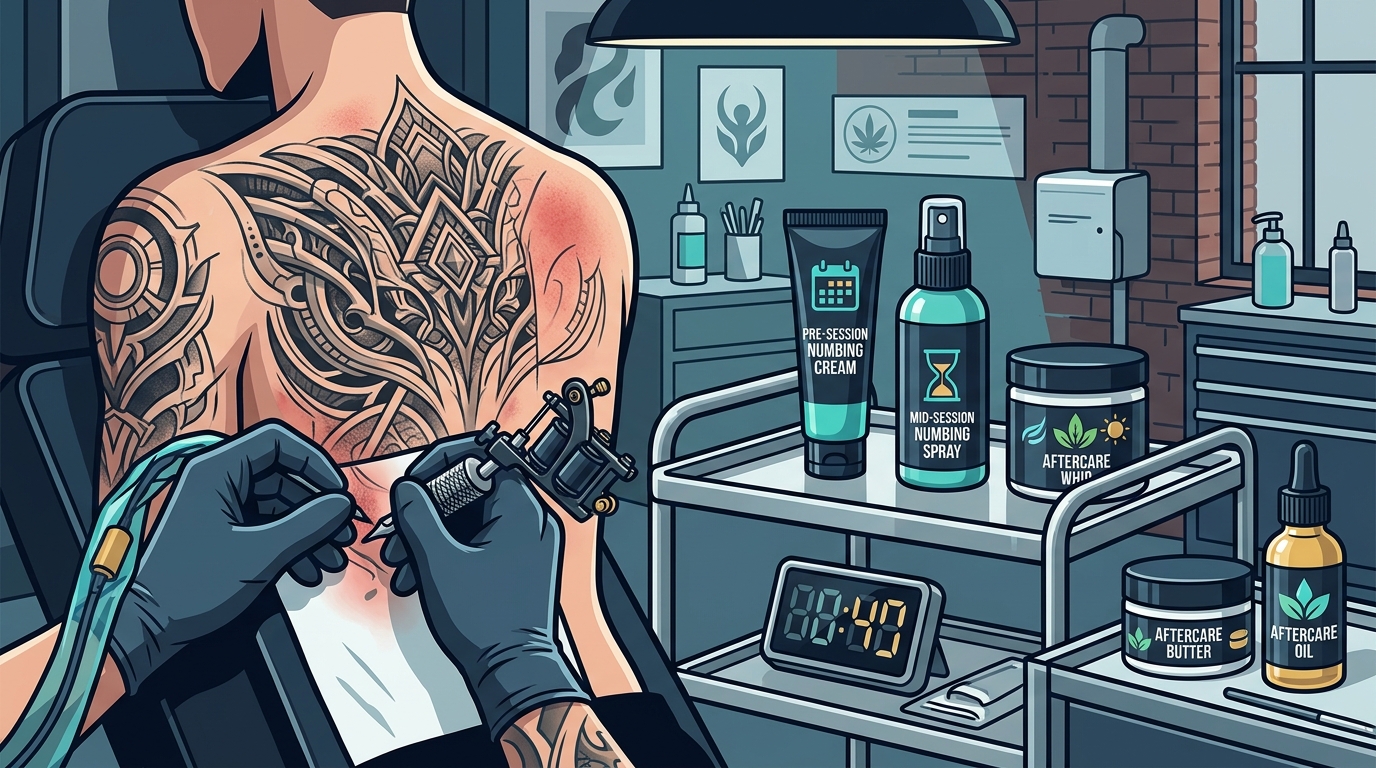
Topical numbing cream is a tool many tattoo enthusiasts reach for before long sessions. A topical numbing cream is a product containing a local anesthetic, commonly lidocaine, that temporarily reduces sensation in the applied area. It is designed for use on intact skin before your session begins.
Painless Tattoo Numbing Cream is formulated to block the receptors in your skin responsible for sending pain signals to your brain. Each single-use sachet is designed to cover approximately a 4-by-4-inch area. Always talk with your tattoo artist before using any numbing product; communication up front ensures the session goes smoothly for everyone.
For those planning sessions that span larger surface areas, multi-packs let you cover more ground. Check the full product collection to see which quantity fits your piece.
Mid-Session Strategies to Stay Comfortable
Breathing and Mental Techniques
Rhythmic breathing is one of the simplest and most effective in-chair tools. A common pattern is inhaling for four counts, holding for four, and exhaling for four. This shifts your focus away from discomfort and onto a controllable rhythm. Visualization and meditation can layer on top of this to further calm your nervous system.
Communication and Breaks
Your artist wants you comfortable. Be open about pain points, request short breaks when you need them, and speak up if your positioning becomes awkward. Keep breaks brief; long pauses can actually intensify discomfort when work resumes, as your body loses the adaptation it built up.
Mid-Session Numbing Spray
When the initial numbing effect of a pre-session cream begins to fade, a numbing spray is the companion product designed for use during the session. Painless Tattoo Numbing Spray is applied by the artist to the working area during a brief pause, providing renewed comfort so you can finish the piece. It is trusted in over 2,200 shops across North America.
Why Aftercare Matters for Pain and Healing
Pain management does not end when the machine stops. A tattoo is an open wound, and how you care for it in the hours and days that follow influences both your comfort and how the ink settles. The general healing timeline runs about two to four weeks on the surface and up to six months below the skin.
Proper aftercare supports the body's natural recovery process. Quality aftercare products keep the area hydrated, soothe irritation, and help protect against environmental exposure. Read the Ultimate Tattoo Aftercare Guide from Painless Tattoo for a detailed walkthrough, and always follow your artist's specific instructions.
Choosing the Right Product for Each Stage
Painless Tattoo offers products mapped to every phase of the tattoo journey. Here is a quick comparison of the aftercare line to help you decide which texture and formulation fits your preference.
| Product | Stage | Texture | Best For |
|---|---|---|---|
| Numbing Cream | Pre-session | Cream | Reducing sensation before the needle touches skin |
| Numbing Spray | During session | Liquid spray | Renewing comfort when cream effect fades mid-session |
| Alpha Whip | Aftercare | Light, whipped | Gentle application on fresh, tender skin; vegan-friendly |
| Alpha Butter | Aftercare | Rich butter | Deep moisturizing for those who prefer a traditional feel |
| Alpha Oil | Aftercare | Fast-absorbing oil | Lightweight hydration with Advanced Growth Factor Technology |
Alpha Whip is a light, whipped aftercare product that combines the soothing qualities of aloe vera gel with the nourishing benefits of organic butters. Alpha Butter is a rich, deep-moisturizing balm crafted from 100% organic ingredients including shea butter, mango butter, and avocado oil. Alpha Oil is a fast-absorbing aftercare oil that leverages proprietary Advanced Growth Factor Technology originally developed for skin recovery applications.
Key Takeaways
- Hydrate and eat well in the days leading up to a long session to boost your body's resilience.
- Get a full night of sleep; rest directly improves pain tolerance.
- Avoid alcohol and blood thinners before your appointment.
- Consider a topical numbing cream before the session and a numbing spray during the session to extend comfort.
- Use breathing techniques and communicate openly with your artist throughout.
- Start aftercare immediately; choose from Whip, Butter, or Oil based on your texture preference.
- Always follow your tattoo artist's guidance on both numbing products and aftercare routines.
Frequently Asked Questions
How long does a typical numbing cream last during a tattoo session?
Results vary by individual and body placement, but many people report two to four hours of reduced sensation when the product is used as directed. If you need extended coverage, a mid-session numbing spray can pick up where the cream leaves off.
Can I use numbing cream for any tattoo placement?
Topical numbing creams are designed for use on intact skin in most external body areas. However, sensitivity and effectiveness differ by location. Always consult your tattoo artist and read the product directions before applying to a new area.
Should I take breaks during a long tattoo session?
Short breaks to stretch, hydrate, and snack can help you reset. Keep them brief, though. Extended or very frequent pauses can actually make pain feel worse when work resumes, because your body loses the adaptation it built during continuous tattooing.
What is the difference between Alpha Whip, Alpha Butter, and Alpha Oil?
All three are aftercare products, but they differ in texture and application feel. Alpha Whip has a light, airy consistency ideal for sensitive fresh ink. Alpha Butter offers a richer, more traditional balm experience. Alpha Oil absorbs quickly and feels lightweight on the skin. Your choice comes down to personal preference and how your skin responds.
Is it normal for pain to increase as a session goes on?
Yes. Your body's adrenaline response fades over time, and prolonged needle work in the same area increases soreness. This is one reason many people pair a pre-session numbing cream with a mid-session spray for longer sittings.
How soon after my session should I start aftercare?
Your artist will cover the tattoo with a protective barrier immediately after the session. Follow their instructions on when to remove it and when to begin applying aftercare products. Timing varies, so your artist's direction is the best guide.
Does tattoo placement affect how much pain I feel during a long session?
Absolutely. Areas with thinner skin and less muscle or fat padding, such as ribs, elbows, feet, and spine, tend to be more sensitive. Discuss placement with your artist during your consultation so you can plan accordingly.
Where can I learn more about Painless Tattoo aftercare products?
Visit the Painless Tattoo aftercare blog or browse the Next Gen Aftercare collection to explore product details, ingredients, and usage guidance.
Ready to Sit Longer and More Comfortably?
Preparation is the difference between surviving a long session and actually enjoying it. Explore the full lineup of Painless Tattoo products to find the right combination of numbing and aftercare tools for your next piece. Your artist, and your skin, will thank you.