
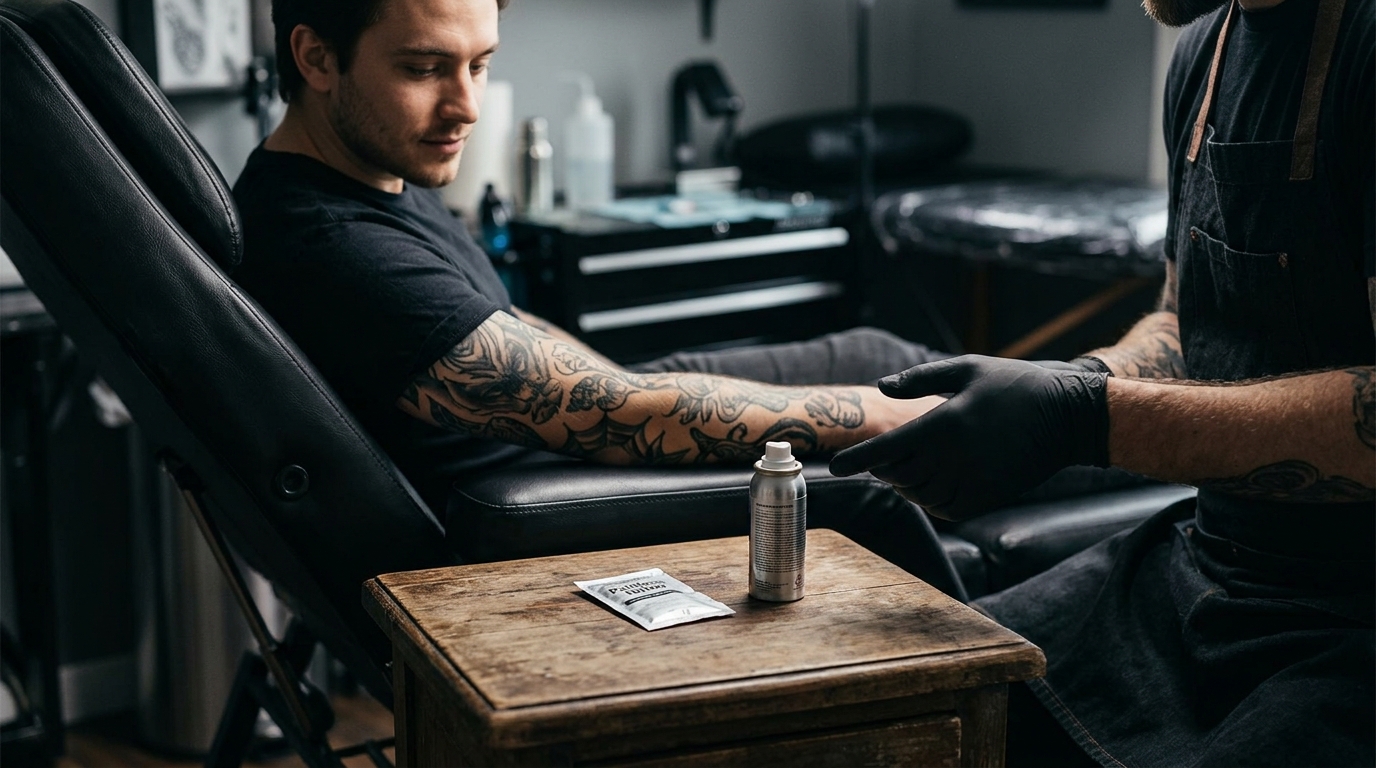
Tattoo Numbing Cream vs Numbing Spray: Which One for Long Sessions?
Planning a multi-hour tattoo session and wondering whether to reach for a numbing cream, a numbing spray, or both? You are not alone. As tattoo sessions grow longer and more detailed, the question of comfort management becomes practical, not optional. Understanding where each product fits in the tattoo journey helps you walk into the studio prepared. This guide breaks down how numbing cream and numbing spray differ in format, timing, and use case so you can talk to your artist with confidence and build a session plan that works for you.
What Numbing Cream and Numbing Spray Actually Are
Tattoo numbing cream is a topical anesthetic designed to be applied to intact skin before a session begins. It penetrates through the outer skin layer to temporarily block nerve signals in the area. Painless Tattoo Numbing Cream, for example, comes in single-use sachets that each cover approximately a 4"x4" surface area.
Tattoo numbing spray is a liquid topical anesthetic formulated to be applied to skin that is already being worked on during a session. Painless Tattoo Numbing Spray is designed for rapid onset mid-session, making it a practical companion product rather than a standalone replacement for cream.
Key Distinction: Timing
Cream is a pre-session product. Spray is a during-session product. That single difference shapes everything else about how and when you use each one.
How Topical Lidocaine Works in the Tattoo Context
Lidocaine is a local anesthetic, a synthetic compound classified as a tertiary amine that temporarily blocks voltage-gated sodium channels on nerve cell membranes. This prevents nerve endings from transmitting pain signals to the brain. In the tattoo context, both cream and spray formulations typically use lidocaine as a core active ingredient.
The delivery method matters as much as the ingredient itself. Creams use a thicker base designed to sit on intact skin long enough to absorb through the epidermis. Sprays use a lighter liquid vehicle that can interact with skin that has already been opened by the tattoo needle. Neither format changes the underlying mechanism; it is the same ingredient reaching the nerves through different pathways.
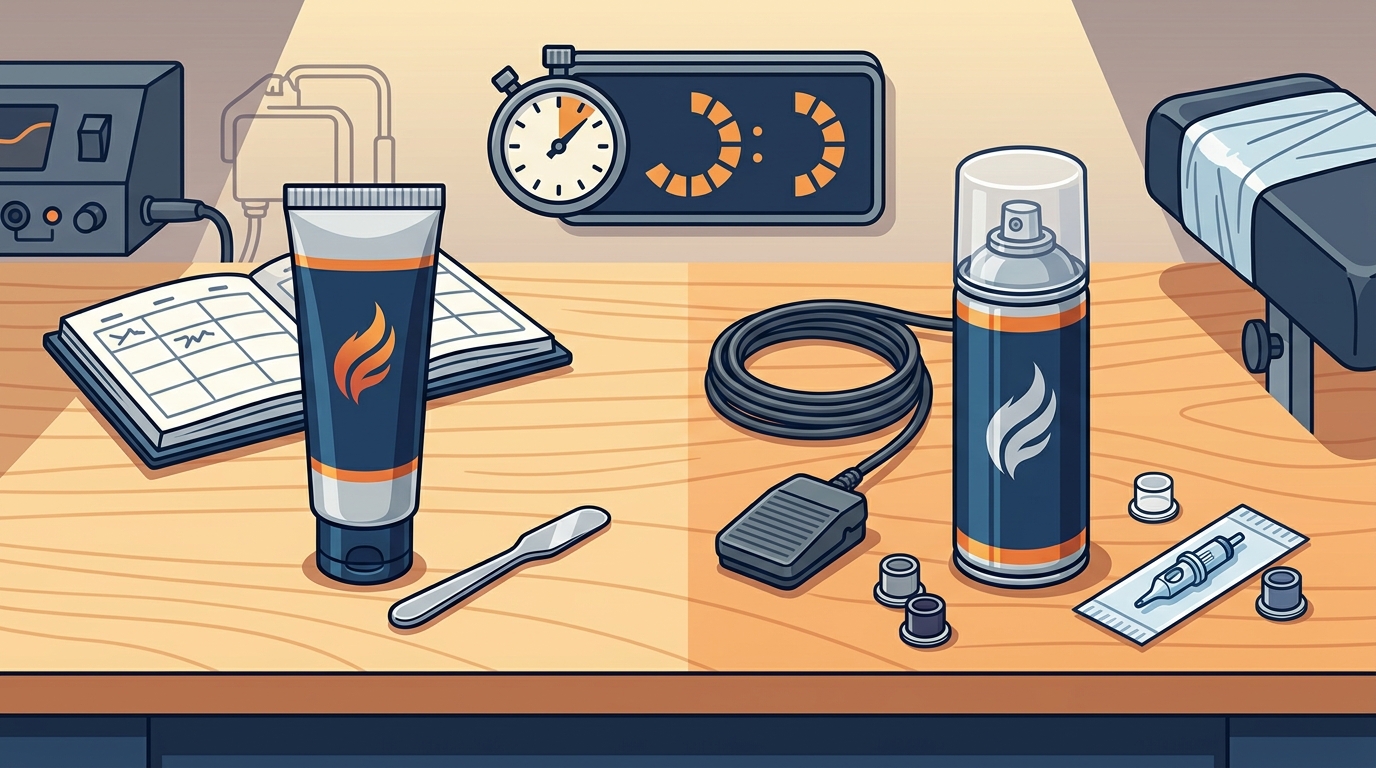
Cream vs Spray: Side-by-Side Comparison
| Feature | Numbing Cream | Numbing Spray |
|---|---|---|
| When to use | Pre-session (before skin is broken) | Mid-session (on broken skin) |
| Typical onset | 30-90 minutes | A few minutes |
| General duration | 1-3+ hours (varies by location and individual) | Shorter; may need reapplication |
| Application style | Spread on skin, often covered | Sprayed directly onto work area |
| Format | Thick cream in sachets or tubes | Liquid in spray bottle |
| Best for | Building a numbing foundation before the needle starts | Topping up comfort as the session progresses |
| Can be reapplied mid-session? | Not practical on broken skin | Yes, designed for it |
This table reflects general characteristics of cream and spray formats. Individual results depend on placement, skin type, and other personal factors. Always consult your tattoo artist before introducing any product to your session.
Why Long Sessions Change the Equation
Short tattoo appointments, think small wrist or ankle pieces, often fall within the comfort window that a single cream application can support. But when sessions stretch past two or three hours, the landscape shifts.
The Fade Factor
No single application of a topical numbing product lasts indefinitely. As your body metabolizes the anesthetic, sensation gradually returns. For longer sessions involving sleeves, back pieces, or rib work, that fade can arrive well before the artist finishes.
Where Spray Becomes Relevant
This is exactly the scenario numbing spray is designed for. Because it is formulated for application on skin that is already being tattooed, your artist can use it to extend comfort without pausing the session for extended prep. The Painless Tattoo Spray was developed alongside the cream specifically to fill that mid-session gap.
Using Both Products Together
For sessions expected to run longer than a couple of hours, many people find that pairing cream and spray covers more of the session than either product alone. The general approach looks like this:
- Pre-session: Numbing cream applied to intact skin ahead of the appointment, following the product directions and your artist's guidance.
- Session start: Artist removes any residual cream and begins working on numbed skin.
- Mid-session: As initial numbing fades, the artist can apply numbing spray to the work area to extend comfort.
The Painless Tattoo numbing collection includes both cream and spray options, along with the BLT Triple Numb for those who want a multi-ingredient approach. Your tattoo artist is the best person to help you decide which combination fits your session plan.
Transitioning from Numbing to Aftercare
Once the session wraps, the focus shifts from comfort to skin support. Painless Tattoo's Alpha Aftercare line is built for this next phase of the tattoo journey.
Choosing the Right Aftercare Format
Alpha Tattoo Oil is a lightweight, fast-absorbing option featuring glycerin and essential fatty acids. Alpha Tattoo Butter is a richer blend of shea butter, mango butter, and essential oils for those who prefer a thicker, more protective feel. Both are designed to support the skin during the days and weeks following a tattoo session. For a full breakdown of the aftercare sequence, check the Ultimate Tattoo Aftercare Guide.
Key Takeaways
- Numbing cream is a pre-session product applied to intact skin; numbing spray is a mid-session product for skin that is already being worked on.
- Cream generally offers a longer initial numbing window, while spray offers faster onset and easy reapplication.
- For sessions expected to last more than two to three hours, using both cream and spray can cover more of the appointment.
- Lidocaine is the core active ingredient in most topical numbing products and works by blocking nerve signal transmission.
- Always talk to your tattoo artist before using any numbing product; they can help you plan timing and product selection.
- Aftercare starts the moment the session ends. Products like Alpha Tattoo Oil and Alpha Tattoo Butter support the next phase of the tattoo journey.
- Individual results vary based on placement, skin type, and personal sensitivity. Set realistic expectations.
Frequently Asked Questions
Can I use numbing cream and spray in the same session?
Yes. Many people use cream before the session and spray during the session. They are designed for different stages of the tattoo process. Talk to your artist about timing and product selection.
Does numbing spray work on unbroken skin?
Numbing sprays are generally formulated for application on skin that has already been opened. On intact skin, a cream format is typically more appropriate because it is designed to absorb through the full epidermis.
How long does numbing cream typically last?
Duration varies by individual, placement, and product. In general, a well-applied numbing cream may support comfort for one to three hours or more. The Painless Tattoo Numbing Cream sachet covers approximately a 4"x4" area per application.
Will numbing products affect my tattoo's appearance?
When used and removed according to product directions and your artist's guidance, quality numbing products should not interfere with ink retention. The key variables in tattoo quality are artist technique, ink quality, and proper aftercare.
Should I talk to my tattoo artist before using numbing products?
Absolutely. Your artist may have preferences about which products they are comfortable working with, timing of application, and how to remove the product before they begin. Open communication leads to better results.
What is the difference between lidocaine cream and a BLT formula?
A BLT (benzocaine, lidocaine, tetracaine) formula combines multiple topical anesthetic ingredients. Painless Tattoo offers a BLT Triple Numb option for those interested in a multi-ingredient approach. Ask your artist which format suits your session.
Is aftercare different if I use numbing products?
The core aftercare process stays the same regardless of whether you used numbing products. Follow your artist's aftercare instructions and consider a dedicated aftercare product like those in the Painless Tattoo Alpha line.
Ready to Plan Your Next Session?
Browse the full Painless Tattoo numbing and aftercare collection to find the right products for your tattoo journey. Whether you need cream, spray, or both, building a plan with your artist is the best first step toward a more comfortable session.