

If you are booking a tattoo session that runs three hours or longer, choosing the right numbing product matters. Numbing cream and numbing spray are designed for different stages of the tattoo process, and understanding when each one fits can make a real difference in your comfort level. In this guide, we break down how cream and spray compare in terms of application timing, depth of effect, and how they work together during extended sessions. Whether you are a first-timer or adding to a full sleeve, knowing which product to reach for (and when) keeps you prepared from start to finish.
What Is Tattoo Numbing Cream?
Tattoo numbing cream is a topical anesthetic applied to intact, unbroken skin before a tattoo session begins. It typically contains lidocaine as its primary active ingredient. Lidocaine is a local anesthetic that works by blocking nerve signals in the area where it is applied, temporarily reducing sensation.
Creams are thicker in consistency and are designed to be applied well in advance of the session. The application method, which involves covering the area to create an occlusive environment, allows the active ingredients to absorb more deeply into the skin layers. This is what makes cream the go-to choice for pre-session preparation.
The Painless Tattoo Numbing Cream is formulated for this exact use case. It is applied before your appointment and is designed to help you sit more comfortably, especially during longer pieces.
What Is Tattoo Numbing Spray?
Tattoo numbing spray is a liquid topical anesthetic designed for use on broken skin during a tattoo session. Unlike cream, spray is not meant for pre-session application on intact skin. Its liquid format absorbs rapidly once the skin barrier has been opened by the tattoo needle.
Sprays commonly contain ingredients like lidocaine, tetracaine, or benzocaine. Because they are applied in a thin layer, they work quickly but are best understood as a mid-session tool rather than a standalone numbing solution. The Painless Tattoo Numbing Spray is designed to be used by your artist during the session when the initial cream begins to wear off.
Why Spray Alone Is Not Enough for Pre-Session
On unbroken skin, a spray delivers a thin liquid layer that evaporates quickly. This means the active ingredient has limited time to absorb and typically reaches only the superficial layer of the skin. For the deeper numbing needed before tattooing begins, cream is the more appropriate format.
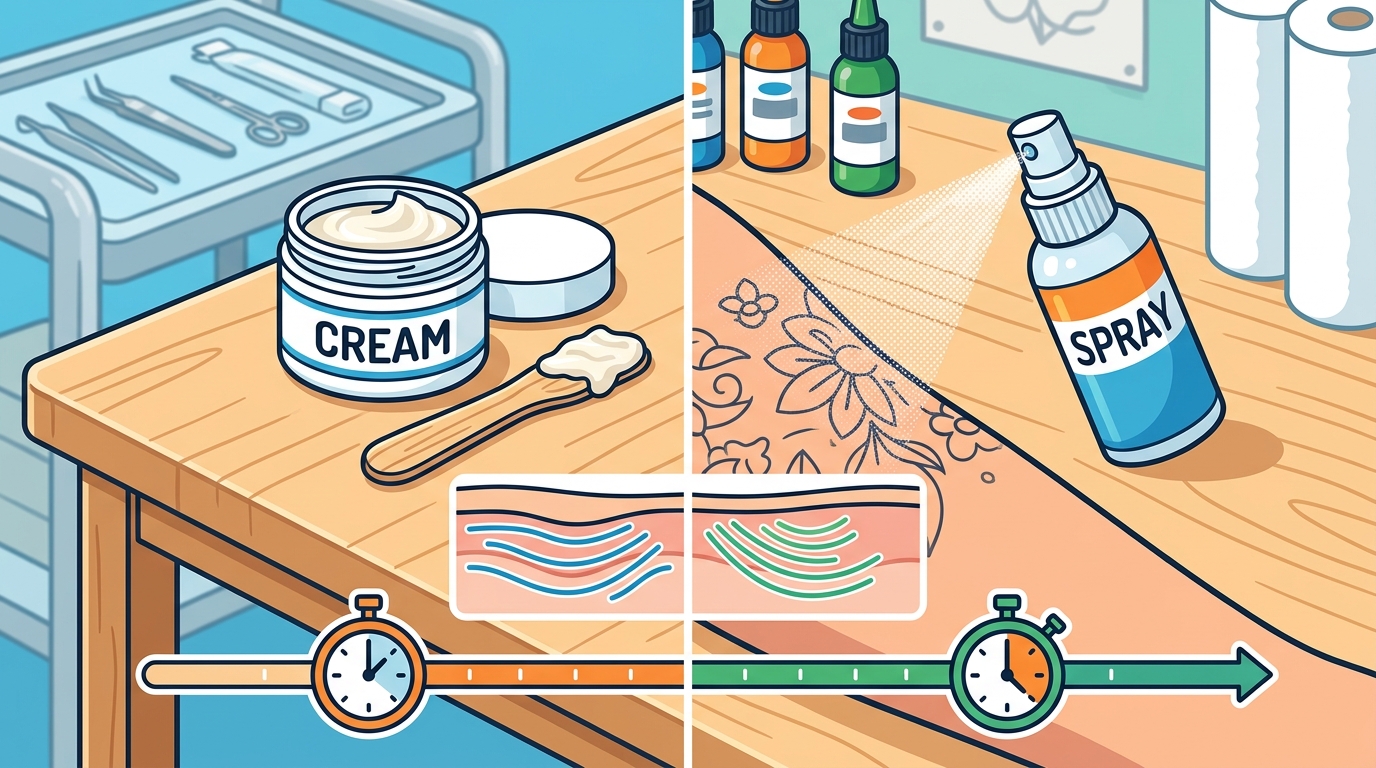
Cream vs Spray: Side-by-Side Comparison
The table below highlights the functional differences between numbing cream and numbing spray so you can see where each product fits in the tattoo process.
| Feature | Numbing Cream | Numbing Spray |
|---|---|---|
| Application stage | Pre-session (before tattooing starts) | Mid-session (during tattooing) |
| Skin type | Intact, unbroken skin | Broken skin (needle has opened the dermis) |
| Format | Thick cream, applied under wrap | Liquid mist, sprayed directly |
| Onset time | Requires advance application time | Absorbs quickly (minutes) |
| Depth of absorption | Deeper skin layers when used with occlusion | Superficial to moderate layers |
| Primary role | Foundation numbing for the session | Top-up or renewal of comfort mid-session |
| Best for | All sessions, especially long ones | Extending comfort past the initial window |
As a general rule, cream is the foundation product and spray is the extension product. They serve complementary roles rather than interchangeable ones.
Using Both Products for Long Sessions
For sessions running beyond two or three hours, many tattoo clients and artists use cream and spray together in sequence. The cream provides the initial comfort window, while the spray extends that window once the skin is open and the artist can apply it directly.
The Two-Phase Approach
Phase one involves applying numbing cream to the area before arriving at the studio. Your tattoo artist should always be informed that you are using a numbing product. Phase two begins mid-session: when the initial numbing starts to fade, the artist can apply numbing spray to the working area. This layered approach is why Painless Tattoo offers both products, and why the combo options bundle them together.
Talk to Your Artist First
Every artist has preferences about numbing products. Some welcome them; others have specific products they trust. Always discuss your plan with your artist before your appointment. They can guide you on what works best for the piece you are getting and the area of the body involved. For product-specific guidance, the Painless Tattoo product directions page outlines general usage information for each SKU.
Transitioning to Aftercare After a Long Session
Once your session wraps, the focus shifts from numbing to skin recovery. Painless Tattoo's aftercare line is built around three products, each with a distinct texture and use case:
- Alpha Tattoo Butter is a soft, light butter that is intentionally designed for gentle application on freshly tattooed skin. It provides deep moisturization without a heavy feel.
- Alpha Tattoo Whip is an even lighter option with a whipped texture. Both the Whip and Butter are vegan-friendly formulations.
- Alpha Tattoo Oil offers a different approach for those who prefer an oil-based moisturizer for ongoing tattoo maintenance and vibrancy.
Choosing between them often comes down to personal texture preference. The Butter delivers intensive moisture, the Whip is lighter and absorbs quickly, and the Oil works well for daily upkeep on healed tattoos. Your tattoo artist can also help you determine which format suits your skin and your new piece.
Key Takeaways
- Numbing cream is a pre-session product designed for intact skin; numbing spray is a mid-session product for broken skin.
- For long tattoo sessions, using both cream and spray in sequence provides the most complete comfort strategy.
- Spray alone is not a substitute for cream before tattooing begins because it does not penetrate deeply enough on unbroken skin.
- Always inform your tattoo artist about any numbing products you plan to use.
- After the session, transition to an aftercare product like Alpha Tattoo Butter, Whip, or Oil to support skin recovery.
- Lidocaine is the most common active ingredient in both cream and spray formats, but the delivery method determines how each one works.
- Consult your artist or a licensed professional if you have sensitive skin or concerns about topical anesthetics.
Frequently Asked Questions
Can I use numbing spray instead of cream before my tattoo?
Numbing spray is formulated for broken skin during a session, not for intact skin beforehand. On unbroken skin, it absorbs too quickly at the surface level to provide meaningful depth of effect. Cream is the appropriate product for pre-session use.
How do cream and spray work together during a long session?
Cream is applied before the session to provide the initial numbing foundation. Mid-session, once the skin is open from the needle, the artist can apply spray to renew comfort. This two-phase approach is why Painless Tattoo sells both products and offers combo bundles.
Does numbing cream affect tattoo ink or skin texture?
This is a common concern. Topical lidocaine itself does not change skin texture. However, formulations vary, so always share product details with your artist so they can assess compatibility with their technique. Your artist's experience is the best guide here.
What is lidocaine?
Lidocaine is a topical anesthetic that temporarily blocks nerve signals in the area where it is applied. It is one of the most widely used local anesthetics and is the primary active ingredient found in most tattoo numbing creams and sprays.
Is the Painless Tattoo aftercare line vegan?
The Alpha Tattoo Whip and Alpha Tattoo Butter are vegan-friendly formulations. The Alpha Tattoo Oil contains alligator fat oil as a featured ingredient, so it is not vegan. Each product in the aftercare line is designed for a different texture preference and use case.
Should I ask my tattoo artist before using numbing cream?
Yes, always. Your tattoo artist should know about any products on your skin before they begin working. Some artists prefer specific products or have guidance on how numbing interacts with their process. Refer to the cream directions or spray directions for general product information to share with your artist.
How long does numbing cream typically last?
Duration varies by product, individual skin type, and body placement. For specifics on any Painless Tattoo product, check the product directions or consult with your tattoo artist for guidance tailored to your session length and placement.
Can I use numbing products for other procedures?
Many topical numbing products, including Painless Tattoo Numbing Cream, are used for various skin-related procedures such as laser hair removal, cosmetic tattooing, and tattoo removal. Always follow the product label and consult a professional for non-tattoo applications.
Get Session-Ready
Planning a long tattoo session? Browse the full Painless Tattoo product lineup to find the right cream, spray, and aftercare combination for your appointment. Pair the numbing cream for pre-session comfort with the spray for mid-session renewal, and finish with an Alpha aftercare product to support your skin's recovery.