

Tattoo Numbing Cream vs Numbing Spray for Long Sessions
Planning a sleeve, a back piece, or any tattoo session that stretches beyond a couple of hours? Choosing the right numbing product can shape the entire experience. Tattoo numbing cream and tattoo numbing spray are both topical anesthetics that contain lidocaine and work by blocking pain signals at the skin level, but they are designed for different moments in your session. Understanding when and why each one shines will help you walk into your next appointment prepared, whether the sitting runs two hours or six.
What Is Tattoo Numbing Cream?
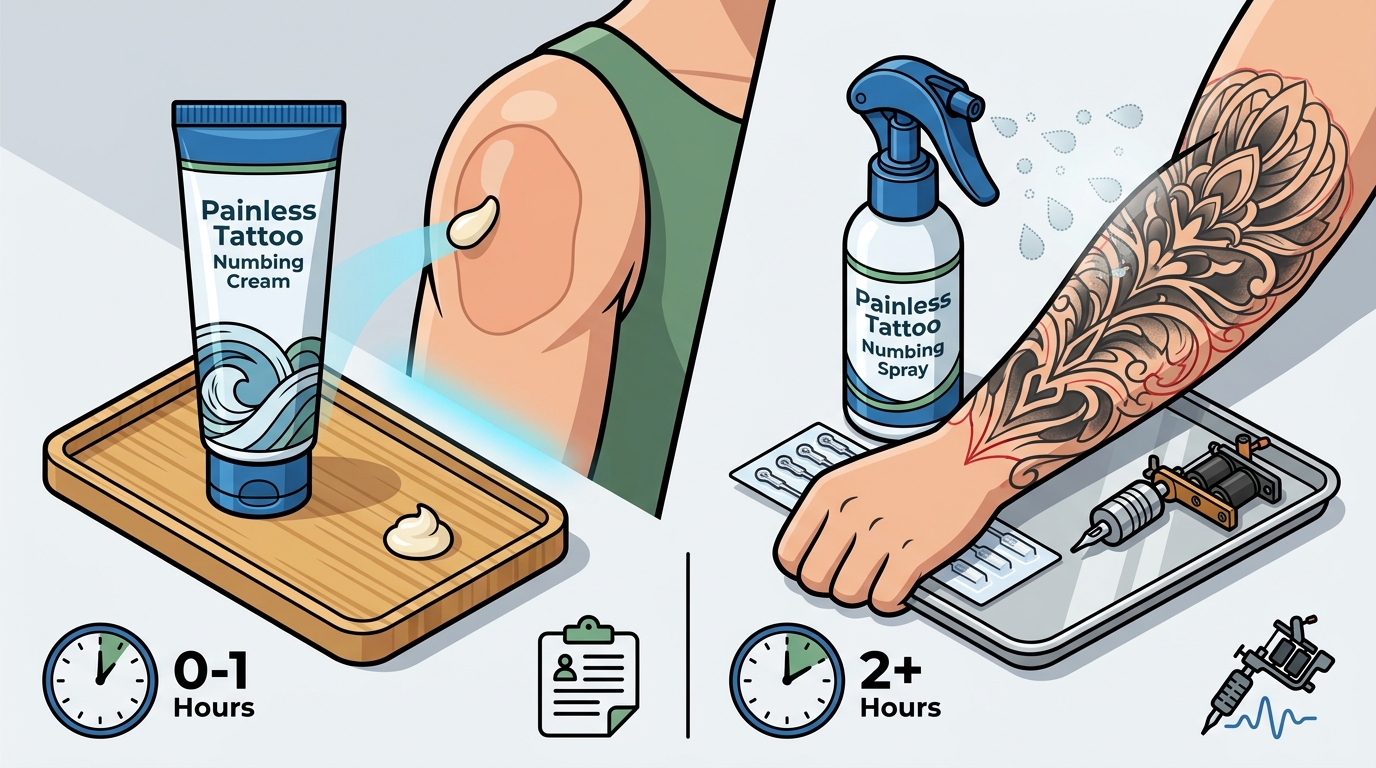
Tattoo numbing cream is a topical anesthetic applied to intact, unbroken skin before your tattoo session begins. Its thick consistency is intentional: the formulation creates a barrier that helps the active ingredient absorb deeper into the skin over time. Painless Tattoo Numbing Cream is designed for use prior to minimally invasive procedures, and each single-use packet covers approximately a 4"x4" area.
Because cream needs time to penetrate the outer skin layer, it is applied well in advance of the session. The payoff is a longer window of comfort, generally lasting anywhere from one to several hours depending on location and individual factors. Your tattoo artist can then wipe the cream away and begin working on numbed skin.
What Is Tattoo Numbing Spray?
Tattoo numbing spray is a liquid topical anesthetic formulated for rapid onset. Unlike cream, spray is lightweight and can be applied with minimal disruption. Painless Tattoo Numbing Spray is described as having rapid onset and long-lasting properties, and its proprietary blend includes skin conditioners and compounds designed to improve absorption.
Sprays are commonly used mid-session when the skin is already broken. As Tattooing 101 notes, some artists apply numbing spray every 20 minutes or so throughout a session for ongoing comfort. The trade-off is that spray typically provides a shorter window of relief per application compared to cream.
Head-to-Head Comparison
The table below summarizes the core differences between numbing cream and numbing spray so you can see, at a glance, how each format fits into a tattoo session.
| Feature | Numbing Cream | Numbing Spray |
|---|---|---|
| When Applied | Before the session, on intact skin | During the session, often on broken skin |
| Onset Time | 30 to 90 minutes | A few minutes |
| Duration per Application | 1 to 3+ hours | Shorter; may require reapplication |
| Application Style | Thick layer, often covered with wrap | Light mist or spray directly onto the area |
| Mess Factor | Moderate (requires wiping before session) | Low |
| Best For | Foundation numbing at session start | Mid-session top-ups and extended sittings |
Numbing cream is your foundation layer. Numbing spray is your tactical refresh. Neither replaces the other; they serve different stages of the same process.
Why Long Sessions Change the Equation
For a short tattoo sitting of an hour or less, numbing cream alone may cover the entire appointment. But sessions that stretch to three, four, or six hours introduce a challenge: cream applied before the session will begin to fade as hours pass.
This is exactly where spray becomes essential. Once the initial numbing window from the cream starts to taper, your artist can apply spray to the working area for a quick refresh. According to industry sources, sprays can be easily reapplied without disrupting the tattooing process, making them convenient for longer sessions requiring intermittent relief.
Where Cream Shines in Long Sessions
Cream provides the deep, sustained numbing at the start when the first lines are laid. Those opening minutes tend to be the most anxiety-inducing, especially for a first tattoo. Starting with a strong foundation sets the tone for the rest of the sitting.
Where Spray Takes Over
As the session progresses and the cream effect fades, spray steps in. Its rapid onset means the artist can apply it, wait a few minutes, and continue working. For marathon sessions, this ability to reapply on the fly is a genuine advantage.
Using Cream and Spray Together
Many experienced tattoo clients and artists use both products as a system rather than choosing one or the other. The Painless Tattoo numbing collection includes both cream and spray options designed to complement each other across the full length of a session.
The general idea is straightforward: cream handles the opening phase, and spray handles the extended phase. Together, they cover the longest possible comfort window. If you are booking a session that you know will run long, talk with your tattoo artist about whether pairing both formats makes sense for your appointment. Your artist's preference and workflow should always guide the final call.
What Comes After: Transitioning to Aftercare
Once your session wraps up, numbing is no longer the priority. Aftercare is. Painless Tattoo offers a full aftercare lineup designed to support the skin at different stages of recovery:
- Alpha Tattoo Oil is a lightweight, fast-absorbing oil that leverages essential fatty acids and glycerin for deep hydration.
- Alpha Tattoo Butter is a richer formula made with organic shea butter, mango butter, and essential oils for sustained moisture.
- Alpha Tattoo Whip offers a lighter, whipped texture for those who prefer minimal residue on their skin.
For a detailed breakdown of what to do day by day after your session, check the Ultimate Tattoo Aftercare Guide on the Painless Tattoo blog.
Key Takeaways
- Numbing cream is a pre-session product applied to intact skin; numbing spray is a mid-session product often used on broken skin.
- Cream offers a longer duration per application, while spray offers faster onset and easy reapplication.
- For sessions under two hours, cream alone may be sufficient.
- For sessions over two to three hours, pairing cream with spray covers a wider comfort window.
- Always discuss numbing product use with your tattoo artist before your appointment.
- Transition to quality aftercare products as soon as your session ends to support the skin during recovery.
- Individual results vary; consider a patch test if you have sensitive or reactive skin.
Frequently Asked Questions
Can I use numbing cream and spray in the same session?
Yes. Many people use cream before the session and spray during the session to extend comfort. The two formats are designed for different stages and can work together. Discuss this approach with your tattoo artist beforehand.
Does numbing spray work on unbroken skin?
Sprays can be applied to unbroken skin, but they are generally considered more effective on broken skin during a session. Cream is typically the better choice for pre-session numbing on intact skin because its thicker consistency allows for deeper absorption.
Will numbing cream affect my tattoo's appearance?
When used and removed according to the product directions, quality numbing cream should not interfere with ink retention. The key is ensuring the cream is fully wiped away and the skin is cleaned before tattooing begins. Always follow your artist's guidance.
How do I know which product to bring to my appointment?
Consider the length and placement of your session. Shorter sittings on moderate-pain areas may only need cream. Longer sittings, especially on sensitive spots like ribs or spine, may benefit from both cream and spray. Your artist can help you decide.
Is lidocaine safe to use before a tattoo?
Lidocaine is a widely used topical anesthetic. However, everyone's skin is different. If you have known sensitivities, cardiovascular conditions, or are on certain medications, consult a licensed healthcare provider before using any topical numbing product.
How long does Painless Tattoo Numbing Cream last?
According to the product page, each single-use packet covers approximately a 4"x4" surface for 1 to 3 hours depending on body location. Factors like skin thickness and individual physiology can influence duration.
Where can I learn more about tattoo aftercare?
Painless Tattoo publishes a comprehensive tattoo aftercare guide covering moisturizing, cleaning, and protecting your new ink during the healing process.
Ready to Prepare for Your Next Session?
Browse the full Painless Tattoo numbing collection to find the right cream, spray, or combination for your upcoming appointment. Pair it with aftercare from the Alpha line, and you will have every stage of the tattoo journey covered.