

If your skin tends to flush, itch, or react to new products, getting a tattoo can feel like a leap of faith. The good news is that a thoughtful aftercare routine can make all the difference between a smooth healing experience and weeks of unnecessary irritation. Sensitive skin is skin that is more prone to reactions such as redness, dryness, itching, or rashes when exposed to external irritants. This guide walks you through what to look for in aftercare products, how to structure your routine by day, and which Painless Tattoo Alpha Aftercare products map to each stage of the healing timeline. Always consult your tattoo artist or a licensed dermatologist for personalized guidance.
Why Sensitive Skin Needs a Different Approach
Tattooing involves repeatedly puncturing the outer layers of skin, which means the area is essentially an open surface during the healing window. For people with conditions like eczema, rosacea, or general skin reactivity, that window carries extra risk. Dermatologists recommend consulting a professional before getting tattooed if you have an active skin condition.
The aftercare products you choose matter even more when your skin is reactive. Fragrance-heavy lotions, petroleum-based ointments, and products with synthetic dyes can all contribute to flare-ups. That is why fragrance-free, organic-ingredient formulas are a starting point rather than a nice-to-have.
Pre-Session Preparation Checklist
Preparation starts well before you sit in the chair. Here is a quick checklist for sensitive-skin clients:
- Talk to your tattoo artist about your skin history and any known allergies.
- Patch-test your chosen aftercare product on a small area of skin 48 hours before your appointment.
- Hydrate well in the days leading up to your session; well-hydrated skin responds better to tattooing.
- Wear loose, breathable clothing made from natural fabrics like cotton to your appointment.
- Have your aftercare products ready at home so the routine starts the moment you walk in the door.
If you plan to use a topical numbing option before your session, the Painless Tattoo product line includes both a numbing cream for pre-session use and a numbing spray designed for use during the session.
The First 72 Hours: Setting the Foundation
The initial days after your tattoo are the most critical for sensitive skin. Your artist will bandage the area immediately after the session. Leave that bandage on for the duration your artist recommends.
Once you remove the bandage, wash your hands thoroughly, then gently cleanse the tattooed area with lukewarm water and a mild, fragrance-free soap. Pat dry with a clean paper towel. As Painless Tattoo's own Ultimate Tattoo Aftercare Guide notes, keeping the area clean and hydrated is the foundation of every routine.
Hydration Without Over-Moisturizing
After cleaning, apply a thin layer of aftercare product. Over-moisturizing is a real concern because too much product can trap moisture against the skin, potentially leading to breakouts or delayed healing. A thin, even layer is all you need.
Day-by-Day Aftercare Sequence
Aftercare is not one-size-fits-all, but the following sequence gives sensitive-skin clients a practical framework. Always defer to your tattoo artist's specific instructions.
| Timeframe | Action | Product Stage |
|---|---|---|
| Day 1 | Remove bandage per artist's direction; gentle wash with fragrance-free soap; pat dry; apply a thin layer of aftercare | Alpha Whip or Alpha Butter |
| Days 2 to 3 | Wash 2 to 3 times daily; apply thin aftercare layer after each wash; wear loose clothing | Alpha Whip or Alpha Butter |
| Days 4 to 7 | Continue gentle cleansing; peeling may begin; do not pick or scratch | Alpha Whip, Butter, or Oil |
| Weeks 2 to 4 | Skin flaking subsides; keep moisturizing; avoid sun exposure | Alpha Oil for lightweight hydration |
| Month 2+ | Surface healing complete; continue daily moisture; apply sunscreen when healed | Alpha Oil or Butter as daily moisturizer |
A tattoo generally takes about 2 to 4 weeks to heal on the surface and up to 6 months to fully heal beneath the skin. Patience is especially important for sensitive-skin types, where rushing the process can trigger secondary reactions.
Alpha Whip vs. Alpha Butter vs. Alpha Oil
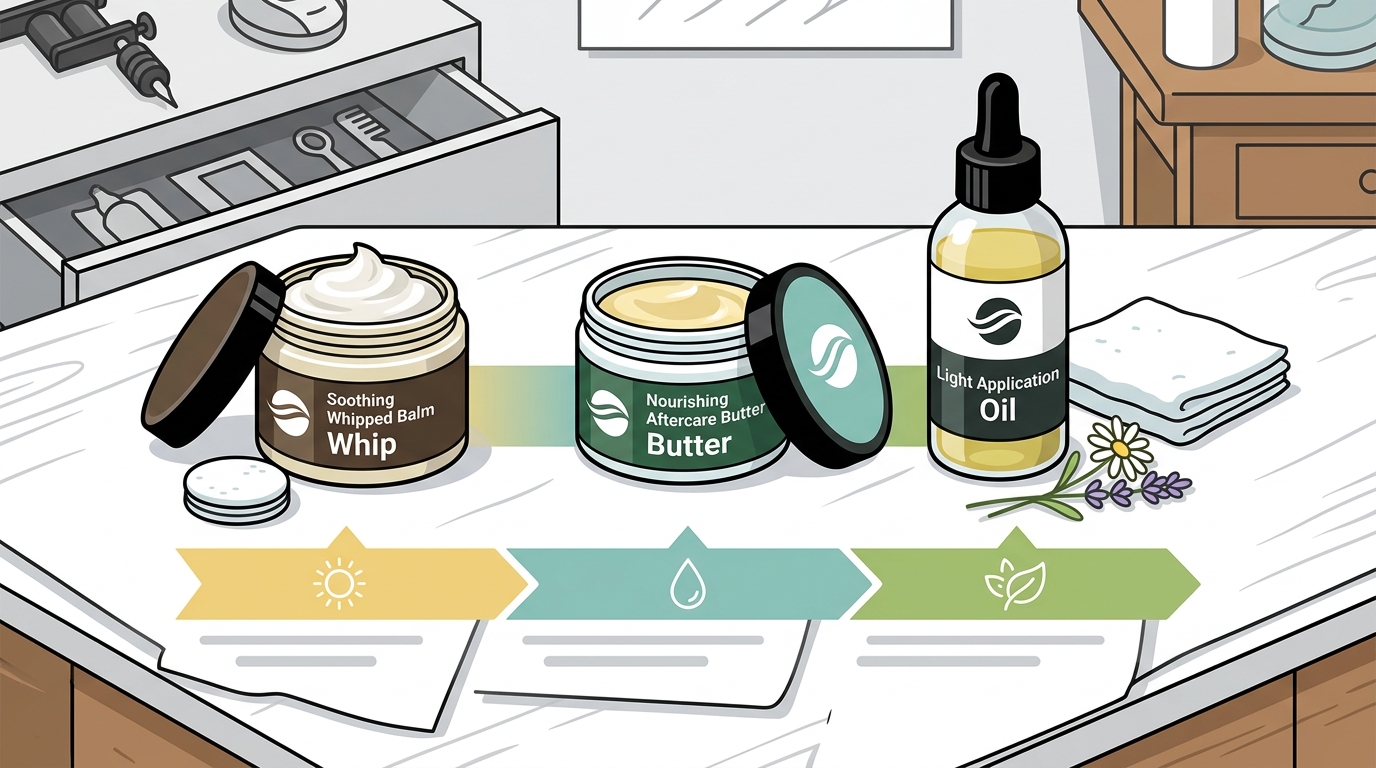
Painless Tattoo's Alpha Aftercare line offers three distinct formulas. Each targets a slightly different need, which matters when your skin is selective about what it tolerates.
| Feature | Alpha Whip | Alpha Butter | Alpha Oil |
|---|---|---|---|
| Texture | Light, airy, whipped | Rich, dense butter | Lightweight liquid oil |
| Best For | Fresh tattoos; skin that dislikes heavy products | Skin that craves deep moisture; cold/dry climates | Long-term daily care; fast absorption |
| Organic Ingredients | Yes | Yes | Yes, with Advanced Growth Factor Technology |
| Vegan | Yes | Yes | No (contains alligator oil) |
| Application Feel | Cool, soothing, gel-like | Smooth, creamy | Non-greasy, absorbs quickly |
Alpha Whip combines qualities of aloe vera gel, rich butters, and hydrating lotions in one formula with a whipped texture. For reactive skin that feels suffocated by heavy creams, the Whip is often a comfortable starting point. Alpha Butter brings a deeper-moisturizing experience suited to those whose skin runs dry. Alpha Oil uses a proprietary Advanced Growth Factor Technology and absorbs quickly, making it a strong option once initial healing is underway.
Ingredients That Matter for Reactive Skin
When shopping for aftercare, three categories of ingredients deserve your attention:
Organic and Plant-Based Bases
Products built on organic, plant-derived ingredients tend to carry a lower risk of irritation. The Alpha Whip and Alpha Butter are both formulated with 100% organic ingredients and are vegan-friendly, which can be a consideration for clients who want to avoid animal-derived waxes or lanolin.
Anti-Inflammatory Properties
Inflammation is the primary driver of redness and swelling after a tattoo. Aftercare formulas that include naturally anti-inflammatory compounds can help keep that response in check. Healthline's aftercare guide reinforces that bigger or more intricate tattoos tend to stay inflamed longer, making soothing ingredients especially relevant for large pieces on sensitive skin.
What to Avoid
Fragrance is one of the most common triggers for skin reactions in aftercare products. Synthetic dyes, alcohol, and heavy petroleum-based barriers can also cause problems. If a product burns or stings on application, stop using it and check in with your artist or a dermatologist.
Common Mistakes That Trigger Reactions
Even the best products will not save you from bad habits. Here are the most frequent aftercare missteps for sensitive-skin clients:
- Over-moisturizing: Slathering on thick layers traps heat and bacteria against the skin.
- Picking or scratching peeling skin: This can damage the tattoo and introduce bacteria.
- Using scented soap or lotion: Fragrance ingredients are a frequent cause of contact dermatitis during tattoo healing.
- Submerging in water: Pools, hot tubs, and baths should be avoided until the tattoo is fully healed to prevent infection and ink loss.
- Sun exposure on fresh ink: UV light can accelerate fading and spike irritation on healing skin.
- Switching products mid-heal: Introducing a new product during the healing window doubles your chances of a reaction.
Read more practical tips in our Tattoo Aftercare: How To Take Care of Your New Tattoo article.
Key Takeaways
- Sensitive skin requires fragrance-free, organic-ingredient aftercare products to reduce the risk of reactions.
- Consult your tattoo artist and, if needed, a dermatologist before your session if you have a known skin condition.
- The first 72 hours are the most critical; keep the area clean, lightly moisturized, and protected.
- Alpha Whip's light, whipped texture is a comfortable starting point for skin that rejects heavy creams.
- Alpha Oil's fast-absorbing formula works well for longer-term daily moisturizing once initial healing is underway.
- Avoid over-moisturizing, scented products, sun exposure, and water submersion during healing.
- Surface healing typically takes 2 to 4 weeks, but full healing beneath the skin can take up to 6 months.
Frequently Asked Questions
Can I get a tattoo if I have eczema or psoriasis?
Many people with eczema or psoriasis do get tattoos, but it is essential to consult a dermatologist first. Active flare-ups on the area you want tattooed may need to be resolved before your appointment. Your tattoo artist should also be informed about your condition so they can adjust their approach.
How do I know if I am having an allergic reaction to aftercare?
Signs of a reaction include persistent redness, a rash that spreads beyond the tattooed area, hives, or intense itching that worsens rather than improves. If you experience any of these, stop using the product and contact your tattoo artist or a healthcare provider.
Is Alpha Whip or Alpha Butter better for sensitive skin?
Both are formulated with organic ingredients. Alpha Whip has a lighter, whipped texture that many sensitive-skin users prefer because it does not feel heavy or occlusive. Alpha Butter provides deeper moisture for skin types that tend toward dryness. Patch-testing either product before your session is a smart move.
Should I avoid petroleum-based products on my tattoo?
Thick, petroleum-heavy ointments can clog pores and trap heat, which may increase irritation for reactive skin. Lighter formulas designed specifically for tattoo aftercare are generally a better fit. Discuss options with your artist.
How often should I moisturize a new tattoo if I have sensitive skin?
Apply a thin layer of aftercare product after each wash, typically 2 to 3 times per day. The key is consistency with thin applications rather than heavy, infrequent ones. Over-moisturizing can suffocate the tattoo and cause its own set of issues.
When can I start using sunscreen on my healed tattoo?
Once your tattoo is fully healed on the surface, usually around 2 to 4 weeks, you can begin applying a high-SPF, broad-spectrum sunscreen to protect against fading. Choose a mineral sunscreen if your skin is reactive to chemical UV filters.
What should I do if my tattoo looks infected?
Signs of infection include excessive redness, pus, warmth, swelling, or fever. If you notice any of these symptoms, seek guidance from a healthcare professional promptly. Do not attempt to treat a potential infection on your own.
Does drinking water really help my tattoo heal?
Hydration supports overall skin health. Well-hydrated skin tends to be more resilient and can recover from the tattooing process more comfortably. While water alone will not heal your tattoo, it is one piece of the puzzle alongside proper external aftercare.
Ready to Build Your Sensitive-Skin Aftercare Kit?
Browse the full Alpha Aftercare collection to find the right combination of Whip, Butter, and Oil for your skin type and healing stage. Your tattoo is an investment; treat it with products designed to support the process from day one.