

The ribs and spine are consistently ranked among the most painful places on the body to get tattooed. Thin skin, minimal fat, dense nerve endings, and the constant movement of breathing all combine to create a uniquely intense experience. But that does not mean you have to walk in unprepared. With the right game plan before, during, and after your session, you can turn a notoriously tough sit into a much more manageable one. This guide walks you through why these areas hurt so much, what to bring to your appointment, and how to support your skin through every stage of recovery.
Why Rib and Spine Tattoos Hurt More
A tattoo pain chart is a visual guide that maps how painful specific body areas are relative to one another. When you look at any reputable chart, the ribs and spine sit near the top. Understanding the anatomy behind the pain helps you prepare mentally and physically.
The Rib Cage
The skin over your rib cage is extremely thin, and there is virtually no fat or muscle to cushion the needle. Every breath you take expands and contracts the rib cage, stretching freshly tattooed skin against the needle with each pass. That involuntary movement is something you simply cannot avoid, and it makes the sensation sharper than most other placements.
The Spine
The spine is a bony area full of nerve endings, which makes it particularly sensitive. According to Healthline's tattoo pain chart, areas close to bones without much fat or where skin is very thin tend to produce the highest discomfort. The spinal cord sits close to the surface, and the vibration from the tattoo machine can radiate through the vertebrae in a way that fleshy placements never replicate.
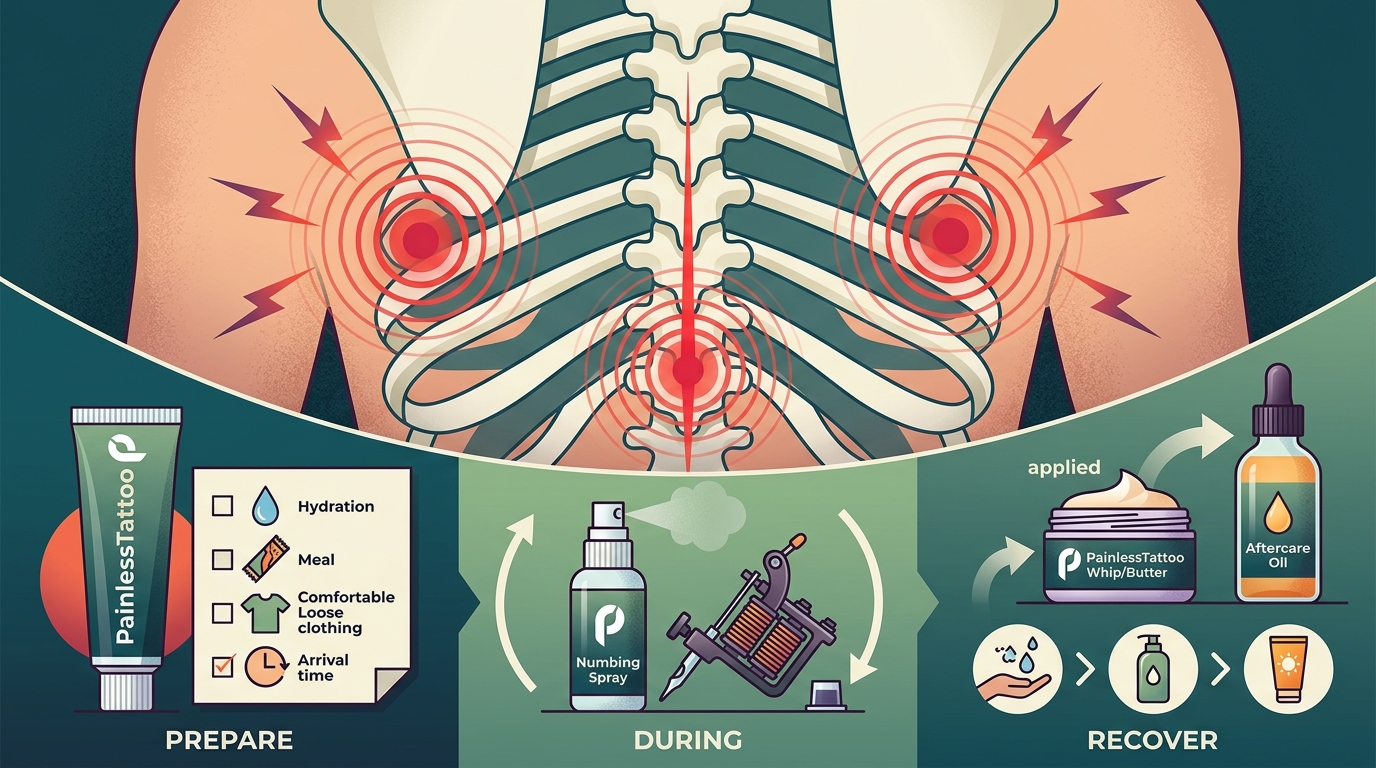
Where Ribs and Spine Land on the Pain Scale
Pain is subjective, but the community consensus is remarkably consistent. The table below compares common tattoo placements so you can set realistic expectations.
| Body Area | Typical Pain Rating (1-10) | Key Factor |
|---|---|---|
| Outer forearm | 3-4 | Fleshy, few nerve endings |
| Outer thigh | 3-4 | Thick skin, good padding |
| Upper back (off spine) | 4-5 | Moderate muscle cushion |
| Rib cage | 8-9 | Thin skin, bone contact, breathing movement |
| Spine | 9 | Dense nerve network, minimal padding |
| Sternum | 8-9 | Direct bone contact, thin skin |
As you can see, the ribs and spine occupy the upper tier alongside the sternum, feet, and elbow ditch. If this is your first tattoo in a high-pain zone, realistic expectations are your best friend.
Pre-Session Preparation Checklist
Preparation matters more for rib and spine work than almost any other placement, because your physical state directly affects how still you can sit and how your skin responds. Here is what to have ready before your appointment.
- Eat a full meal one to two hours before your session. Low blood sugar amplifies pain perception and can make you lightheaded.
- Hydrate well in the 24 hours leading up to your appointment. Well-hydrated skin generally accepts ink more smoothly.
- Skip alcohol and caffeine the day of. Both can thin your blood or increase anxiety.
- Wear loose, comfortable clothing that gives your artist easy access to the rib or spine area without pinching or rubbing.
- Talk to your artist about topical numbing options. A topical numbing cream is a product containing ingredients like lidocaine that is applied to unbroken skin before a procedure to temporarily reduce sensation. Many artists welcome them for high-pain areas. Painless Tattoo Numbing Cream is designed for exactly this kind of scenario.
- Bring entertainment. Music, a podcast, or a conversation partner can keep your mind occupied and reduce pain perception.
Staying Comfortable During the Session
Once you are in the chair (or lying on your side for ribs), your breathing and mindset become your main tools. Here are strategies that experienced collectors and artists recommend.
Breathing Technique
Shallow, tense breathing makes rib tattoos worse. Focus on slow, steady exhales during needle passes. Deep, even breathing relaxes your torso and gives your artist a more stable canvas to work on.
Breaks and Communication
There is no award for sitting through pain silently. Let your artist know when you need a pause. Experienced artists expect breaks during rib and spine sessions and often plan them into the workflow.
Mid-Session Numbing Support
For longer sessions, many artists keep a numbing spray on hand to reapply once the skin has been opened. Painless Tattoo Numbing Spray is a topical option designed for use during a session when the initial numbing begins to fade. Always coordinate with your tattoo artist before introducing any product mid-session.
Your Aftercare Plan by Stage
Tattoo aftercare is the set of steps you follow after your session to support your skin as it heals and to help preserve the appearance of your ink. Rib and spine tattoos deserve extra attention because the area is prone to friction from clothing and constant movement from breathing.
Days 1-3: Protect and Soothe
Follow your artist's wrapping and cleaning instructions. Once the initial wrap comes off, keep the area clean and lightly moisturized. A lightweight, fast-absorbing aftercare product works best here. Alpha Tattoo Oil is formulated to absorb quickly without leaving a heavy residue on tender skin.
Days 4-14: Nourish and Hydrate
As the outer layers begin to heal and flaking starts, consistent moisture is important. Switch to or continue with a product that provides deeper hydration without clogging pores. Alpha Tattoo Whip offers a light, whipped texture that many people find comfortable on healing skin.
Weeks 3 and Beyond: Maintain and Preserve
Once surface healing is complete, ongoing moisture helps maintain vibrancy. Alpha Tattoo Butter provides a richer texture suited to daily maintenance on fully healed tattoos. For a complete walkthrough, check out the Ultimate Tattoo Aftercare Guide on PainlessTattoo.
Alpha Aftercare Comparison: Oil vs. Whip vs. Butter
Choosing the right aftercare product depends on the stage of healing and your texture preference. Here is a side-by-side breakdown of the three Alpha Aftercare options from Painless Tattoo.
| Feature | Alpha Tattoo Oil | Alpha Tattoo Whip | Alpha Tattoo Butter |
|---|---|---|---|
| Texture | Lightweight liquid | Light, airy whip | Soft, rich butter |
| Best Stage | Early healing (Days 1-7) | Mid healing (Days 4-14+) | Healed tattoo maintenance |
| Absorption | Fast | Moderate | Gradual |
| Key Ingredients | Glycerin, essential fatty acids | 100% organic blend | Shea butter, mango butter, essential oils |
| Vegan | Check label | Yes | Contains beeswax |
| Ideal For | Quick absorption on tender skin | Soothing without heaviness | Deep nourishment, daily use |
All three products were developed in collaboration with tattoo artists, cosmetic chemists, and dermatologists and were split-tested against other aftercare products on the market. Your artist may have a preference, so always check with them before starting any aftercare routine.
Key Takeaways
- The ribs and spine rank 8-9 out of 10 on most tattoo pain charts due to thin skin, bone proximity, and nerve density.
- Preparation is your strongest tool: eat well, hydrate, skip alcohol, and discuss numbing options with your artist.
- Topical numbing cream applied before the session and numbing spray used during the session are two common ways people manage discomfort in high-pain zones.
- Controlled, slow breathing during a rib tattoo helps relax the torso and gives your artist a steadier working surface.
- Aftercare matters even more on ribs and spine because of constant movement and clothing friction.
- Match your aftercare product to your healing stage: oil for early days, whip for mid-healing, butter for long-term maintenance.
- Always follow your tattoo artist's specific aftercare instructions alongside any product you choose.
Frequently Asked Questions
How painful is a rib tattoo compared to other placements?
Rib tattoos are widely considered one of the most painful placements. Most pain charts rate the rib cage at 8 to 9 out of 10. The combination of thin skin, minimal fat, and the constant expansion from breathing creates an intense sensation that areas like the forearm or thigh simply do not produce.
Is the spine more painful than the ribs?
They are very close. The spine typically rates at about 9 out of 10 due to the dense network of nerves and direct bone contact. Some people find the spine slightly more intense because of the vibration that travels through the vertebrae, while others say the breathing factor makes ribs worse. Individual anatomy and pain tolerance play a major role.
Can I use a numbing cream for a rib or spine tattoo?
Many people do. A topical numbing cream is applied to unbroken skin before the session to temporarily reduce sensation in the area. Always talk to your tattoo artist first, as some artists have preferences about which products they are comfortable working with. Painless Tattoo's numbing line is used in thousands of tattoo facilities.
How long does a rib tattoo take to heal?
Surface healing generally takes 2 to 4 weeks, while full dermal healing can take 4 to 6 months. Rib tattoos may feel more sensitive during recovery because of the constant motion from breathing and potential friction from clothing. Following a consistent aftercare routine supports the process.
What should I eat before a rib or spine tattoo?
A balanced meal with protein, complex carbohydrates, and healthy fats about one to two hours before your session is a good approach. Stable blood sugar helps your body manage discomfort and reduces the chance of feeling faint during a long sit. Avoid heavy caffeine or alcohol.
What is the best aftercare product for a rib tattoo?
The best product depends on your healing stage. In the first few days, a lightweight option like Alpha Tattoo Oil absorbs quickly on tender skin. As healing progresses, a whipped texture like Alpha Tattoo Whip offers hydration without heaviness. For long-term maintenance, Alpha Tattoo Butter provides deeper nourishment.
Should I take breaks during a rib tattoo session?
Absolutely. Most experienced tattoo artists build breaks into rib and spine sessions. Communicating openly with your artist about your comfort level helps them adjust pacing and technique. There is no benefit to pushing through extreme discomfort, and staying relaxed actually helps your artist produce cleaner lines.
Get Ready for Your Next Session
Planning a rib or spine tattoo takes more preparation than the average placement, but the results are worth it. Browse the full Painless Tattoo product lineup to find the right numbing and aftercare products for every stage of your tattoo journey. Talk to your artist, build your kit, and walk into your appointment with confidence.