
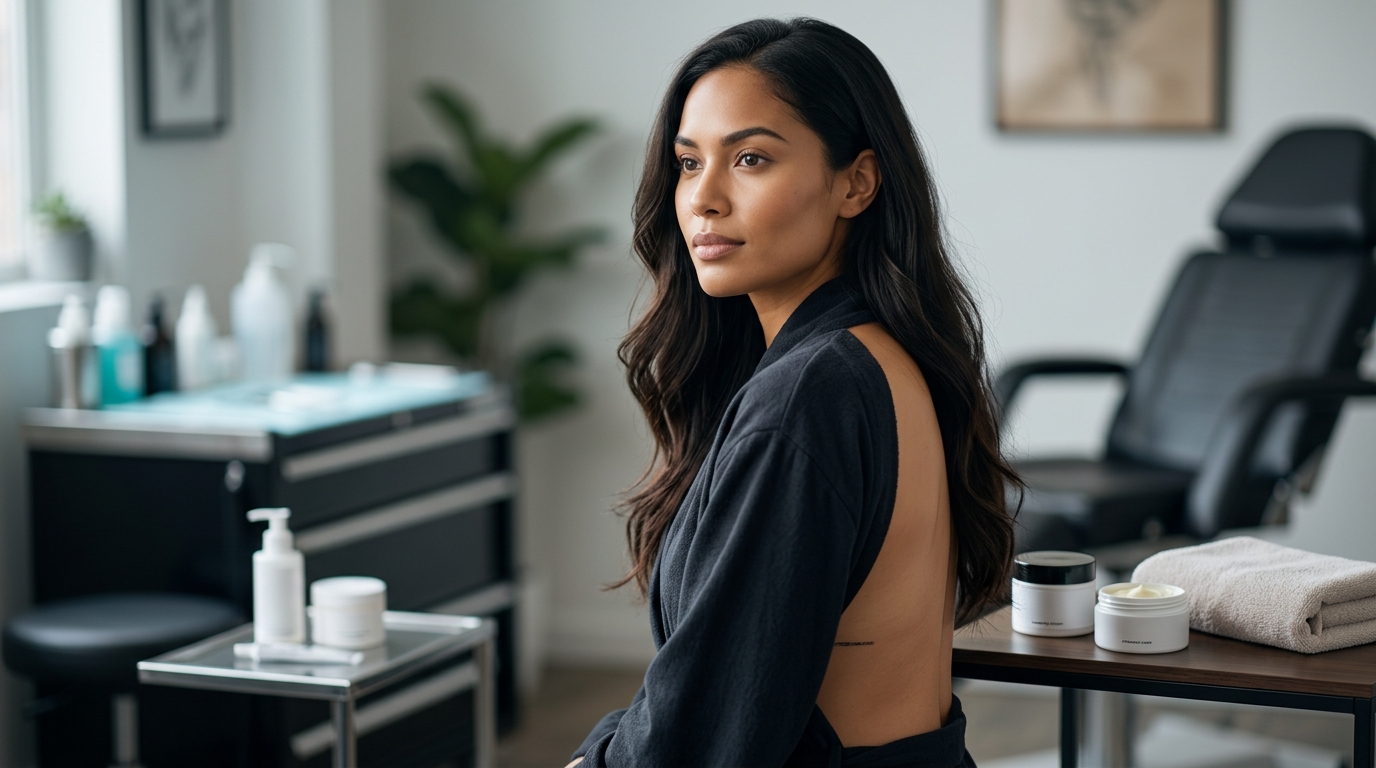
The rib cage and spine consistently rank among the most painful places to get tattooed. Both areas combine thin skin, minimal fat padding, and dense nerve endings, which means every pass of the needle transmits sensation straight to bone. But thousands of people sit through rib and spine sessions every week and walk away thrilled with the result. The difference between a miserable session and a manageable one usually comes down to preparation, the right products at each stage, and solid aftercare once you leave the chair.
Why Rib and Spine Tattoos Hurt More Than Other Placements
A topical numbing cream is a cream containing an active anesthetic ingredient, like lidocaine, that is applied to the skin surface before a procedure to temporarily reduce sensation. Understanding why these two spots are so intense starts with basic anatomy.
The ribs sit directly beneath the skin with virtually no fat or muscle cushion. According to Healthline's tattoo pain chart, areas close to bones without much fat and with many nerve endings tend to produce the highest pain levels. The spine adds another layer: it houses a dense network of nerves running just below the surface, which amplifies every vibration from the machine.
Rib tattoos also present a unique mechanical challenge. Your rib cage expands and contracts with every breath, creating involuntary movement that stretches freshly worked skin against the needle. That constant motion can intensify the sensation and make it harder for your artist to pull clean lines.
Where Ribs and Spine Fall on the Tattoo Pain Scale
A tattoo pain scale is a subjective 1-to-10 ranking system used to compare discomfort levels across different body placements. Ribs and spine both land near the top of that scale.
| Body Area | Typical Pain Rating (1-10) | Why |
|---|---|---|
| Outer forearm | 3-4 | Fleshy, few nerve endings |
| Upper arm / shoulder | 3-5 | Good muscle and fat padding |
| Outer thigh | 4-5 | Thick skin, solid cushion |
| Rib cage | 8-10 | Thin skin, bone contact, breathing movement |
| Spine | 9 | Bony, dense nerve endings |
| Sternum | 8-9 | Very thin skin over flat bone |
These figures reflect general community and artist consensus. Individual experiences vary based on sleep, hydration, stress levels, and personal pain tolerance. Your tattoo artist is the best person to talk to about what to expect for your specific design and placement.
What to Do Before Your Session
Preparation matters more for rib and spine work than almost any other placement because your physical state directly affects how you sit and how your skin holds ink. Here is a pre-session checklist:
- Sleep well the night before. Fatigue lowers your pain threshold.
- Eat a full meal one to two hours before your appointment. Low blood sugar makes everything feel worse.
- Hydrate heavily in the 24 hours leading up to your session. Well-hydrated skin accepts ink more smoothly.
- Skip alcohol and caffeine for at least 12 hours. Both can thin your blood or spike your nervous system.
- Wear loose, comfortable clothing that gives your artist easy access to the area.
- Bring a topical numbing option. Many people reach for a pre-session numbing cream to take the edge off high-pain placements like ribs and spine. Talk with your artist beforehand about using one.
Mental Preparation
Knowing what to expect reduces anxiety, which in turn reduces perceived pain. Visualize the finished piece, plan a distraction playlist, and remind yourself that breaks are always an option.
Managing Discomfort During the Session
Breathing technique is a controlled pattern of slow, deep breaths used to regulate the nervous system and reduce the body's pain response. This is especially relevant for rib tattoos, where shallow breathing can tense your torso and amplify discomfort.
Breathing and Positioning
Long, slow exhales during needle passes help your body stay relaxed. Holding your breath or breathing in short, panicked bursts tightens the muscles across your ribs and makes the sensation worse. Your artist may coach you through this.
Breaks, Snacks, and Mid-Session Support
Do not hesitate to ask for breaks. A five-minute pause to drink water, eat a snack, and reset mentally can make the difference between finishing your piece and tapping out early. For longer sessions, some artists apply a numbing spray to already-worked skin to help you push through the final stretch.
Distraction Strategies
Conversation with your artist, music, podcasts, or a show on your phone can keep your brain occupied. Research suggests you are more likely to stay in the "dull pain" phase when your attention is directed elsewhere.
Aftercare for Rib and Spine Tattoos
Rib and spine tattoos can take slightly longer to heal because the skin is thin and the area experiences constant movement from breathing and bending. Following a consistent aftercare routine is essential. Painless Tattoo's Ultimate Tattoo Aftercare Guide covers the fundamentals in detail, but here is a quick breakdown:
- Day 1: Leave the protective barrier from your artist in place for the recommended time. Once removed, gently wash with lukewarm water and mild soap. Pat dry.
- Days 2-14: Wash twice daily, let dry, then apply a thin layer of aftercare product. Keep the area moisturized but avoid over-applying.
- Weeks 3-6: The surface should be healed, but the deeper layers of skin are still recovering. Continue moisturizing and avoid direct sun exposure, pools, and hot tubs.
Resist the urge to scratch or pick at any flaking skin. Moisturizing with a product formulated for tattooed skin helps manage the itch without risking damage to the ink. Consult your tattoo artist or a licensed professional if anything looks or feels unusual during healing.
Which Product Fits Which Stage
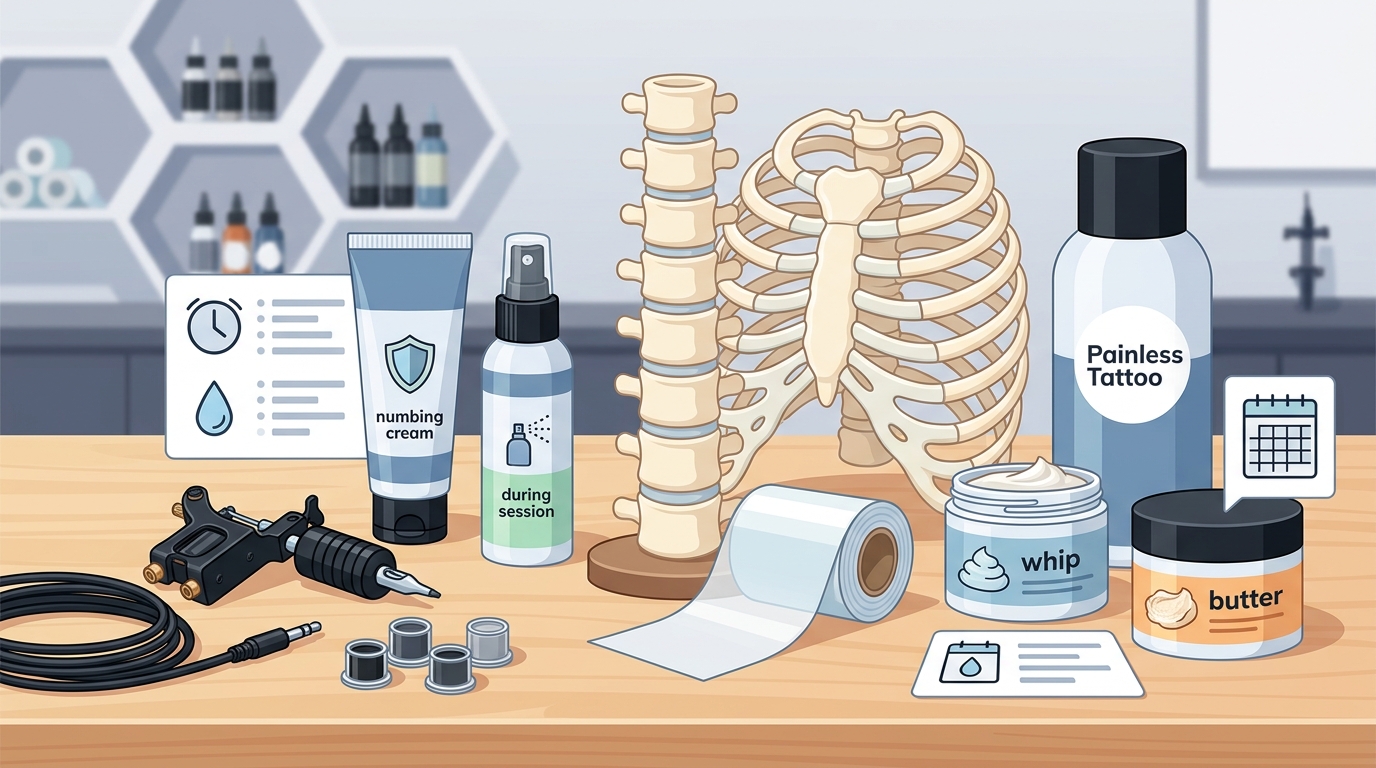
Painless Tattoo offers products designed for each phase of the tattoo journey. Here is how the lineup maps to a rib or spine session:
| Stage | Product | What It Does |
|---|---|---|
| Pre-session | Painless Tattoo Numbing Cream | Applied to unbroken skin before your appointment to reduce sensation |
| Mid-session | Painless Tattoo Numbing Spray | Used by your artist on already-worked skin to extend comfort |
| Aftercare (lighter feel) | Alpha Tattoo Whip | Lightweight, vegan formula for daily moisturizing during healing |
| Aftercare (richer feel) | Alpha Tattoo Butter | Thicker, vegan-friendly option for skin that needs deeper hydration |
| Aftercare (long-term) | Alpha Tattoo Oil | Blends natural and organic ingredients to nourish healed tattoos over time |
Choosing between Whip, Butter, and Oil comes down to texture preference and where you are in the healing timeline. Whip absorbs quickly and works well under clothing. Butter provides a richer barrier for drier skin. Oil is a great long-term option for keeping healed ink looking vibrant. All three are designed with tattooed skin in mind.
Key Takeaways
- Ribs and spine rank 8-10 and 9 out of 10 on most tattoo pain scales due to thin skin, bone proximity, and dense nerve endings.
- Preparation (sleep, hydration, a solid meal) directly impacts how much discomfort you feel during a session.
- Controlled, slow breathing is the single most effective in-chair technique for rib tattoos because it reduces muscle tension across the torso.
- Topical numbing products applied before and during a session are a common approach people use to manage high-pain placements. Always discuss with your artist first.
- Aftercare matters even more on thin-skinned areas. Keep the tattoo clean, moisturized, and protected from sun and friction.
- Painless Tattoo's product line maps to every stage: cream before, spray during, and Whip, Butter, or Oil for aftercare.
- When in doubt about healing or pain management, consult your tattoo artist or a licensed healthcare professional.
Frequently Asked Questions
How painful is a rib tattoo compared to other body parts?
Rib tattoos are consistently rated 8 to 10 out of 10 on most pain scales. The combination of thin skin, minimal fat, and the constant movement from breathing places them in the top tier of painful placements, alongside the spine, sternum, and feet.
Is a spine tattoo more painful than a rib tattoo?
They are very close. Spine tattoos generally rank around 9 out of 10 due to the dense nerve network along the spinal column. Some people find the vibration sensation on the spine more intense, while others struggle more with the breathing-related movement on the ribs. It comes down to individual tolerance.
Can I use numbing cream for a rib or spine tattoo?
Many people use a topical numbing cream before their session to help take the edge off. It is important to discuss this with your tattoo artist ahead of time, as they may have preferences about which products work well with their process.
How long does a rib tattoo take to heal?
Surface healing typically takes two to four weeks. Full dermal healing underneath can take four to six months. The constant motion from breathing means rib tattoos benefit from careful aftercare, including consistent moisturizing and avoiding tight clothing that creates friction.
What should I eat before a rib or spine tattoo?
A balanced meal with protein, complex carbohydrates, and healthy fats one to two hours before your appointment helps keep blood sugar stable. Low blood sugar during a session can increase pain sensitivity and raise the risk of feeling faint.
How do I choose between Alpha Whip, Butter, and Oil for aftercare?
It depends on your skin type and preference. Alpha Whip is the lightest and absorbs quickly, making it ideal under clothing. Alpha Butter is thicker and provides a richer moisture barrier. Alpha Oil is designed for long-term nourishment of healed tattoos. Many people start with Whip or Butter during healing and transition to Oil once the tattoo is fully healed.
Should I take pain medication before my tattoo session?
This is a question for your doctor or your tattoo artist. Some over-the-counter pain relievers are blood thinners, which can affect how much you bleed during a session. Always consult a licensed professional before combining any medication with a tattoo appointment.
Do smaller rib tattoos hurt less than larger ones?
Generally, yes, because the session is shorter. The pain per minute may be similar, but total time under the needle is a major factor in overall discomfort. A small fine-line piece might take 30 to 60 minutes, while a large shaded piece could run several hours.
Ready to Prepare for Your Next Session?
Browse the full Painless Tattoo product lineup to find the right numbing and aftercare products for your rib or spine tattoo. Have your kit ready before appointment day so you can walk in confident and walk out with ink you love.