
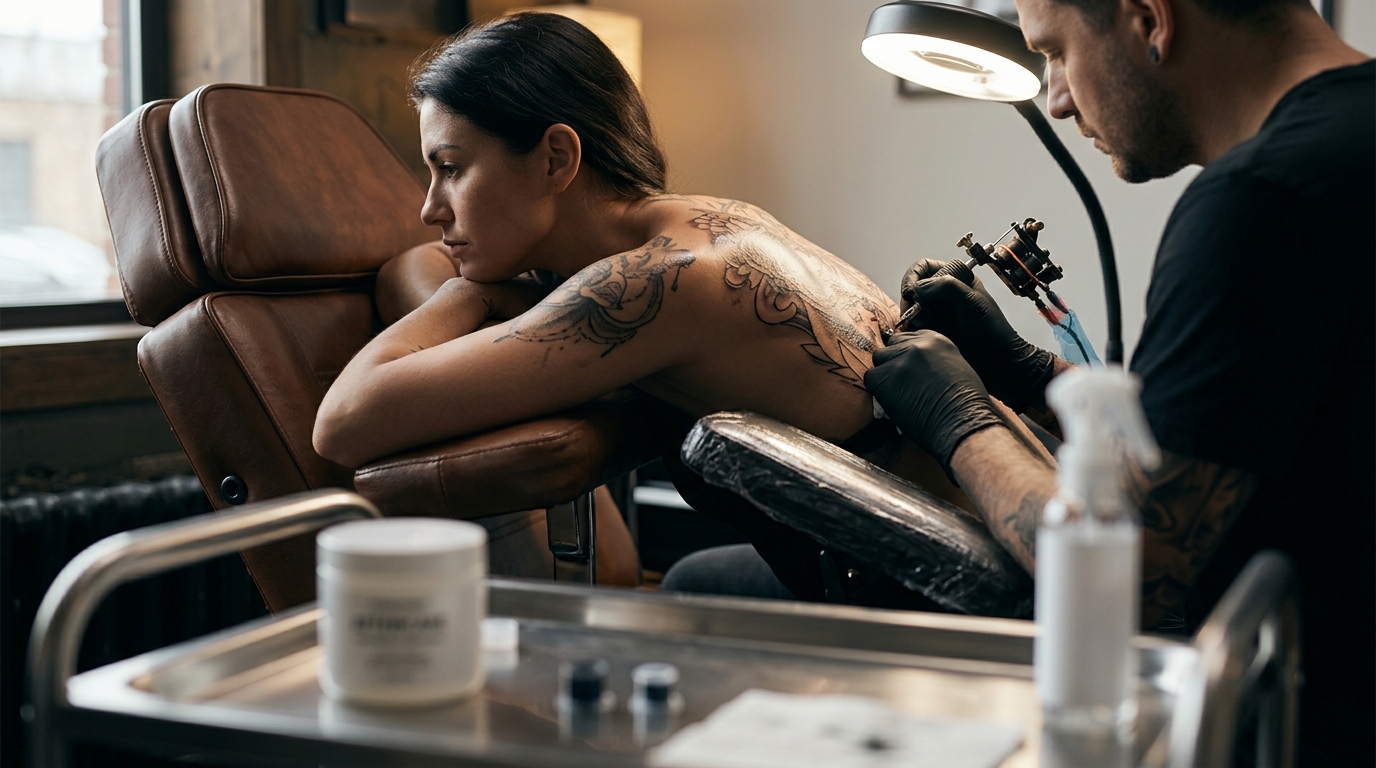
Long tattoo sessions test your body and your mindset. Whether you are sitting for a half-sleeve or a detailed back piece, discomfort tends to build over time as your skin is worked repeatedly. The good news is that preparation, smart in-chair strategies, and a solid aftercare routine can make a multi-hour session far more manageable. This guide walks you through every phase of the experience, from what to do the week before your appointment to the products that support your skin once the needle stops. If you have been putting off a large piece because you are worried about pain, keep reading.
Why Long Sessions Hurt More Than Short Ones
Tattoo pain is not a flat line. Your body releases adrenaline and endorphins early in the session, which can actually make the first hour or two feel surprisingly tolerable. According to Saniderm's pain resource, those natural pain relievers tend to wear off after about three to four hours, which is why the final stretch of a long sitting often feels the hardest.
Needle grouping matters, too. Shading passes use larger needle configurations that create a duller, burning sensation over time, while line work delivers sharper but shorter bursts. If your design involves dense color packing or heavy black work, expect cumulative soreness as the session progresses.
Prepare Your Body Before the Appointment
Hydration and Nutrition
Hydrated skin is more elastic and accepts ink more smoothly, which means fewer passes and less irritation. Start increasing your water intake at least 48 hours before the session. Eat a balanced meal one to two hours before your appointment so your blood sugar stays steady. As Healthline notes, your body handles pain better when it is well-rested and nourished.
Sleep and Timing
A full night of sleep raises your pain tolerance and stabilizes your mood. Schedule your session during your natural energy peak; most people do best in the late morning or early afternoon. Avoid alcohol for at least 48 hours beforehand, as it can thin your blood and increase sensitivity.
What to Bring
Pack snacks with natural sugars (fruit, juice, granola bars), a water bottle, headphones, and loose clothing that gives your artist easy access to the tattoo area. Having these basics ready removes small stressors that add up over several hours.
Topical Numbing Options for the Tattoo Chair
Topical numbing cream is a product applied to unbroken skin before a procedure to temporarily reduce sensation in the area. It is one of the most common tools people reach for when preparing for extended tattoo work. Painless Tattoo Numbing Cream is designed for pre-session use: you apply it to intact skin and let it take effect before your artist begins.
For mid-session support, a numbing spray is a topical product formulated for use on skin that has already been opened by the needle. Painless Tattoo Numbing Spray fits this role, allowing artists to continue working on sensitive areas without stopping the session entirely. Many collectors pair the cream and spray together using the Painless Tattoo Combo to cover both phases of a long sitting.
Always talk to your tattoo artist before using any topical numbing product. Your artist can advise on compatibility with their workflow and your skin type.
In-Chair Strategies That Actually Help
Breathing and Distraction
Controlled breathing keeps your muscles relaxed and reduces the tension that amplifies discomfort. Slow, deep inhales through the nose and steady exhales through the mouth give your nervous system a calming signal. Pair that with a playlist, podcast, or audiobook to occupy your attention.
Strategic Breaks
Short breaks every two to three hours let you stretch, hydrate, and reset. However, be mindful of overdoing it. Once your body adapts to the sensation, stopping and restarting can make the pain feel sharper. Keep breaks brief: five to ten minutes for a snack and a stretch, then back in the chair.
Communication With Your Artist
A skilled artist wants to know when you need a pause or a position change. Open dialogue leads to a smoother session for both of you. If a particular area feels unbearable, say so. Your artist may adjust speed, angle, or suggest a numbing spray touch-up.
Body Placement and Pain Intensity
Not every spot on the body reacts the same way to a tattoo needle. The table below gives a general sense of how placement affects discomfort during extended sessions.
| Body Area | Pain Level (General) | Why It Hurts More or Less |
|---|---|---|
| Outer upper arm | Low to moderate | Thick muscle and fat cushion the needle |
| Inner bicep | Moderate to high | Thinner skin with more nerve endings |
| Ribs and sternum | High | Minimal fat, close to bone |
| Outer thigh | Low to moderate | Dense muscle, less sensitivity |
| Knee and elbow ditch | High | Bony with thin, sensitive skin |
| Calf | Moderate | Good muscle coverage but can cramp |
| Spine | High | Concentrated nerve endings along vertebrae |
If you are planning a large piece that crosses into a high-pain zone, topical numbing products and break scheduling become especially important. Browse Painless Tattoo's best-selling products to see what other collectors use for those tough spots.
Your Aftercare Sequence After a Long Session
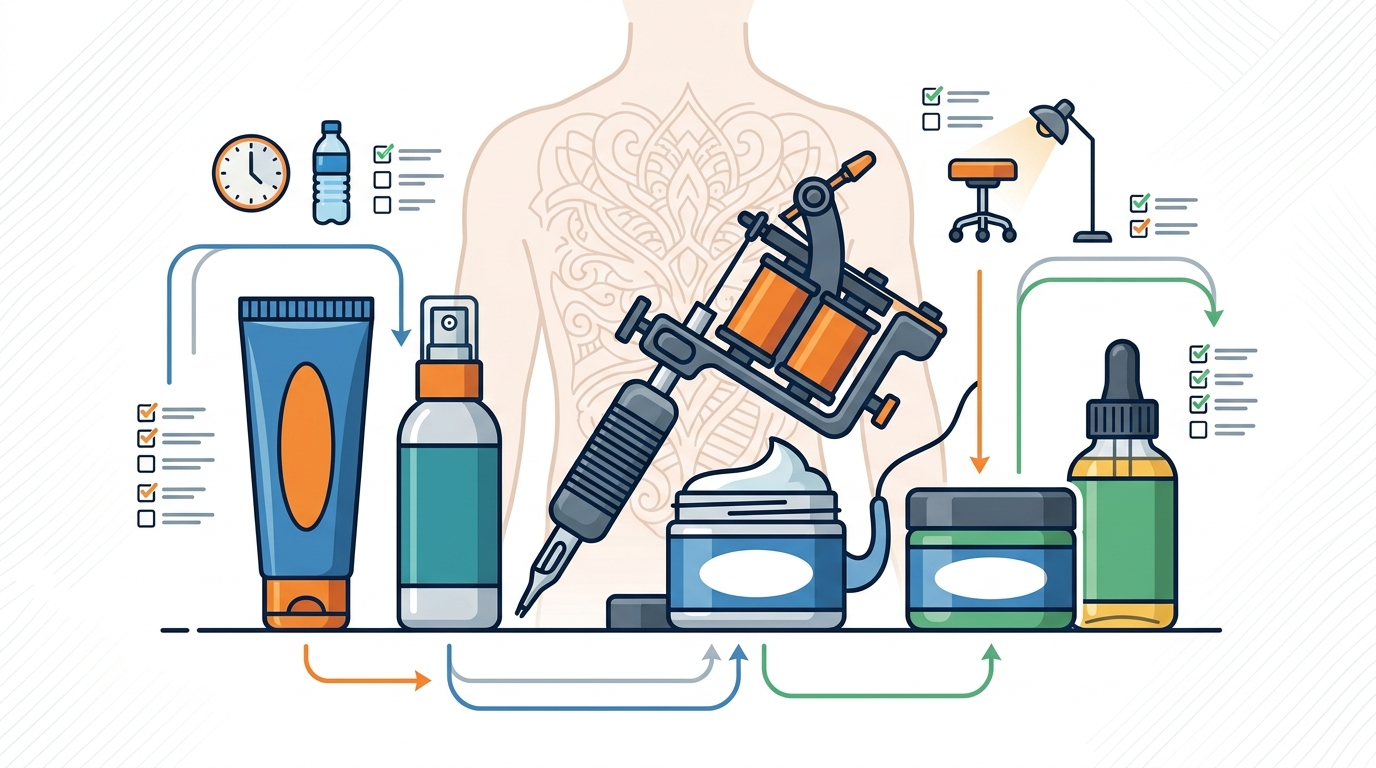
A long session means more skin trauma, which makes aftercare even more critical. Aftercare is the routine you follow in the days and weeks after getting tattooed to support skin recovery and preserve ink quality. Here is a general stage-by-stage look at the Painless Tattoo aftercare lineup and where each product fits.
| Stage | Timeframe | Product | Why It Fits |
|---|---|---|---|
| Pre-session | Before appointment | Numbing Cream | Applied to intact skin to reduce sensation |
| During session | Mid-tattoo | Numbing Spray | Designed for open skin, extends comfort |
| Early aftercare | Days 1-5 | Alpha Tattoo Whip | Lightweight, vegan formula for fresh tattoos |
| Mid aftercare | Days 5-14 | Alpha Tattoo Butter | Richer texture, vegan, for peeling phase |
| Long-term care | Day 14 onward | Alpha Tattoo Oil | Nourishes healed skin and supports ink vibrancy |
Alpha Tattoo Whip and Alpha Tattoo Butter are both vegan formulations. The Whip has a lighter, airier texture suited to the earliest days when skin is most sensitive, while the Butter offers a denser feel for the flaking and peeling stage. Alpha Tattoo Oil rounds out the sequence as a daily-use product for maintaining the look and feel of healed tattoos. Your tattoo artist can help you decide which combination works best for your skin.
Key Takeaways
- Pain intensifies after three to four hours as your body's natural endorphins taper off.
- Hydration, nutrition, and sleep in the 48 hours before your session directly affect your pain tolerance.
- Topical numbing cream is applied pre-session; numbing spray can be used mid-session on open skin.
- Short, strategic breaks (five to ten minutes every two to three hours) outperform frequent long pauses.
- Body placement plays a major role: bony, thin-skinned areas hurt significantly more.
- A phased aftercare sequence, from Whip to Butter to Oil, supports skin recovery at every stage.
- Always communicate openly with your tattoo artist about pain levels, product use, and break timing.
Frequently Asked Questions
How long does a typical long tattoo session last?
Most artists define a long session as anything over three hours. Full-day sittings can run six to eight hours with breaks, depending on the design complexity and both the artist's and client's stamina.
Can I use numbing cream for any tattoo placement?
Topical numbing cream is generally used on intact skin across most body areas. However, you should always check with your tattoo artist first, as some artists prefer specific products or have preferences about which areas they want numbed.
What is the difference between numbing cream and numbing spray?
Numbing cream is applied to unbroken skin before the session begins, while numbing spray is formulated for skin that has already been opened by the tattoo needle. Many people use both during a long session.
Does tattoo placement really affect pain that much?
Yes. Areas close to bone with thin skin and dense nerve endings, such as ribs, elbows, and the spine, are widely reported as significantly more painful than areas with thicker muscle and fat, like the outer arm or thigh.
What should I eat before a long tattoo session?
A balanced meal with protein, complex carbs, and healthy fats one to two hours before your appointment helps stabilize blood sugar. Bring high-sugar snacks like fruit or juice for quick energy during breaks.
How do I know when to ask for a break?
If you feel lightheaded, nauseated, or notice your pain tolerance dropping sharply, ask for a break. Short pauses every two to three hours are standard for long sessions and most experienced artists will proactively suggest them.
What aftercare products does Painless Tattoo offer?
The aftercare line includes Alpha Tattoo Whip (a lightweight vegan moisturizer), Alpha Tattoo Butter (a richer vegan balm), and Alpha Tattoo Oil (a nourishing oil for healed tattoos). Each product is designed for a different stage of the healing process.
Should I consult my tattoo artist before using numbing products?
Absolutely. Your artist understands how different products interact with their technique and your skin. A quick conversation before your appointment ensures a smooth experience for both of you.
Ready to Sit Longer and More Comfortably?
Explore the full Painless Tattoo product lineup to find the right combination of numbing and aftercare products for your next long session. Match each product to the right stage of your tattoo journey and walk into your appointment prepared.