
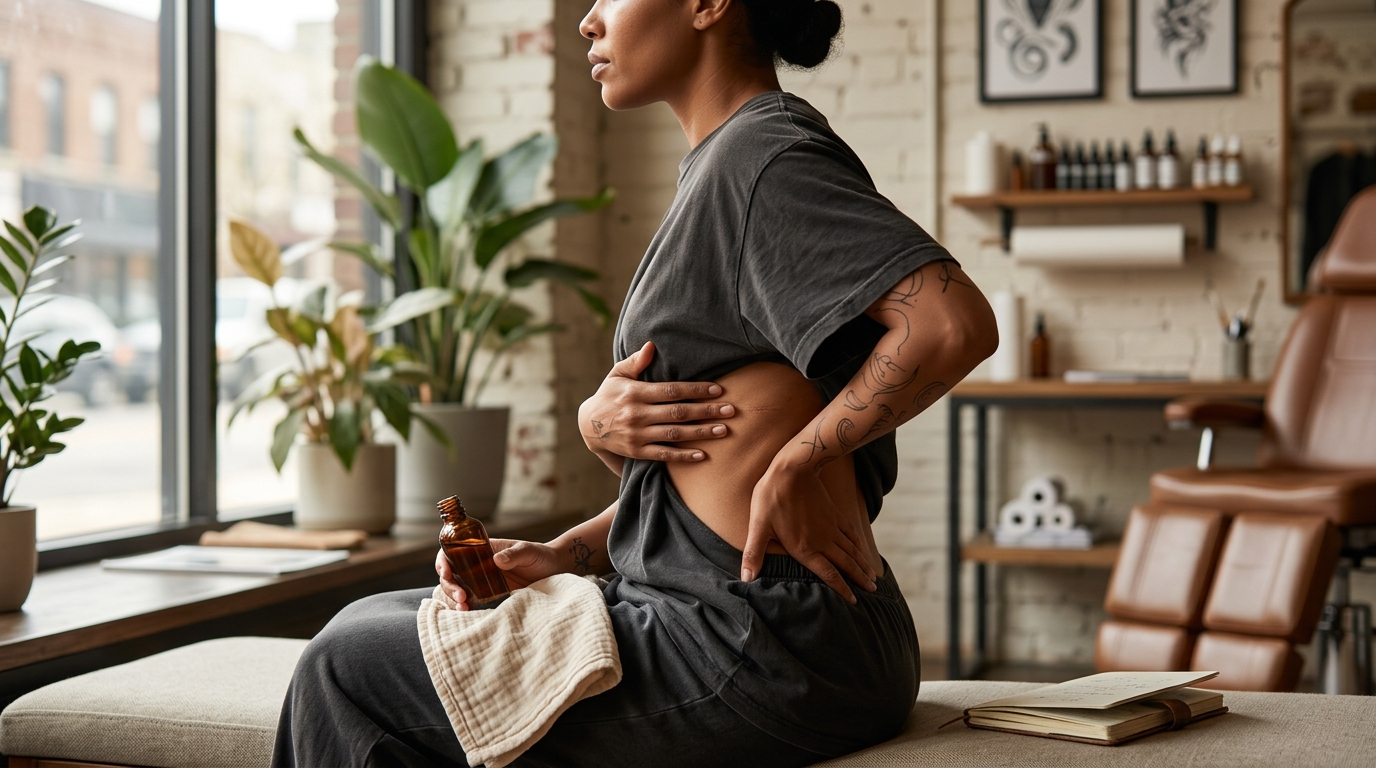
Rib and spine tattoos consistently rank among the most painful placements on every tattoo pain chart. The thin skin, prominent bones, and dense nerve endings in these areas create a sensation that even experienced collectors describe as intense. But pain does not have to be the reason you skip a placement you love. With the right preparation before, during, and after your session, you can walk into the shop confident, comfortable, and ready. This guide covers exactly why these spots hurt so much, what you can do ahead of time, and which products fit each stage of the tattoo journey.
Why Rib and Spine Tattoos Hurt More Than Other Spots
Pain during tattooing comes down to three anatomical factors: skin thickness, nerve density, and proximity to bone. The rib cage and spine check all three boxes.
The Rib Cage
The skin over your ribs is thin and sits directly on bone with very little fat or muscle to cushion the needle. On top of that, every breath you take causes your rib cage to expand and contract, stretching freshly tattooed skin against the needle with each pass. That constant involuntary movement is unique to this placement and adds a layer of discomfort you will not find on a forearm or thigh.
The Spine
The spine is a bony column surrounded by a dense network of nerve endings. The skin along the vertebrae is thinner than on the surrounding back, and the vibration of the tattoo machine against bone creates a rattling sensation many people find especially uncomfortable. The proximity to the central nervous system amplifies the body's pain response compared to fleshier areas.
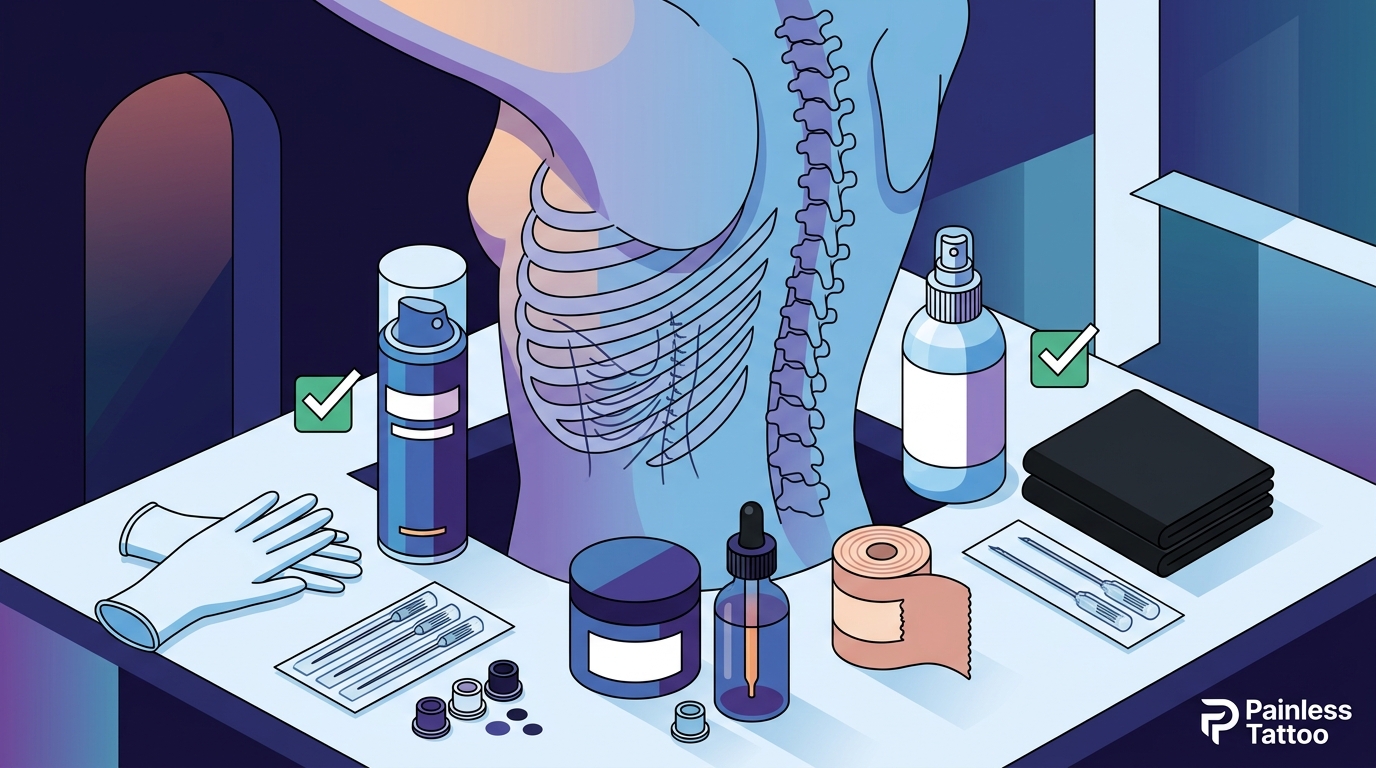
Breathing and Posture
Both placements require you to hold awkward positions for extended periods. Rib sessions often mean lying on your side with one arm overhead, while spine work usually involves sitting hunched forward. Fatigue from these positions compounds the pain over a multi-hour session.
Where Ribs and Spine Land on the Pain Scale
A pain scale is a subjective rating system tattoo communities use to compare placement intensity. Most charts use a 1 to 10 scale, where 1 is barely noticeable and 10 is extreme. Here is how ribs and spine stack up against other common spots.
| Placement | Typical Pain Rating | Key Factor |
|---|---|---|
| Outer Bicep | 3/10 | Thick muscle padding |
| Outer Thigh | 4/10 | Fleshy, few nerves |
| Sternum | 7-8/10 | Bone close to surface |
| Rib Cage | 8-10/10 | Thin skin, breathing movement |
| Spine | 9/10 | Nerve density, vertebral vibration |
| Armpit | 10/10 | Nerve clusters, ultra-thin skin |
As the table shows, ribs and spine sit near the top. Understanding that going in helps you set realistic expectations and plan accordingly.
Preparing Your Body Before the Session
What you do in the 24 to 48 hours before your appointment matters more than most people realize. A well-prepared body handles discomfort more effectively.
Hydration and Nutrition
Eat a full, balanced meal one to two hours before your session. Low blood sugar can amplify pain perception and make you lightheaded. Drink plenty of water in the days leading up to your appointment because hydrated skin accepts ink more smoothly. Avoid alcohol and caffeine, both of which thin your blood or heighten anxiety.
Sleep and Stress
A full night of sleep lowers cortisol levels, which directly influences how your nervous system processes pain. Showing up well-rested is one of the simplest ways to improve your session experience.
Topical Numbing Options
Topical numbing cream is a lidocaine-based product applied to the skin before a tattoo session to temporarily reduce surface-level sensation. Many people preparing for high-pain placements like ribs and spine reach for a topical numbing cream ahead of their appointment. Always coordinate with your tattoo artist before using any numbing product, as some artists have specific preferences about skin prep.
Managing Comfort During the Session
Once the needle starts, your comfort toolkit shifts from preparation to real-time management.
Breathing Techniques
Slow, controlled breathing helps regulate your nervous system. Try inhaling for four counts, holding for four, and exhaling for four. This is especially important for rib tattoos where rapid or shallow breathing makes the artist's job harder and your experience more painful.
Breaks and Session Length
For rib and spine pieces, many artists recommend splitting longer designs across multiple sessions. A large rib composition can take three to six hours, and fatigue after the two-hour mark tends to lower your pain tolerance significantly. Do not hesitate to ask for short breaks.
Mid-Session Numbing Support
A numbing spray is a topical product designed for use on broken skin during a tattoo session. Some artists use a numbing spray mid-session to help manage discomfort on especially sensitive passes. Talk to your artist about whether a spray fits their workflow.
Aftercare for High-Sensitivity Placements
Aftercare on ribs and spine requires extra attention because these areas move constantly and are prone to friction from clothing. The goal is to keep the tattooed skin clean, hydrated, and protected while it recovers.
Follow the guidance your tattoo artist gives you. For a thorough walkthrough, check out the Ultimate Tattoo Aftercare Guide from Painless Tattoo, which covers the full timeline from day one onward.
General principles most artists agree on include gentle washing with lukewarm water and mild soap, patting the area dry, and applying a thin layer of aftercare product. For rib tattoos, wear loose-fitting clothing to minimize rubbing. For spine tattoos, avoid leaning back against hard surfaces during the first week.
Painless Tattoo's Alpha Aftercare line offers three textures suited to different preferences and stages. You can explore the full range in their tattoo aftercare guide.
Choosing the Right Aftercare Product
Not every aftercare product works the same way. Texture, ingredients, and intended use case all vary. Here is how the three Alpha Aftercare options from Painless Tattoo compare.
| Product | Texture | Key Ingredients | Best For |
|---|---|---|---|
| Alpha Tattoo Whip | Light, whipped | Aloe Vera, Organic Glycerin, Vitamin E | Lightweight daily hydration; vegan-friendly |
| Alpha Tattoo Butter | Rich, creamy | Shea Butter, Mango Butter, Beeswax, MCT Oil | Deeper moisture for dry or peeling skin |
| Alpha Tattoo Oil | Fast-absorbing oil | Proprietary Advanced Growth Factor Technology | Long-term ink vibrancy and skin nourishment |
Alpha Tattoo Whip is a vegan aftercare product with a light, whipped consistency that absorbs quickly without leaving a greasy residue. If you prefer a richer feel, Alpha Tattoo Butter blends shea and mango butters for deeper hydration. Alpha Tattoo Oil is a fast-absorbing formula originally developed around advanced skin-support technology and repurposed specifically for tattooed skin. Many people rotate between all three depending on the stage of recovery and personal preference.
Key Takeaways
- Ribs and spine are among the most painful tattoo placements, typically rated 8 to 9 out of 10 on pain charts.
- Thin skin, bone proximity, and dense nerve endings are the primary drivers of discomfort in both areas.
- Hydration, nutrition, sleep, and stress management before your session directly affect pain tolerance.
- Topical numbing products used before or during a session can help manage discomfort. Always coordinate with your artist.
- Aftercare on high-movement areas like ribs and spine requires loose clothing, gentle washing, and consistent moisturizing.
- Painless Tattoo's Alpha Aftercare line (Whip, Butter, and Oil) offers three different textures to match your skin's needs at each recovery stage.
- Splitting long rib or spine sessions across multiple appointments reduces fatigue and keeps pain manageable.
Frequently Asked Questions
Why do rib tattoos hurt so much?
Rib tattoos are painful because the skin over the rib cage is very thin and sits directly on bone with minimal fat or muscle cushioning. The area also has a high concentration of nerve endings, and the constant motion of breathing stretches the skin during the session.
Is a spine tattoo more painful than a rib tattoo?
Both placements rank around 9 out of 10 on most pain charts. The spine adds the unique discomfort of needle vibration against vertebrae and proximity to the central nervous system, while ribs add the challenge of breathing-related skin movement. Most people find them comparably intense.
How long does a rib tattoo session typically take?
Small text or symbols on the ribs may take 30 minutes to an hour. Larger compositions with detail or shading can take three to six hours, sometimes split over multiple sessions to manage fatigue and pain.
Can I use numbing cream before a rib or spine tattoo?
Many people use a topical numbing cream before high-pain placements. The most important step is to talk to your tattoo artist first, as some artists have preferences about how numbing products interact with skin texture and ink absorption.
What should I wear to a rib tattoo appointment?
Wear loose, soft clothing that provides easy access to the rib area. A button-up shirt or a sports bra (for the side torso) works well. Avoid tight fabrics that will press against the fresh tattoo afterward.
How do I sleep after getting a spine tattoo?
Sleep on your side or stomach during the first week to avoid pressing the fresh tattoo against your mattress. Place a clean towel over your pillow or sheet as an extra precaution. Follow the aftercare recommendations your artist provides.
What is the best aftercare product for a rib tattoo?
The best aftercare product depends on your skin type and recovery stage. A lightweight option like Alpha Tattoo Whip works well for daily use, while a richer product like Alpha Tattoo Butter may suit drier or peeling skin. Consult your tattoo artist for personalized aftercare guidance.
Should I split my rib tattoo into multiple sessions?
For larger designs, splitting the work across two or more sessions is a common and practical approach. Pain tolerance tends to drop after a couple of hours, and shorter sessions allow for better healing between appointments.
Get Ready for Your Next Session
Whether you are planning your first rib piece or adding to a spine design, the right products make a real difference at every stage. Explore the full lineup of numbing and aftercare products from Painless Tattoo and walk into your next appointment prepared.