
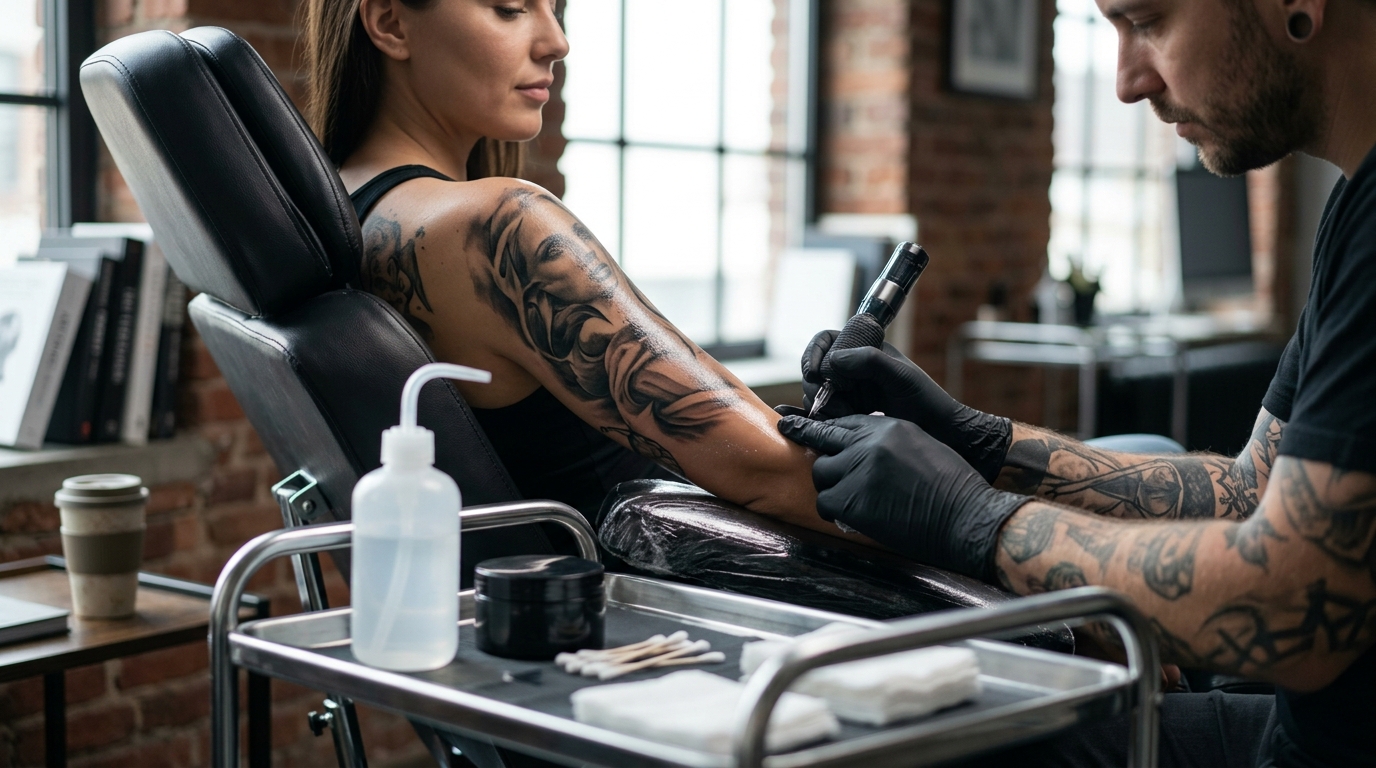
Tattoo Numbing Cream vs Numbing Spray for Long Sessions
Planning a multi-hour tattoo session and wondering whether to grab a numbing cream, a numbing spray, or both? You are not alone. Long sessions covering sleeves, back pieces, and full-leg work push comfort to its limits, and choosing the right topical numbing product for each phase of the appointment can make the difference between powering through and tapping out. This guide breaks down how tattoo numbing cream and numbing spray differ in formulation, timing, and practical use so you can walk into your next session prepared. Always confirm product choices with your tattoo artist beforehand.
What Is Tattoo Numbing Cream?
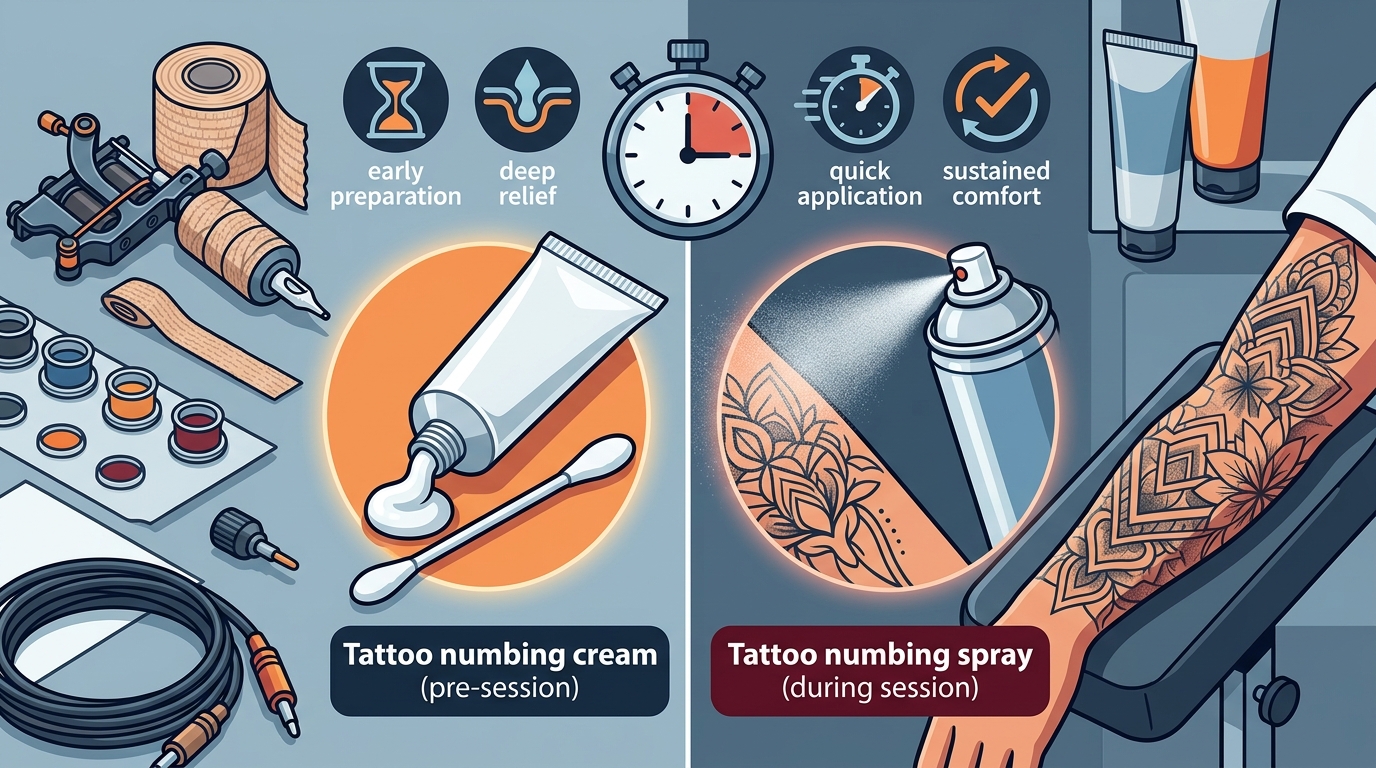
Tattoo numbing cream is a topical anesthetic applied to intact skin before a tattoo session begins. It typically contains lidocaine as its primary active ingredient, which temporarily blocks nerve signals that carry pain sensations to the brain. Because the cream is thick, it sits on the skin long enough to absorb into the deeper dermal layers where the tattoo needle reaches.
Painless Tattoo Numbing Cream is designed for pre-session use and comes in single-use sachets for sanitation. Each packet covers approximately a 4"x4" area, and the product is formulated with skin conditioners alongside the active numbing compounds.
Why People Choose Cream for Pre-Session Prep
Cream is the go-to for the start of a session because it needs to be applied to unbroken skin. This format allows the active ingredients time to penetrate while the skin is still intact. Many clients coordinate with their artist on the timeline so the cream has absorbed before stencil placement begins.
What Is Tattoo Numbing Spray?
Tattoo numbing spray is a liquid topical anesthetic designed to be applied during a tattoo session on skin that has already been worked on. Sprays are favored for their rapid onset and ease of re-application, since the artist can mist the area without pausing for long. Painless Tattoo Numbing Spray includes a proprietary blend of antibacterial and anti-inflammatory ingredients along with lightweight hydrators that help calm visible redness.
Why Spray Works Mid-Session
Once the needle has broken the skin, a spray can reach nerve endings more directly than a cream applied to an intact surface. This is why sprays are positioned as mid-session companions rather than pre-session tools. Artists appreciate that the liquid format does not leave a heavy residue that could interfere with ink application.
Head-to-Head Comparison Table
| Feature | Numbing Cream | Numbing Spray |
|---|---|---|
| When to use | Before the session (intact skin) | During the session (broken skin) |
| Primary active | Lidocaine-based | Lidocaine-based |
| Application method | Thick layer, often with occlusive wrap | Light mist sprayed directly on area |
| Onset speed | Requires absorption time before session | Rapid onset after application |
| Coverage per unit | ~4"x4" per sachet | Multiple re-applications per bottle |
| Re-application | Not typically reapplied once session starts | Can be reapplied up to 3 times daily |
| Best for | Initial lining and early session comfort | Extending comfort through long sessions |
Why Long Sessions Change the Equation
Short sessions under an hour may only need a pre-session cream. Long sessions are a different story. As the hours add up, the initial numbing effect can fade, especially in sensitive areas like ribs, inner arms, or spine. That is where having a mid-session option becomes valuable.
The Fade Factor
Topical lidocaine is a temporary nerve-signal blocker, not a permanent anesthetic. During extended tattoo work, the body continues to process and metabolize the active ingredient. A numbing spray allows the artist to refresh the numbing effect without needing to stop, clean, and re-wrap the area.
Sensitive Placement Areas
Spots like the ribs, sternum, and kneecap are notorious for higher discomfort. If you are planning work on a painful tattoo area, talking to your artist about a combined cream-and-spray approach is worth the conversation.
Using Cream and Spray Together
Cream and spray are not competing products. They are designed for different phases of the same session. Painless Tattoo positions its numbing tool lineup as a system: cream handles the pre-session window, and spray picks up during the session once the skin is open.
For artists managing client comfort across a full day of bookings, a combined workflow means fewer tap-outs and more continuous working time. The Painless Tattoo Spray 15 Pack is built for exactly that studio-level demand.
Talk to Your Artist First
Every artist has preferences about what goes on the skin before and during a session. Some artists have strong opinions about specific products, wrapping methods, and timing. Always check in with your tattoo professional before bringing any topical numbing product to your appointment.
Aftercare After a Long Session
Once the session ends, the focus shifts from numbing to recovery. A longer session typically means more skin trauma, which makes a solid aftercare routine even more important. Painless Tattoo offers three aftercare textures to match different preferences and skin needs.
Alpha Tattoo Oil is a lightweight, fast-absorbing option that uses the brand's proprietary Advanced Growth Factor Technology. Alpha Tattoo Oil is designed for those who prefer a non-greasy finish.
Alpha Tattoo Butter is a thicker formula made with organic ingredients and built for people who want a richer, more protective feel on the skin. Alpha Tattoo Butter is a vegan-friendly option in the aftercare line.
Alpha Tattoo Whip sits between the oil and the butter in texture and is another vegan option for daily aftercare use. For a deeper dive into post-session care, check out the Ultimate Tattoo Aftercare Guide on the Painless Tattoo blog.
Key Takeaways
- Tattoo numbing cream is a pre-session product applied to intact skin before the needle touches down.
- Tattoo numbing spray is a mid-session product applied to broken skin for rapid, on-the-fly comfort renewal.
- Long sessions benefit from using both formats in sequence rather than relying on one alone.
- Lidocaine is a temporary nerve-signal blocker found in both creams and sprays, though formulations and delivery methods vary.
- Always confirm any numbing product with your tattoo artist before your appointment.
- After a long session, transition to aftercare products like Alpha Tattoo Oil, Butter, or Whip to support your skin's recovery.
- Cream and spray serve different stages of the tattoo journey and are complementary, not interchangeable.
Frequently Asked Questions
Can I use numbing cream and numbing spray during the same session?
Yes. They are designed for different phases. Cream goes on before the session on intact skin, and spray is used during the session once the skin is broken. Many long-session clients and artists use both as part of a comfort strategy.
Does numbing spray work on unbroken skin?
Sprays are formulated primarily for use on skin that has already been opened by the tattoo needle. On intact skin, the thin liquid format does not absorb as deeply as a cream. For pre-session numbing, a cream is the better match.
How long does tattoo numbing cream last?
Duration varies depending on body placement, skin type, and the specific product. Painless Tattoo Numbing Cream is designed to cover approximately a 4"x4" area for a general window of 1 to 3 hours. Your mileage may vary, so talk to your artist about expectations.
Will numbing products affect tattoo ink quality?
Painless Tattoo states that its cream and spray are formulated not to interfere with the tattooing process. That said, every artist has their own experience with topical products. Always discuss this with your tattoo professional.
Is tattoo numbing spray safe to reapply multiple times?
Painless Tattoo Numbing Spray can be reapplied as needed, up to three times daily. If you experience any unusual reaction like excessive redness or swelling, stop use and consult a healthcare provider.
What should I use after the session for aftercare?
Painless Tattoo offers three aftercare products: Alpha Tattoo Oil for a lightweight feel, Alpha Tattoo Butter for a richer texture, and Alpha Tattoo Whip for something in between. Follow your artist's aftercare recommendations as a starting point.
Do I need a prescription for tattoo numbing cream?
Over-the-counter topical lidocaine products, including Painless Tattoo Numbing Cream, do not require a prescription. Liquid or injectable lidocaine used in medical settings is a different category and does require medical oversight.
Should I ask my tattoo artist before using numbing products?
Absolutely. Your tattoo artist is the best resource for understanding what works well with their technique and workflow. Bring the product to your consultation or send them a link ahead of time so there are no surprises on session day.
Ready to Prep for Your Next Long Session?
Browse the full Painless Tattoo product lineup to find the right cream, spray, and aftercare combination for your next appointment. Match each product to the right stage of your tattoo journey and walk in with a plan.