
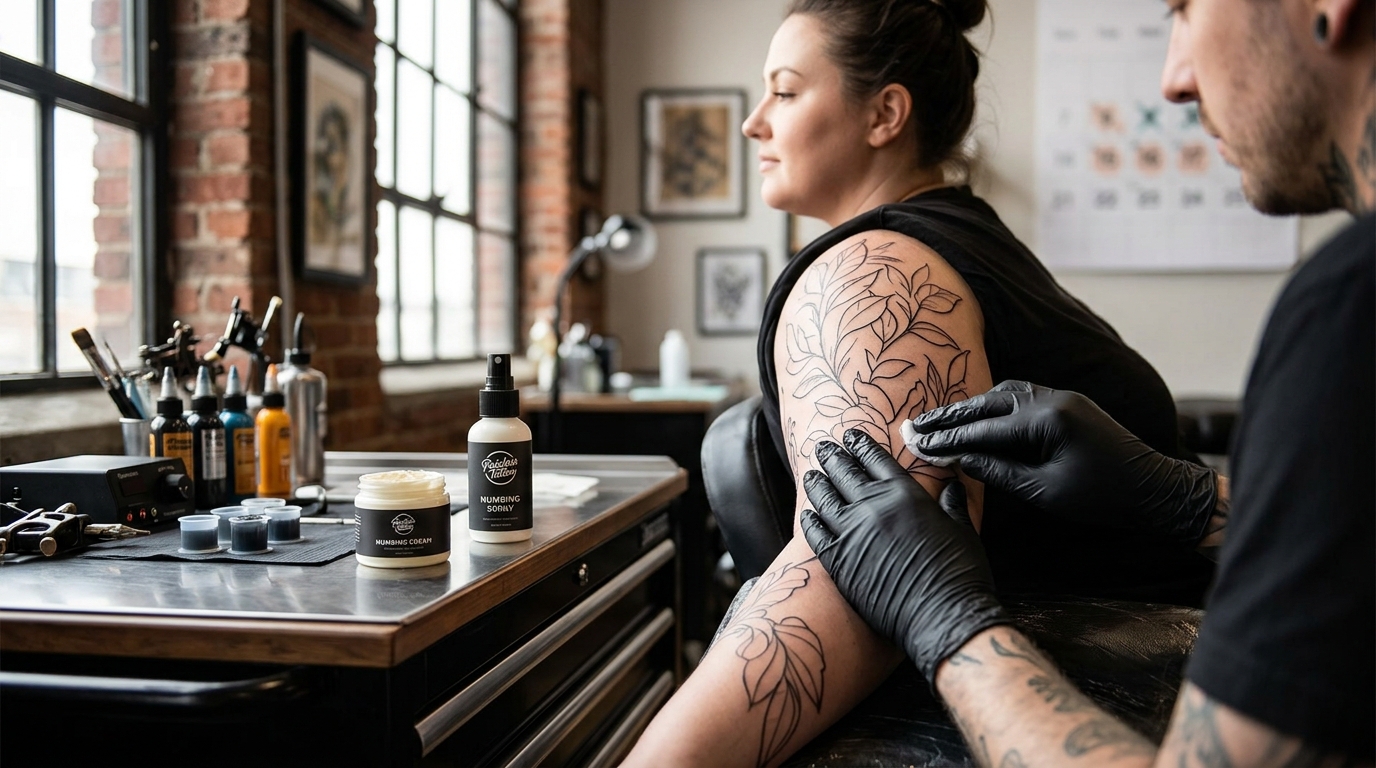
Choosing the right topical anesthetic directly impacts artist workflow and client comfort during extended tattooing. Professionals consistently evaluate application methods to ensure consistent skin preparation across large canvas areas. The fundamental difference lies in how each formulation penetrates the epidermis and maintains its therapeutic effect over time. Artists must weigh absorption rates, coverage consistency, and session duration when selecting their preferred delivery system. (Painless Tattoo Apparel ndash)
How They Differ
Tattoo numbing cream is a thick topical formulation designed to sit on the skin surface while gradually penetrating deeper tissue layers. Tattoo numbing cream is a thick topical formulation designed to sit on the skin surface while gradually penetrating deeper tissue layers. This consistency allows artists to work over larger areas without frequent reapplication. The thicker base creates a physical barrier that locks active ingredients against the target zone. Many studios prefer this method for traditional blackwork or intricate line work that demands steady skin tension. (Painless Tattoo Products ndash)
Tattoo numbing spray is a fine mist dispersion system engineered to cover irregular contours quickly. Tattoo numbing spray is a fine mist dispersion system engineered to cover irregular contours quickly. This delivery method reduces product waste and accelerates the initial preparation phase. Artists often select this approach for geometric patterns or color packing where precise edge definition matters most. The rapid evaporation rate also minimizes the risk of product pooling in skin creases.
Absorption Mechanics
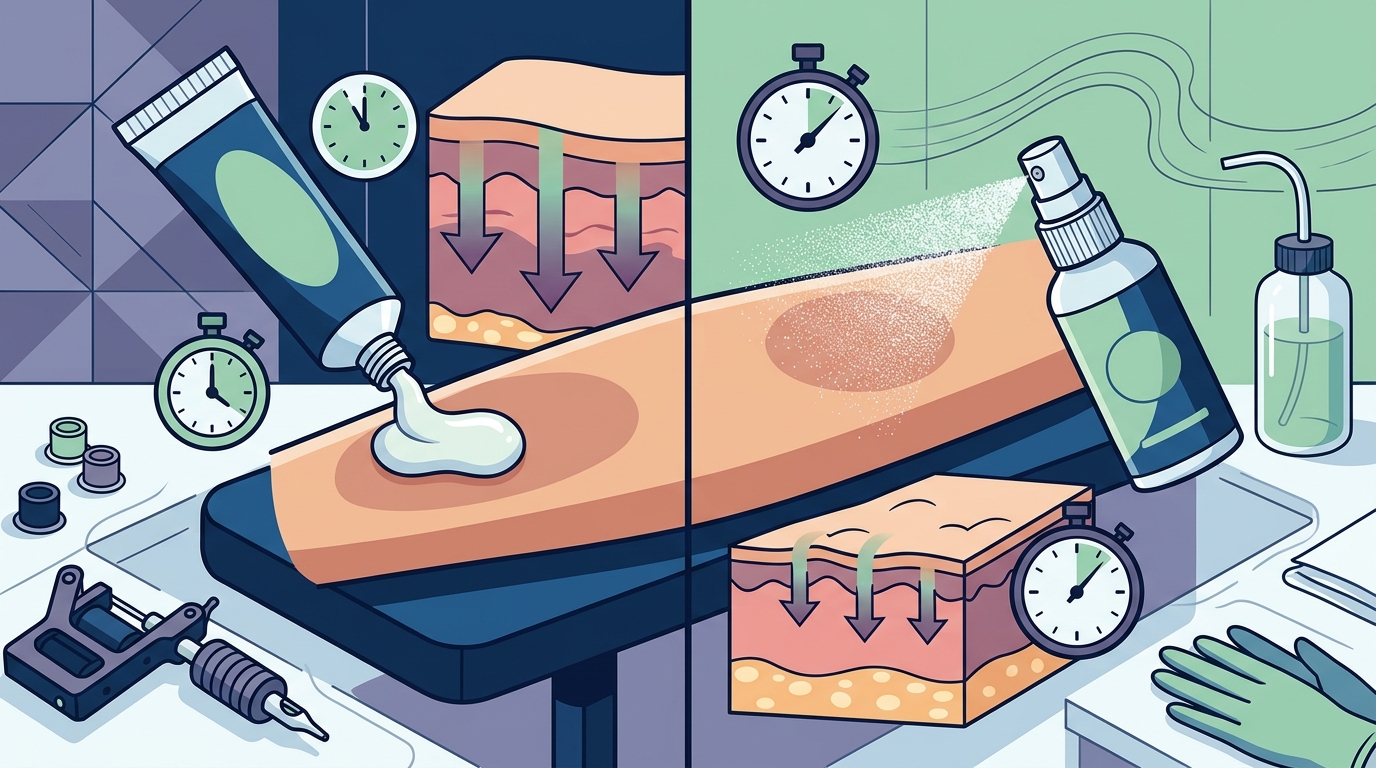
Understanding how each product interacts with the skin explains why session length dictates the final choice. The cream formulation relies on occlusive properties to force active compounds through the stratum corneum. This process typically requires extended dwell times before the tattoo machine makes contact. Artists must plan their workflow around these mandatory waiting periods to ensure maximum efficacy.
The spray formulation utilizes aerosolized droplets that distribute active compounds across a wider surface area. Topical anesthesia is the medical application of chemical agents to temporarily block nerve signal transmission. This definition highlights the core mechanism behind both delivery systems. The spray penetrates faster but may require strategic reapplication during multi-hour sessions. Professionals often combine both methods to balance rapid onset with sustained coverage.
Session Duration
Extended tattooing demands a numbing strategy that maintains consistent pain thresholds throughout the entire appointment. Cream-based systems generally provide longer-lasting coverage once fully absorbed. The occlusive layer prevents rapid evaporation and keeps the active ingredients in direct contact with nerve endings. This makes them ideal for sessions exceeding four hours or large-scale back pieces.
Spray-based systems excel during the initial setup phase but may require touch-ups during prolonged work. The fine mist distributes evenly across complex curves and shaded regions without heavy product buildup. Artists frequently pair this approach with targeted cream applications on highly sensitive zones. This hybrid strategy optimizes comfort while maintaining precise machine control.
Application Techniques
Proper preparation directly influences how well either product performs during active tattooing. Cream application requires a thin, even layer that fully covers the target stencil area. Artists typically use disposable applicators to maintain strict hygiene standards throughout the process. The product must remain undisturbed for the recommended dwell time to achieve maximum penetration.
Spray application demands consistent nozzle distance and overlapping passes to ensure uniform coverage. The spray must dry completely before stencil transfer to prevent smudging or distortion. Professionals often test the coverage on a small patch before committing to the full design. Studio inventory should always reflect the specific workflow requirements of the artist.
Product Comparison
| Feature | Cream Formulation | Spray Formulation | Best Use Case |
|---|---|---|---|
| Onset Time | Slower absorption | Rapid dispersion | Planning ahead |
| Coverage Area | Large flat zones | Irregular contours | Design complexity |
| Duration | Extended coverage | Requires touch-ups | Session length |
| Studio Preference | Traditional line work | Color packing | Artist workflow |
Both delivery systems integrate seamlessly into professional studio workflows. The Painless Tattoo Numbing Cream remains a studio staple for its reliable occlusive properties. Meanwhile, the Painless Tattoo Numbing Spray offers unmatched speed for rapid setup phases. Many artists now utilize the BLT Triple Numb system to combine both advantages in a single package. Studios can also explore the Painless Tattoo Combo to stock multiple formats for diverse client needs.
Key Takeaways
- Cream formulations provide extended coverage ideal for sessions exceeding four hours.
- Spray formulations deliver rapid onset perfect for intricate geometric patterns.
- Hybrid application strategies maximize comfort across complex body zones.
- Proper dwell times directly correlate with long-term pain management success.
- Studio inventory should include multiple delivery formats for client flexibility.
- Wholesale purchasing options reduce per-unit costs for high-volume artists.
Frequently Asked Questions
Which numbing product lasts longer during a tattoo session?
Cream formulations generally maintain their therapeutic effect longer due to their occlusive base. The thicker consistency prevents rapid evaporation and keeps active ingredients in direct contact with nerve endings. Artists working on large back pieces or full sleeves typically prefer this extended coverage model.
Can I use both cream and spray during the same appointment?
Yes, combining both delivery systems creates a highly effective pain management strategy. Artists often apply spray for rapid initial coverage and layer cream over highly sensitive zones. This hybrid approach balances quick onset with sustained therapeutic effects throughout the entire appointment.
How long should I wait before the tattoo machine touches the skin?
Most professional formulations require between thirty and sixty minutes of undisturbed dwell time. The exact duration depends on skin thickness, body location, and the specific active compound concentration. Always follow the manufacturer guidelines printed on the packaging for optimal results.
Is numbing spray safe for sensitive skin types?
Modern spray formulations are engineered to minimize irritation while delivering consistent coverage. The fine mist distribution reduces product pooling and prevents excessive chemical concentration in one area. Clients with known sensitivities should always consult their artist before selecting a specific delivery method.
What is the best way to store numbing products between sessions?
Both cream and spray formulations require cool, dry storage conditions to maintain chemical stability. Direct sunlight and extreme temperature fluctuations can degrade active compounds over time. Keeping products in their original packaging until ready for use preserves maximum efficacy.
Do professional artists recommend one format over the other?
Studio preferences depend entirely on the specific design requirements and client comfort goals. Traditional line work often benefits from the steady coverage of cream formulations. Color packing and intricate shading frequently utilize the rapid dispersion of spray systems.
Book Your Next Session
Ready to experience professional-grade pain management for your next appointment? Visit the official product store to explore our complete lineup of studio-tested formulations. Our team provides detailed application guides and wholesale pricing for high-volume artists. Schedule your consultation today and ensure your next tattoo session remains comfortable from start to finish.