
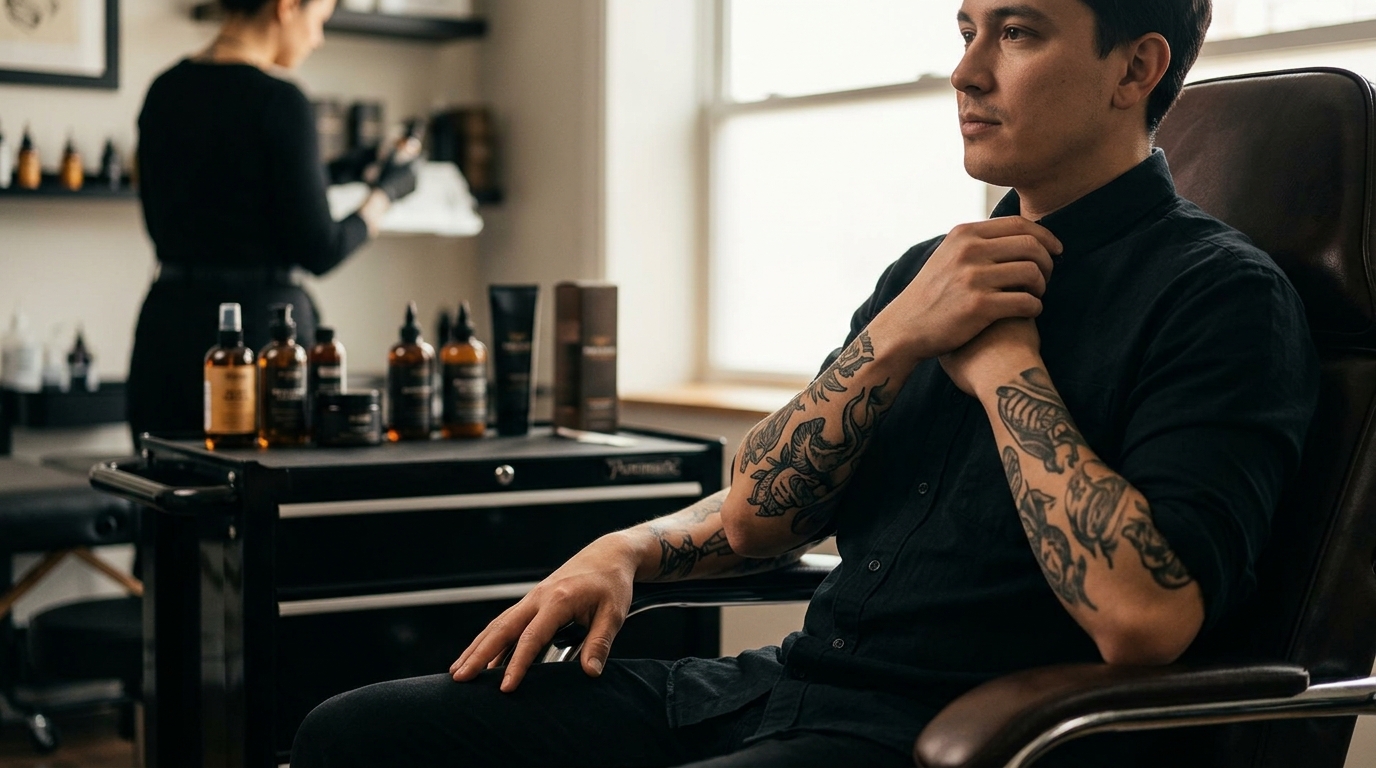
The global tattoo industry continues to expand rapidly, with recent market analysis indicating that the sector now generates over $2 billion in annual revenue across North America alone. This explosive growth directly correlates with a rising demand for advanced pain management solutions during studio sessions. Professionals and enthusiasts alike now prioritize clinical-grade topical anesthetics to ensure comfort without compromising skin integrity. Understanding where to source these specialized formulations remains critical for both safety and efficacy. This guide examines the exact channels for purchasing verified numbing agents, breaking down product tiers, application protocols, and compliance standards. (Painless Tattoo Apparel ndash)
Understanding Professional Grade Numbing Formulations
Professional grade tattoo numbing products differ significantly from over-the-counter retail alternatives. These formulations are engineered specifically for the mechanical trauma of needle penetration. Topical anesthesia is the localized application of chemical agents to temporarily block nerve signal transmission. Studio owners require consistent results across diverse skin types and body regions. The market currently offers three primary delivery systems, each engineered for distinct workflow requirements. (Your Shopping Cart ndash)
Cream-based formulations provide extended contact time and deeper dermal penetration. Spray applications offer rapid coverage and reduced mess during high-volume studio hours. Triple-action hybrid systems combine multiple active compounds to maximize duration and coverage area. Each system requires specific preparation timelines to achieve optimal clinical results. Selecting the correct delivery method depends entirely on your studio workflow and client comfort preferences.
Key Ingredients and Clinical Efficacy Standards
Effective numbing formulations rely on precise concentrations of amide-based anesthetics. Lidocaine and prilocaine remain the industry standard for professional applications. Amide-based anesthetics are synthetic compounds that reversibly bind to voltage-gated sodium channels in peripheral nerves. These compounds prevent action potential propagation, effectively halting pain signal transmission to the central nervous system. Reputable manufacturers maintain strict quality control protocols to ensure batch consistency.
Regulatory agencies continuously monitor pigment safety and topical formulation standards. Recent updates from the Food and Drug Administration emphasize transparency in ingredient disclosure. Studios must verify that all purchased products meet current safety benchmarks. Third-party laboratory testing provides essential verification of active compound concentrations. Always request certificates of analysis before integrating new formulations into your studio operations.
Direct Retail Channels vs. Wholesale Distribution
Purchasing decisions ultimately depend on your operational scale and budget constraints. Independent artists typically benefit from direct retail purchases, while established studios require bulk distribution models. The following table compares standard purchasing pathways and their operational advantages.
| Purchasing Pathway | Unit Cost Efficiency | Inventory Management | Recommended For |
|---|---|---|---|
| Direct Retail Packs | Standard pricing | Low volume tracking | Freelance artists and beginners |
| Artist Bundle Packs | Moderate discount | Medium volume tracking | Part-time studios and pop-up events |
| Wholesale Distribution | Maximum discount | High volume tracking | Established studios and franchises |
Direct retail options remain accessible through the official product collection page. These packs provide immediate access to cream, spray, and hybrid systems. Wholesale distribution channels offer significant cost savings for high-volume operations. Studios purchasing the wholesale artist pack receive discounted pricing per unit. Bulk purchasing reduces overhead costs while ensuring consistent stock availability. Evaluate your monthly session volume before committing to large inventory orders.
Application Protocols and Skin Preparation
Proper application directly determines clinical effectiveness and client satisfaction. Incorrect usage frequently results in inadequate pain coverage or extended recovery periods. Pre-application skin preparation is the mandatory cleansing and degreasing process required before topical agent deployment. This step removes natural oils, dead skin cells, and surface contaminants that block absorption. Studios must enforce strict hygiene protocols before any numbing product touches the skin.
Cream formulations typically require forty-five to sixty minutes of occluded contact time. Spray applications often activate within fifteen to twenty minutes under standard conditions. Hybrid systems combine rapid onset properties with extended duration capabilities. Always follow the manufacturer's specific timing guidelines for each product line. The official application guidelines provide step-by-step instructions for optimal results. Never exceed recommended dosages, as systemic absorption increases with prolonged exposure.

Regulatory Compliance and Safety Verification
Professional studios operate under strict health department regulations and insurance requirements. Purchasing unverified numbing products frequently voids studio liability coverage. Reputable manufacturers maintain full transparency regarding ingredient sourcing and manufacturing practices. The American Tattoo Association publishes updated safety guidelines for topical agent usage. Compliance ensures both client safety and legal protection for business operators.
Insurance providers increasingly require documentation of all consumable products used during sessions. Maintaining a centralized inventory log simplifies audit processes and claim verification. Partnering with established brands reduces liability exposure and streamlines compliance workflows. The Centers for Disease Control emphasizes proper storage conditions to maintain compound stability. Keep all products in climate-controlled environments away from direct sunlight. Verify expiration dates before each application to guarantee maximum efficacy.
Key Takeaways
- Professional grade formulations utilize precise amide-based concentrations for consistent nerve blockage.
- Direct retail packs suit freelance artists, while wholesale bundles optimize studio overhead costs.
- Pre-application skin preparation remains mandatory for optimal compound absorption and coverage.
- Regulatory compliance requires full ingredient transparency and documented safety certifications.
- Hybrid systems combine rapid onset properties with extended duration capabilities for complex sessions.
- Insurance providers increasingly mandate verified product documentation for liability coverage.
- Climate-controlled storage preserves compound stability and extends product shelf life.
Frequently Asked Questions
What is the recommended application time for professional tattoo numbing cream?
Most clinical-grade formulations require forty-five to sixty minutes of occluded contact time before needle penetration begins. Spray applications typically activate within fifteen to twenty minutes under standard studio conditions.
Can numbing products interfere with pigment retention during the tattooing process?
When applied correctly, professional formulations do not compromise pigment retention. Over-application or improper timing may cause slight pigment fading in highly vascularized areas.
Are wholesale numbing packs suitable for beginner tattoo artists?
Wholesale bundles are designed for high-volume operations and require precise inventory management. Beginners should start with direct retail packs to master application timing and dosage protocols.
How should studios store numbing products to maintain compound stability?
All topical anesthetics must remain in climate-controlled environments between sixty-five and seventy-five degrees Fahrenheit. Direct sunlight and extreme temperatures degrade active compounds and reduce clinical effectiveness.
Do professional numbing formulations require a medical prescription?
Most studio-grade topical anesthetics are classified as over-the-counter professional supplies. They do not require physician authorization, though state health department regulations may vary by region.
What is the difference between cream, spray, and hybrid numbing systems?
Creams provide extended contact time and deeper dermal penetration. Sprays offer rapid coverage and reduced mess during high-volume sessions. Hybrid systems combine multiple active compounds to maximize duration and coverage area.
How do studios verify the authenticity of purchased numbing products?
Reputable manufacturers provide batch-specific verification codes and certificates of analysis. Always purchase directly from authorized distributors to avoid counterfeit formulations.
Secure Your Studio Supply Order
Investing in verified professional grade numbing products directly impacts client retention, studio reputation, and operational efficiency. Partnering with established manufacturers ensures consistent results across diverse skin types and session complexities. Browse the complete product lineup and select the delivery system that aligns with your studio workflow. Visit the official storefront to place your order today. High-volume studios should explore the wholesale distribution options to maximize cost efficiency. Contact the support team for custom pricing tiers and bulk fulfillment schedules.