

Tattoo artists and clients alike face a significant challenge when planning extended sessions. The skin's natural pain response can escalate quickly, leading to movement, compromised artistry, and client discomfort. According to industry data on client retention, over 60% of first-time tattooers cite pain as a primary barrier to booking follow-up appointments. This statistic highlights why effective pain management is not just a luxury but a critical component of professional tattooing. Choosing the right topical anesthetic can mean the difference between a flawless, multi-hour session and a rushed, painful experience. This guide breaks down the mechanics of numbing creams versus numbing sprays to help you make an informed decision.
Mechanism of Action and Absorption
Understanding how topical anesthetics interact with the skin is the first step in selecting the right product. Both creams and sprays typically rely on high concentrations of lidocaine or tetracaine to block nerve signals in the epidermis. However, the delivery method significantly impacts how quickly and deeply the active ingredients penetrate.
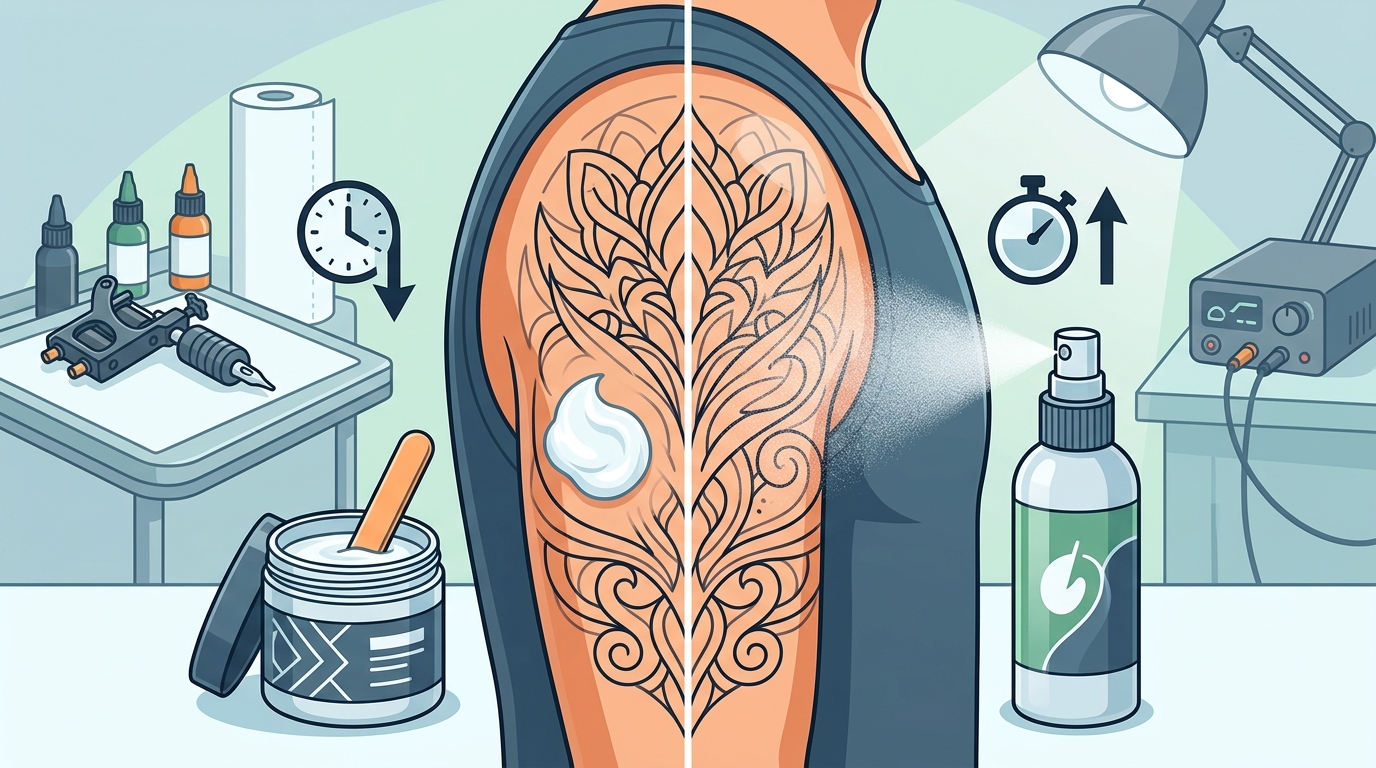
Numbing cream is a semi-solid formulation designed to sit on the skin surface for an extended period. This allows the active ingredients to slowly diffuse into the nerve endings. The occlusive nature of creams often requires a longer onset time, typically 45 to 60 minutes, to reach peak efficacy. This slow-release mechanism is ideal for deep, dense tattoo work where sustained numbness is required.
Numbing spray is a liquid-based aerosol or pump delivery system that evaporates quickly upon contact with the skin. This rapid evaporation can create a cooling effect that provides immediate, albeit superficial, relief. Sprays are often preferred for quick touch-ups or for clients who are sensitive to the thick texture of creams. The absorption rate is faster, but the duration of numbness may be shorter compared to heavy-duty creams.
The Case for Numbing Cream
For long tattoo sessions, particularly those exceeding two hours, numbing cream remains the gold standard in the industry. The primary advantage lies in its ability to create a thick, protective barrier over the skin. This barrier not only delivers the anesthetic but also protects the area from environmental contaminants during the waiting period.
At PainlessTattoo, the formulation of their flagship numbing cream is designed to maximize penetration. The inclusion of ingredients like mango butter and shea butter helps to condition the skin, ensuring that the anesthetic can work effectively without causing excessive dryness or irritation. This is crucial for artists who need to work on sensitive areas like the ribs, inner arms, or behind the knees.
Another significant benefit of cream is its longevity. Once the skin is fully numbed, the effects can last for several hours, providing a consistent level of comfort throughout the session. This consistency allows the artist to focus on detail work without interruption. Clients often report that the initial sting of the needle is significantly reduced, allowing them to relax and enjoy the experience more.
However, the application process requires more time and precision. Artists must ensure an even layer is applied, often covering the area with plastic wrap to enhance absorption. This process can add 30 to 45 minutes to the overall appointment time, which is a trade-off for the superior pain relief provided.
The Case for Numbing Spray
Numbing sprays offer a different set of advantages, primarily centered around convenience and speed. For artists who work on a tight schedule or need to numb a client quickly before starting a session, spray is an invaluable tool. The application is straightforward: a few pumps over the target area, and the product is ready to work.
The Painless Tattoo Numbing Spray is formulated to provide rapid onset relief. This makes it particularly useful for clients who have a low pain tolerance but cannot afford to wait the full 60 minutes required for a cream to take effect. The spray also allows for easy reapplication during the session if the numbness begins to wear off in specific spots.
Additionally, sprays are less messy than creams. They do not leave a greasy residue on the artist's hands or the surrounding skin, which can be a hygiene concern in a busy studio environment. The cooling sensation provided by the evaporation of the spray can also help to reduce swelling and redness immediately after the needle stops.
Despite these benefits, sprays may not be sufficient for very long or deep tattoo sessions. The active ingredients may not penetrate as deeply as a cream, leading to a shorter duration of numbness. Clients may find that they need to reapply the spray multiple times during a long session, which can be disruptive to the flow of the tattooing process.
Comparison Table: Cream vs. Spray
The following table summarizes the key differences between numbing cream and numbing spray to help you decide which is best for your specific needs.
| Feature | Numbing Cream | Numbing Spray |
|---|---|---|
| Onset Time | 45-60 minutes | 10-15 minutes |
| Duration of Numbness | 3-5 hours | 1-2 hours |
| Penetration Depth | Deep | Superficial |
| Application Ease | Requires plastic wrap | Quick pump application |
| Best For | Long sessions, sensitive areas | Quick touch-ups, short sessions |
| Residue | Greasy, requires cleanup | Minimal, evaporates quickly |
Key Takeaways
- Onset Time: Creams require 45-60 minutes to work, while sprays act in 10-15 minutes.
- Duration: Creams provide longer-lasting numbness, ideal for sessions over two hours.
- Penetration: Creams penetrate deeper into the skin, offering more effective pain relief for dense work.
- Convenience: Sprays are easier to apply and do not require plastic wrap or extensive cleanup.
- Product Range: PainlessTattoo offers both options to suit different client needs.
- Aftercare: Both products should be followed by proper aftercare to ensure optimal healing.
- Professional Use: Many artists use a combination of both for maximum comfort and efficiency.
Frequently Asked Questions
Can I use numbing spray for a full-day tattoo session?
While numbing spray can be used for a full-day session, it may require frequent reapplication. The effects of spray typically last 1-2 hours, whereas cream can last 3-5 hours. For long sessions, cream is generally more effective.
Does numbing cream affect the tattooing process?
Yes, numbing cream can change the texture of the skin, making it slightly firmer. Artists may need to adjust their technique slightly to ensure proper ink saturation. However, the benefit of reduced pain usually outweighs this minor adjustment.
Is it safe to use numbing products on all skin types?
Most numbing products are safe for all skin types. However, individuals with sensitive skin or allergies to lidocaine should perform a patch test 24 hours before use. PainlessTattoo recommends consulting with a healthcare provider if you have any concerns.
How do I apply numbing spray correctly?
Apply the spray evenly over the target area from a distance of about 6 inches. Allow it to dry completely before covering with plastic wrap if recommended. Avoid rubbing the product in, as this can reduce its efficacy.
What is the difference between Alpha Tattoo Oil and numbing cream?
Alpha Tattoo Oil is an aftercare product designed to heal and nourish the skin after the tattoo is complete. Numbing cream is a pre-session product used to reduce pain during the tattooing process. They serve completely different purposes in the tattoo lifecycle.
Can I use numbing cream on sensitive areas like the ribs?
Yes, numbing cream is particularly effective on sensitive areas like the ribs, inner arms, and behind the knees. The deep penetration of the cream helps to block the intense nerve signals in these areas, making the tattooing process much more comfortable.
Are there any side effects of using numbing products?
Side effects are rare but can include redness, itching, or mild swelling at the application site. In rare cases, individuals may experience an allergic reaction. Always follow the instructions provided with the product and do not exceed the recommended dosage.
Book Your Painless Session
Choosing the right numbing product can transform your tattoo experience from a painful ordeal into a comfortable and memorable event. Whether you prefer the deep, long-lasting relief of Painless Tattoo Numbing Cream or the quick convenience of Painless Tattoo Numbing Spray, having the right tools is essential for both artists and clients.
Explore the full range of PainlessTattoo products to find the perfect solution for your next session. Visit our Shop Now page to browse our complete collection of numbing tools and aftercare products. For wholesale inquiries, check out our Wholesale section. Join the community of artists and clients who trust PainlessTattoo for superior pain management and aftercare.