
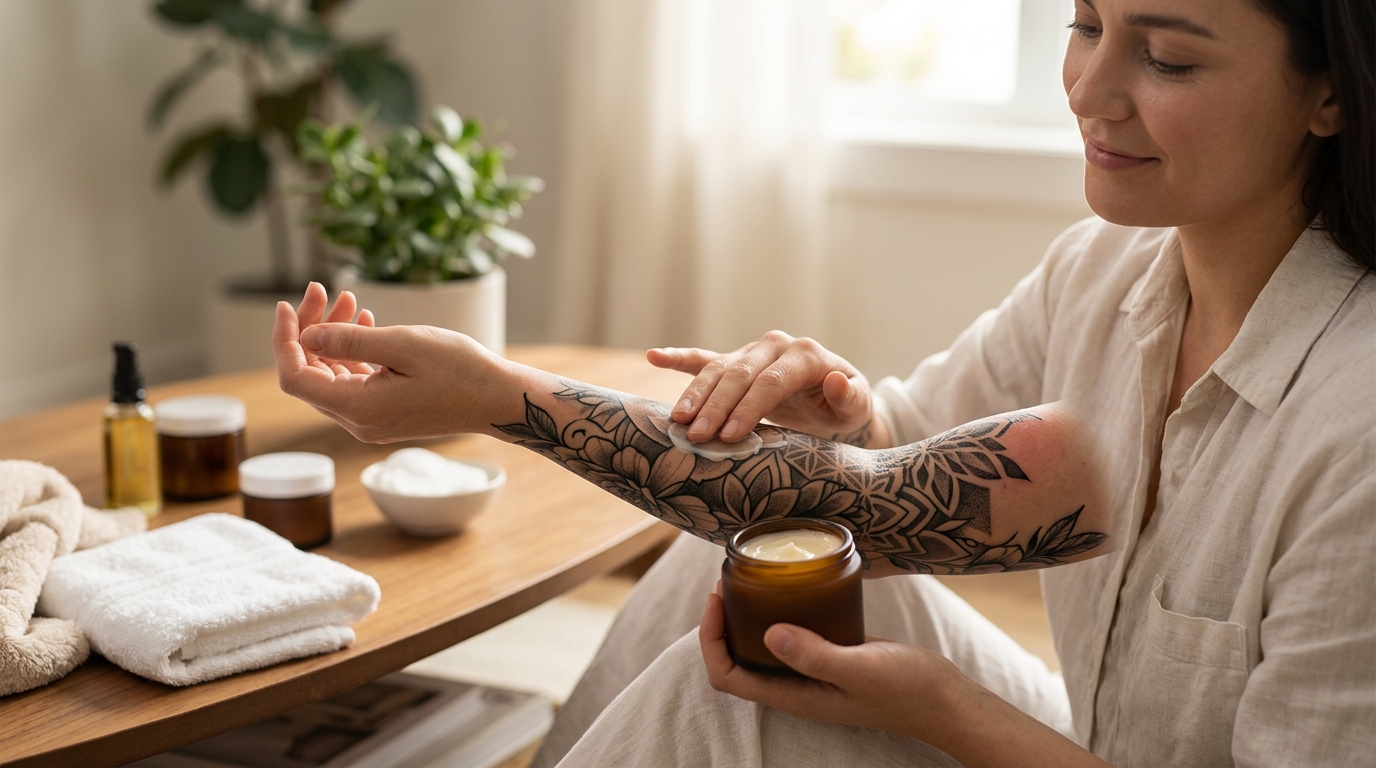
Tattoo aftercare is not merely a suggestion; it is the critical bridge between the needle and the final healed artwork. When the skin is traumatized by ink, the body initiates an immediate inflammatory response. This process manifests as redness, swelling, and tenderness. According to dermatological standards, proper intervention during the first week can significantly reduce the duration of this inflammatory phase. The goal is to create a moist, protected environment that allows keratinocytes to migrate efficiently across the wound bed. This guide details the specific product categories and protocols that accelerate this biological timeline while minimizing visible redness.
Understanding Redness and Inflammation
Redness, or erythema, is the body's natural defense mechanism. Blood vessels dilate to bring immune cells to the site of injury. While this is healthy, excessive or prolonged redness can indicate irritation or poor aftercare choices. The skin barrier must be restored quickly to prevent transepidermal water loss, which delays healing.
Healing occurs in distinct phases. The first phase is hemostasis and inflammation. The second is proliferation, where new tissue forms. The final phase is maturation. Products that support the proliferation phase are essential for speeding up the overall timeline. Using harsh soaps or alcohol-based products can disrupt this cycle, extending the redness period unnecessarily.
Moisture is the key variable. A dry scab forms when the wound is exposed to air. Scabs are thick, opaque, and can lift ink during the peeling stage. A moist wound heals faster than a dry one. This is a fundamental principle of wound care that applies directly to tattoo aftercare. By keeping the area hydrated with specialized ointments, you prevent the formation of thick scabs and reduce the visual impact of redness.
The Role of Numbing Agents in Healing
While primarily designed for pain management, numbing agents play a secondary role in the healing process. BLT Triple Numb is a specialized formulation that combines three potent numbing agents. This product is often used before the tattooing session to minimize trauma. Less trauma during the procedure means less immediate inflammation afterward.
Reducing the initial shock to the skin can lead to a calmer inflammatory response. This does not replace aftercare but sets a better foundation for it. When the skin is not in a state of acute distress, the subsequent healing products can work more effectively. The Painless Tattoo Numbing Cream is another popular option for pre-care preparation.
It is important to note that numbing products are not aftercare. They are pre-care tools. Using them after the tattoo is complete can interfere with the skin's natural immune response. However, understanding their role helps artists and clients manage the entire experience from start to finish. The Painless Tattoo Numbing Spray offers a fast-acting alternative for those who prefer topical sprays over creams.
Top Aftercare Products for Speed
The Painless Tattoo Combo includes several products designed specifically for the healing phase. These products are formulated to be non-comedogenic and free of unnecessary fillers. The focus is on pure, active ingredients that support skin regeneration.
Alpha Tattoo Butter
Alpha Tattoo Butter is a rich, emollient product designed for the later stages of healing. It contains shea butter, mango butter, and beeswax. These ingredients create a protective barrier that locks in moisture. This is crucial for reducing redness in the days following the initial peeling. The butter is thick enough to provide long-lasting hydration without feeling greasy. It is ideal for dry skin types that may experience excessive flaking.
Alpha Tattoo Oil
Alpha Tattoo Oil is a lightweight alternative to the butter. It is formulated with avocado extract, olive extract, and tea tree extract. Tea tree is known for its mild antiseptic properties, which can help prevent infection. Infection is a primary cause of prolonged redness and delayed healing. The oil absorbs quickly, making it suitable for humid climates or oily skin types. It helps to soften the skin as it peels, reducing the urge to scratch.
Alpha Tattoo Whip
Alpha Tattoo Whip offers a unique texture that is both airy and hydrating. It is designed to provide immediate relief to irritated skin. The whip formulation allows for easy application over large areas. It is particularly effective for reducing the sensation of tightness that often accompanies the healing process. Tight skin can lead to cracking, which restarts the healing clock. Keeping the skin supple is essential for speed.
Product Comparison Matrix
Choosing the right product depends on your skin type and the stage of healing. The following table compares the primary aftercare options available from PainlessTattoo.
| Product | Best For | Key Ingredients | Healing Stage |
|---|---|---|---|
| Alpha Tattoo Butter | Dry, Flaky Skin | Shea Butter, Mango Butter, Beeswax | Mid to Late Healing |
| Alpha Tattoo Oil | Oily, Humid Climates | Avocado Extract, Tea Tree, Olive Oil | Early to Mid Healing |
| Alpha Tattoo Whip | Immediate Relief | Lightweight Emollients, Aloe Vera | Any Stage |
| Painless Tattoo Combo | Complete Care | Full Range of Alpha Products | Full Cycle |
Key Takeaways
- Moisture is Critical: A moist wound heals faster than a dry one. Avoid thick scabs by using appropriate ointments.
- Product Selection: Alpha Tattoo Butter is best for dry skin, while Alpha Tattoo Oil suits oily skin types.
- Pre-Care Matters: Using BLT Triple Numb before the session can reduce initial trauma and subsequent inflammation.
- Avoid Irritants: Do not use products with alcohol or harsh fragrances. These ingredients delay healing and increase redness.
- Consistency: Apply aftercare products 2-3 times daily. Inconsistent application leads to uneven healing and patchy color.
- Hygiene: Wash hands before applying any product. Introducing bacteria to an open wound is a primary cause of infection.
- Patience: Even with the best products, healing takes time. Do not pick at peeling skin.
Frequently Asked Questions
How long does tattoo redness typically last?
Redness usually subsides within 3 to 7 days for most people. If redness persists beyond two weeks, it may indicate an allergic reaction or infection.
Can I use lotion on my new tattoo?
Standard body lotions are not recommended for fresh tattoos. They often contain fragrances and preservatives that can irritate the wound. Use a specialized product like Alpha Tattoo Oil instead.
What is the fastest way to heal a tattoo?
The fastest healing comes from keeping the tattoo moist and clean. Avoiding sun exposure and tight clothing also accelerates the process.
Is Alpha Tattoo Butter greasy?
Alpha Tattoo Butter is rich but absorbs well. It is designed to provide a barrier without leaving a heavy, greasy residue that attracts dirt.
Can I use numbing cream after my tattoo?
No. Numbing creams are for pre-care only. Using them on an open wound can interfere with the healing process and cause irritation.
How often should I apply aftercare products?
Apply a thin layer 2 to 3 times a day. Over-application can suffocate the skin and delay healing.
What ingredients should I avoid?
Avoid petroleum jelly, alcohol, and artificial fragrances. These ingredients can trap bacteria or dry out the skin.
Does the Painless Tattoo Combo include all necessary products?
Yes, the combo typically includes the essential oils and butters needed for the full healing cycle, providing a complete solution.
Start Your Healing Journey
Proper aftercare is the difference between a vibrant, long-lasting tattoo and a faded, irritated one. By choosing the right products, you can speed up the healing process and minimize redness. Explore the Painless Tattoo Products collection to find the perfect regimen for your skin type. Visit the PainlessTattoo homepage to learn more about our commitment to quality and innovation in tattoo care.